

Fully Paralyzed Man with ALS Speaks to Family with First-of-Its-Kind Technology

Learn more about BrainGate2, a medical technology that may help those with ALS to speak in the future.

Written byEmilie Le Beau Lucchesi
| 3 min read
Google NewsGoogle News Preferred Source
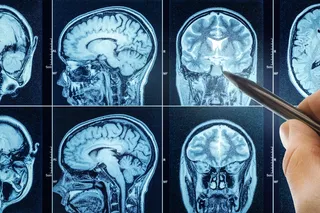
Astrocytes may contribute to the progression of ALS.Image Credit: Kateryna Kon/Shutterstock

Newsletter

Sign up for our email newsletter for the latest science news

Sign Up

For many people living with Amyotrophic Lateral Sclerosis (ALS), saying ‘I love you’ to a partner or child is impossible. ALS is a progressive neurological disease that leads to complete paralysis. Early symptoms involve weakness in the arms or legs as well as slurred speech or difficulty swallowing.

“One in four people already have speech impairment when they are diagnosed,” says David Brandman, co-director of the Neuroprosthetics Lab and a neurosurgeon at the University of California-Davis.

As the speech paralysis progresses, patients cannot ask for help, pose questions, or even thank the people helping them with day-to-day living.

There isn’t a cure for ALS, and patients typically only live for three to five years after diagnosis. But scientists recently had a major breakthrough with a computer interface that holds promise to help ALS patients live a better quality of life — by giving them back their voice.


Read More: Stephen Hawking's Disease: How ALS Impacts the Body and Progress for Treatment


Living with ALS: From Signals to Speech

In a 2025 study published in Nature, a team of scientists detailed the new computer interface and its effectiveness for Casey, a 46-year-old California man living with ALS. Casey is fully paralyzed and unable to speak to his wife and daughter. He is a participant in the BrainGate2 clinical trial at UC Davis.

Brandman implanted four microelectrode arrays into Casey’s brain in the region responsible for producing speech. The electrodes sense the brain’s neuron activities and transmit the information to the brain-computer interface (BCI), which translates the signals into speech.

“We deep-faked his voice so the computer sounds like him when he speaks,” Brandman says. “It sounds like him in real time as if the musculature is still working.”

Technology that Reads Minds?

Although it may seem as though the microelectrodes are mind-reading, the research team says the technology is based on sensing the words a person wants to say but cannot due to paralysis.

“This is not a mind-reading device. I’m not listening to your deepest, darkest secrets. It’s an artifact of where we are recording in the brain,” Brandman says.

The BCI is currently a wired device that connects to a computer system that is stationed on a nearby cart. The research team is currently working on a wireless system and plans to shrink the computer system down to something the size of a laptop. Eventually, it could be as small as a mobile phone.

“It will become much smaller. That’s more on the refinement and development size. We’re still in the discovery stage,” says Sergey Stavisky, assistant professor in the Department of Neurological Surgery and co-director of the Neuroprosthetics Lab at UC-Davis.

Translating Words and Tone

When Casey connects to BrainGate2, the sensors are able to translate not just his words but also his tone and intonation. The researchers noted that this was an important aspect of the design.

“Speech is a fundamental quality of humans, and it’s still the fastest mode of communication. How we speak helps us emote, it’s not just the words we say, but how we say it includes a lot of information,” says Maitreyee Wairagkar, project scientist in the Neuroprosthetics Lab at UC-Davis.

Casey’s family reported understanding him 60 percent of the time. Without the help of BrainGate2, they understood him just 4 percent of the time.

BCI like BrainGate2 can’t cure ALS, but Brandman says it can add to a patient’s quality of life, allow them to speak, plan for their future, and advocate for themselves. There is also hope that the technology could be helpful to patients who lose their speech due to other conditions such as stroke, primary progressive aphasia, or locked-in syndrome.

“This isn’t a cure for someone’s ALS, I can’t make someone’s ALS go away, but it can make someone’s life more meaningful,” Brandman says.

BrainGate clinical trials are currently recruiting at UC Davis and its four partner institutions.

This article is not offering medical advice and should be used for informational purposes only.


Read More: A Soft Ventilator Could Help People with ALS Breathe Easier


Article Sources

Our writers at Discovermagazine.com use peer-reviewed studies and high-quality sources for our articles, and our editors review for scientific accuracy and editorial standards. Review the sources used below for this article:

Meet the Author

  • Emilie Lucchesi
    Emilie Le Beau Lucchesi, Ph.D., is a freelance journalist who regularly contributes to Discover Magazine. She reports on the social sciences, medical history, and new scientific discoveries.View Full Profile

Related Topics

Stay Curious

JoinOur List

Sign up for our weekly science updates

View our Privacy Policy

SubscribeTo The Magazine

Save up to 40% off the cover price when you subscribe to Discover magazine.

Subscribe