
Advertisement

This Neanderthal Gene Might Be Holding Back Your Athletic Performance

Genetic legacy of our ancient cousins could be making it harder for some people to reach their athletic potential.

Jenny Lehmann
ByJenny Lehmann
Google NewsGoogle News Preferred Source
Image Credit: Gorodenkoff/Shutterstock

Newsletter

Sign up for our email newsletter for the latest science news

Sign Up

If you’ve ever struggled to keep up in spin class or wondered why sprint training feels extra brutal, you might be right to blame it on your genes — or more precisely, your ancient cousins’ genes.

Advertisement

A new study by researchers from the Max Planck Institute for Evolutionary Anthropology, the Okinawa Institute of Science and Technology, and Sweden’s Karolinska Institutet has uncovered that some modern humans carry a Neanderthal genetic variant that hampers muscle performance.

Published in Nature Communications, the research suggests this ancient gene could halve a person’s chances of becoming an elite athlete.

Genetic Inheritance From Neanderthals

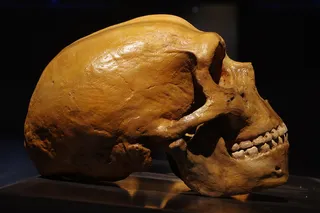
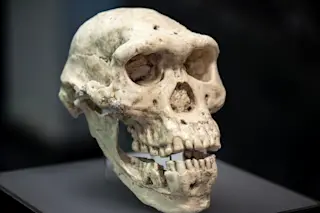
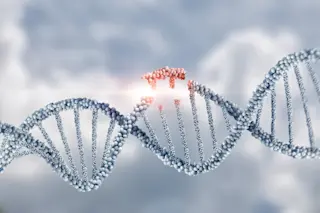
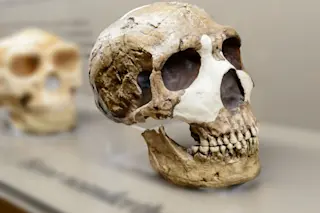
So, what exactly is this gene, and why does it matter for our bodies today? The research team has pinpointed a variant in the AMPD1 gene that some of us inherited from Neanderthals. Their findings show that all Neanderthals carried this specific variant, which is absent in other species.

AMPD1 is an important enzyme for energy production in muscle cells, supporting normal muscular function. According to the press release, mutations that impair AMPD1 are actually the most common cause of metabolic myopathy (genetic disorders interfering with muscle cells energy production) among Europeans, affecting nine to 14 percent of people.

By analyzing ancient DNA alongside modern human genomes, researchers confirmed that the Neanderthal variant slipped into our gene pool around 50,000 years ago, when Neanderthals and modern humans interbred in Europe and Western Asia.


Read More: Neanderthals May Have Run Their Own Fat Factories 125,000 Years Ago


Gene Variant Impacts Performance

Laboratory tests showed that human enzymes with this Neanderthal variant had 25 percent less AMPD1 activity. When scientists introduced it into genetically engineered mice, enzyme activity in muscle tissue dropped by a staggering 80 percent, seriously impairing function.

Yet, for most people who carry it, about two to eight percent of Europeans today, life goes on without major issues. Dominik Macak, the study’s first author, explained in the statement: “Strikingly, most individuals who carry the variant do not experience significant health issues. However, the enzyme appears to play an important role in athletic performance.”

Indeed, when the researchers examined the genetic data of over a thousand elite athletes from various sports, they found that those carrying a non-functional AMPD1 were about half as likely to reach top-level athletic status. The effect was similar in both endurance and power sports, suggesting the enzyme’s broad importance for physical performance.

Advertisement

What This Means Beyond Sports

So, why would Neanderthals carry a gene that potentially weakens muscle output? Senior author Hugo Zeberg suggests that technological and cultural advances may have reduced the need for extreme physical feats, both in Neanderthals and modern humans.

Besides athletic performance, carriers of AMPD1 variants also show a slightly increased risk (about three to six percent) of developing varicose veins. Still, in contemporary Western societies, where extreme muscle performance is rarely required for survival, this genetic quirk has moderate relevance.

Advertisement

The researchers emphasize that understanding these ancient gene variants can shed light on our health, performance, and genetic diversity today. Studying such genes from a physiological and evolutionary perspective could help explain not only why some people are less athletic than others, but also how our bodies have adapted — and continue to adapt — across millennia.


Read More: How Strong Were Ancient Humans?


Article Sources

Our writers at Discovermagazine.com use peer-reviewed studies and high-quality sources for our articles, and our editors review for scientific accuracy and editorial standards. Review the sources used below for this article:

  • Jenny Lehmann

    Jenny Lehmann

    Jenny Lehmann is an assistant editor at Discover Magazine who writes articles on microbiology, psychology, neurology, and zoology, and oversees the Piece of Mind column of the print issue.

Stay Curious

JoinOur List

Sign up for our weekly science updates

View our Privacy Policy

SubscribeTo The Magazine

Save up to 40% off the cover price when you subscribe to Discover magazine.

Subscribe
Advertisement

1 Free Article