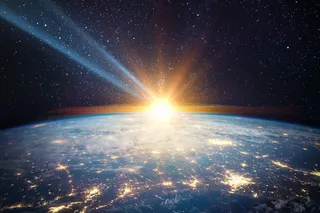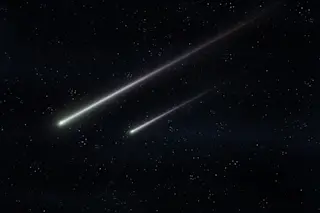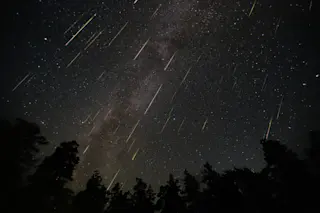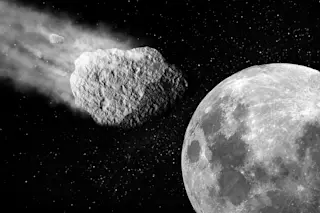


December brings one of the richest, most enigmatic meteor showers, the Geminids. Bright moonlight often spoils the annual show, but this year circumstances are ideal: The Geminids peak on the 13th, under a dark sky punctuated by a crescent moon that sets by twilight’s end. Get away from city glow and you will see meteors streaking across the heavens all night long.
WHAT’S UP IN THE DECEMBER SKY
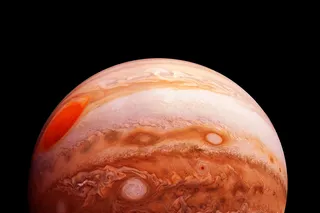
The planets are social this month. Venus cozies up to Mars and Mercury, while Jupiter slips behind the moon, an event called
an occultation.
DECEMBER 1
Saturn rises by 8 p.m., beginning a three-
month window of
optimum viewing.
DECEMBER 5-7
Mars passes close by
much brighter Venus
in the eastern sky
before dawn.
DECEMBER 7
The crescent moon
occults Jupiter, visible
fromthe eastern
two-thirdsof the U.S.
DECEMBER 13-14
Geminid meteors put
on an excellent show, lighting the sky from
9 p.m. to dawn.
DECEMBER 21
Winter begins at
7:40 a.m. EST, when Earth’s North Pole tips maximally away
from the sun.