
I LOVE all things space--arguably more than the next girl. For years I wanted to be an astrobiologist. Infinite possibilities and the ultimate opportunity to explore the unknown. And it's no secret to readers that I adore Carl Sagan and Cosmos, which fostered a love and appreciation of science in so many of us.

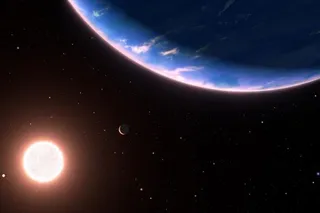
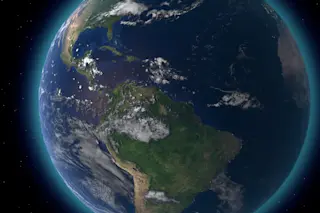
All I'm saying is, just perhaps--for the time being--we might be better off spending the kind of figures currently invested in large scale BIG 'what if?' projects on more proximate concerns. No doubt the mission of Kepler is really cool, but why rush to search for planets like ours when it behooves us to focus efforts on preserving life as we know it here. My exuberance over the possibility of an eventual planetary census is tempered as this week I'm hearing about university cuts to every budget and program possible. And as college tuition continues to rise, high school students are emailing me that their education feels ever more elusive in an unprecedented economic crisis. I understand that these projects have been in the pipeline for a long time, that they seek important answers, and have the potential to change everything. But, they also might not succeed. Kepler cost close to 600 million dollars and overruns even put the mission in jeopardy at one point. In 2009, we need to balance budgets so that we're doing a better job to foster the next the generation of scientific leaders who are going to pursue the coming decades' BIG ideas. And we must additionally put a fair share of support into the projects that will preserve what we've got at home on Planet Earth. As I wrote recently, in a climate of limited budgets, I'd rather see funding for more immediate global concerns like improving agricultural yield, preparing for climate change, and mitigating the impacts of ocean acidification. And no, it's not comparing apples and oranges. It's dollars and a collective future. A glance at the number of digits in NOAA's budget and you'll understand what I'm getting at--something's wrong when such a vital agency is so overlooked that it's never even been authorized by Congress. I want more than most anyone to explore the cosmos, it's just not our highest priority from my perspective. That said, with Kepler's Friday launch set to examine more than 100,000 sun-like stars in the Swan and Lyre constellations, you bet I'll be watching and listening with great interest.