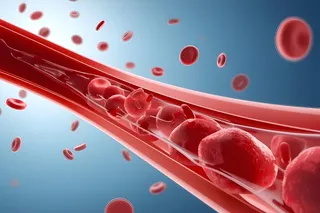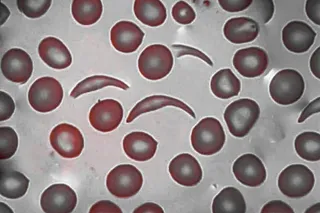
Using embryonic stem cells, researchers have created enough red blood cells to fill several test tubes, in a development that could eventually allow for the mass-production of blood and the end of blood donation drives.
"We literally generated whole tubes in the lab, from scratch," said Robert Lanza, chief science officer at Advanced Cell Technologies [Wired News].
The breakthrough raises the prospect of mass-producing supplies of the "universal donor" blood type O-negative, which is prized because it can be safely transfused into any patient, whatever their blood group. This type of blood is in short supply – around 8% of Caucasians have it, and just 0.3% of Asians [New Scientist].
Experts say the method would also help keep pathogens like HIV out of the blood supply, as blood banks would no longer have to screen the blood from thousands of donors. In the study, published in the journal Blood [subscription required], Lanza's team used stem cells drawn from human embryos, a controversial technique.
After allowing the stem cells to begin the earliest stages of embryonic development, the researchers prompted some of them to grow into red blood cells by exposing them to a variety of proteins. Up to 65% of the resulting cells matured to the point at which they shed their nucleus, which allows them to take on the distinctive doughnut shape of circulating red blood cell [Los Angeles Times].

 Explore All Options
There are a number of hurdles before companies could consider mass-producing blood. Researchers will have to test whether the produced cells are safe for animals and then humans, and will work on getting the cells to produce the adult version of globin, the compound that carries oxygen. Lanza's team would also prefer to dodge the controversy posed by embryonic stem cells.
Lanza said his team was now trying to make blood cells using induced pluripotent stem cells -- a new source of stem cells made using ordinary skin cells and several genes that re-program them back to an embryonic-like state [Reuters].
Lanza discusses everything from the death threats he has received to his hopes for pushing the human life span past 100 in the new DISCOVER interview, "Fighting for the Right to Clone."
Image: flickr/montuno