
skip to main content

Soft Blows For Pedestrians

Explore how pedestrian safety devices can dramatically reduce auto-accident fatalities and safeguard lives in head-on collisions.

Written byMaia Weinstock
| 1 min read
Follow on GoogleGoogle News Preferred Source
Placeholder image

Newsletter

Sign up for our email newsletter for the latest science news

Sign Up

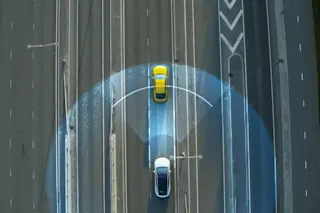
One out of every eight auto-accident fatalities—roughly 5,000 deaths every year in this country—is a pedestrian. After years of focusing almost exclusively on protecting those inside the car or truck, automakers are finally starting to think outside the box, and the Swedish auto-safety firm Autoliv is helping to lead the way.

In most head-on accidents, the pedestrian's head smashes onto the windshield or against engine parts, through the hood. "If you don't do anything, you have a 50 percent chance of life-threatening injury," says Yngve HŒland, Autoliv's research director. To improve the odds, the company devised a system that senses a pedestrian impact and inflates a pair of steel bellows that props the hood up by four inches in just 70 milliseconds. The person's head then tends to strike the resilient sheet metal of the hood, which can absorb much of the energy of the impact. Autoliv has also tested external air bags that deploy from the windshield pillars to soften the landing of a crash-victim's head.

Together, these two safety devices reduce the likelihood of a fatal injury to 15 percent, judging from crash-dummy simulations. The European Parliament is considering safety guidelines that would most likely require automakers to incorporate such pedestrian-protection systems by mid-2005. No such rules are pending in the United States, but American and Japanese manufacturers are beginning to experiment with similar technologies.

Stay Curious

JoinOur List

Sign up for our weekly science updates

View our Privacy Policy

SubscribeTo The Magazine

Save up to 40% off the cover price when you subscribe to Discover magazine.

Subscribe