

Because of a rogue speck of dust floating around Stephen Chou's lab at Princeton University, your next computer monitor may display a much sharper image.
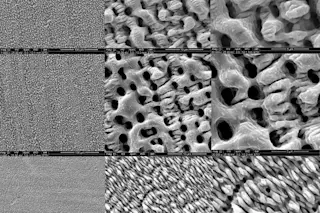
An electrical engineer, Chou was working on a better way to configure polymer plastics used to make light-emitting diodes, or LEDs, and other electronics. One of his graduate students pressed a mask into a layer of plastic, preparing to transform the material into a pattern of electrical circuits. By a fluke, bits of dust got behind the mask. When Chou removed it, he was startled to see that an array of beautiful, highly regular microscopic pillars had sprung up where the mask did not lie flush on the surface.
Chou thinks his polymer pillars will simplify the manufacturing of LED video displays, which have better resolution than cathode-ray tubes but are expensive to build. Color LED screens usually contain three different materials to display the red, blue, and green parts of the picture. "In the old technology, you had to fabricate each color separately," says Chou. "With this process, you can fabricate all the colors at the same time, using the pillar height and size to control the color."