
Advertisement

Don't Reach for the Insect Spray—It's Just Robo-Fly

Discover the innovative robotic insect based on the blowfly, developed by UC Berkeley Robotics Lab to aid in environmental monitoring.

Google NewsGoogle News Preferred Source

Newsletter

Sign up for our email newsletter for the latest science news

Sign Up

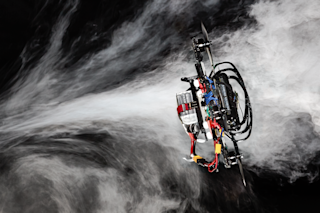
While some of their colleagues develop robotic cats and dogs, an electrical engineering team from the University of California at Berkeley chose a less obvious animal to emulate. Ron Fearing, Kristofer Pister, biologist Michael Dickinson, and their colleagues are building a robotic insect loosely based on the blowfly, a common pest. The robo-fly has a one-inch wingspan and weighs less than a hundredth of an ounce. Its wings are composed of rigid polymer. Thin strips of ceramic material connected to its thorax contract in response to electricity, pulling on the wings and causing them to twist and flap.

Advertisement

Photographs courtesy of UC Berkeley Robotics Lab (3)

In a recent test, a tethered one-winged robo-fly managed to flap vigorously enough to rotate a miniature boom. To get off the ground, the fly will have to produce about 10 times as much lift, but the researchers believe it can be done. The final design, shown in the computer model above, will add navigational controls, sensors, and solar panels that double as landing gear. Fearing hopes to have a prototype fly buzzing around the lab by the end of next year. He projects that by 2005, the robo-fly could be performing surveillance or environmental monitoring. "Or it could be a companion robot that could warn people away from obstacles or help them find stuff around the house," Fearing says.

Stay Curious

JoinOur List

Sign up for our weekly science updates

View our Privacy Policy

SubscribeTo The Magazine

Save up to 40% off the cover price when you subscribe to Discover magazine.

Subscribe
Advertisement

1 Free Article