

When spending a relaxing day at the beach, your worries may include everything from packing enough sunscreen to avoiding a shark or jellyfish encounter while swimming. But one of the ocean’s fastest-moving dangers — a naturally occurring bacterium that thrives in warm water and can cause flesh-eating disease — may need to be added to your list.
This spring, according to CBS News, researchers detected Vibrio bacteria in multiple coastal locations on New York’s Long Island, prompting officials in the Hamptons to issue a public health alert. Meanwhile, Florida has reported eight infections so far this year, and health officials in Mississippi have also urged residents to take precautions.
The discovery highlights the strange reality that the same warmer ocean conditions that make beach days more appealing can also create ideal conditions for dangerous bacteria. While severe infections remain rare, experts say understanding the risks and knowing how to avoid them is becoming increasingly important.
What Is Flesh-Eating Bacteria and Why Is It a Growing U.S. Coastal Risk?
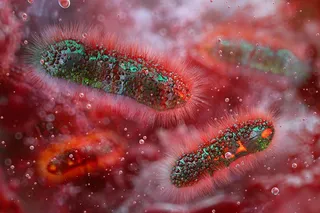
The term “flesh-eating bacteria” sounds like something from a horror movie, but it isn’t entirely accurate. In the case of Vibrio vulnificus, the bacteria don’t actually consume human tissue. Instead, they release toxins that rapidly destroy it, damaging blood vessels and cutting off circulation while making it harder for the immune system to fight the infection.

 Explore All Options
Vibrio bacteria naturally live in coastal waters, particularly during the warmer months between May and October. About a dozen species can infect humans, causing an illness known as vibriosis.
According to the Centers for Disease Control and Prevention (CDC), an estimated 80,000 cases of vibriosis occur in the United States each year. Roughly 52,000 of those infections are linked to eating contaminated seafood, particularly raw or undercooked oysters.
For most people, the illness causes symptoms such as watery diarrhea, stomach cramps, nausea, vomiting, fever, and chills. But Vibrio can be far more serious. If it enters the bloodstream or an open wound, it can trigger a rapidly progressing infection known as necrotizing fasciitis.
Many patients require intensive medical care, and some need limb amputations. About 1 in 5 people infected with Vibrio die — sometimes within just a day or two of becoming ill.
Read More: Proteins in Tick Saliva Help Diseases Spread — a Promising Vaccine May Help Block Transmission
Where Can You Get Vibrio and How Can You Protect Yourself?
Most people become infected in one of two ways: by eating contaminated shellfish or by exposing an open wound to warm coastal water.
Fortunately, reducing your risk is pretty straightforward.
Stony Brook Medicine recommends inspecting your skin for cuts, scrapes, or healing surgical wounds before swimming. If you have an open wound, it’s safest to stay out of the water. If avoiding the water isn’t possible, cover the area with a waterproof bandage. Any cuts sustained at the beach should be rinsed immediately and thoroughly cleaned with soap and water as soon as possible.
According to Florida Health, officials in Florida specifically warn that floodwaters and standing water following hurricanes or severe storms can increase exposure, making extra caution important after extreme weather.
Why Vibrio Is Becoming a Bigger Threat
Researchers have tracked Vibrio for decades because the bacteria flourish when coastal waters become warmer and saltier. As climate change raises ocean temperatures and sea levels, those favorable conditions are lasting longer and expanding into new regions.
As reported by CNN, researchers said warmer winters also allow more bacteria to survive year-round, meaning summer outbreaks begin with a larger bacterial population already in place.
Monitoring those environmental changes has become increasingly important. CBS News wrote that earlier this year, the Trump administration began removing hundreds of deep-sea ocean monitoring instruments that researchers use to track water conditions linked to Vibrio growth. Following bipartisan opposition in Congress, the administration reversed its plans to dismantle the monitoring network.
Public health surveillance has also shifted. Since 1995, a CDC program called FoodNet has tracked several major foodborne pathogens, including Vibrio. However, last year, reporting requirements changed, meaning participating states are no longer required to report Vibrio cases to the CDC.
For most people, a trip to the beach will remain perfectly safe. But as coastal waters continue to warm, experts say one of the most important pieces of beach gear may not be sunscreen or flip-flops, but simple awareness of the possible risks.
This article is not offering medical advice and should be used for informational purposes only.
Article Sources
Our writers at Discovermagazine.com use peer-reviewed studies and high-quality sources for our articles, and our editors review for scientific accuracy and editorial standards. Review the sources used below for this article:
- This article references information from CBS News: New disease threats follow Trump administration's health program cuts
- This article references information from the CDC: About Vibrio Infection
- This article references information from Florida Health: Vibrio Vulnificus
- This article references information from Stony Brook Medicine: Flesh-Eating Bacteria: Symptoms, Risks and How to Stay Safe
- This article references information from CNN: Flesh-eating bacteria cases are rising. Climate change is to blame, say scientists