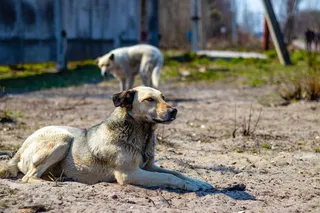
You can do everything right for a dog, maybe even spoil them a little, from the fancy food in the bowl to the plain chicken and rice you cook when their tummy is off, the evening walks and the vet visits you never skip, and still end up watching a big one slow down years before a small one down the street, as plenty of owners can tell you.
Now a study in Science, led by Arizona State University researchers, points to a possible reason in the dogs' DNA. As dogs age, certain jumping genes, bits of DNA that can hop to new spots, lose the chemical tags that keep them in check. For one family of jumping genes, giant breeds lose about 35 percent more of those tags each year than small breeds do, on average.
“Dogs provide an extraordinary model for understanding aging because they show dramatic variation in lifespan within a single species,” said senior author Noah Snyder-Mackler in a press release.
What Jumping Genes Reveal About Dog Aging
Bigger mammal species generally live longer, with mice lasting about two years and some whales nearly 200, yet dogs break the rule. To search for a molecular explanation, the team looked at 864 dogs in the Dog Aging Project, a large collaborative study of canine aging.

 Explore All Options
Sitting on top of the DNA is a layer of chemical tags that work like switches, turning genes up or down while leaving the code itself untouched, a system called DNA methylation. The tags respond to diet and stress and wear away with age, which makes them a useful marker of aging. The team mapped them at more than 3 million sites across the group.
Across the genome, the tags thinned out with age, most of all on jumping genes. When the tags come off, these genes can copy themselves into new locations and damage DNA, a process tied to cancer and other conditions that come with age. One family, called LINE1, lost tags in over 40 percent of its regions, the hardest hit among jumping genes.
The loss progressed fastest in larger breeds, and Blaise Mariner, a study co-author, said that suggests a looser grip on these genes may contribute to faster aging.
LINE1 also looked different in male and female dogs. Female dogs have two X chromosomes while males have an X and a Y, and LINE1 genes on the X carried more tags in male dogs than in female ones. That may mean the genes are more active in females and could shape how the sexes age.
“This was an unexpected result,” said Brianah McCoy, a former doctoral student at the university who also co-led the work.
Read More: Faster Biological Aging May Help Explain Why More Younger Adults Are Getting Cancer
How Dogs Could Help Researchers Understand Human Aging
“Because they are companion animals, they can also be a powerful model with immediate relevance to human health,” Snyder-Mackler said of dogs.
Jumping genes may be a core part of aging across mammals, and targeting them, or the systems that keep them in check, could someday lead to therapies that help people stay healthy longer.
The next question is whether jumping-gene activity drives aging or follows from it.
The Dogs Behind the Data
A smaller group of dogs would have hidden these patterns, the researchers say, and Snyder-Mackler credits big collaborations like the Dog Aging Project for bringing them to light.
“They allow us to connect molecular changes to real-world variation in health and lifespan.”
Anyone who has watched a big dog slow down early has already seen that variation up close. The study suggests part of the story may sit in one family of jumping genes.
Read More: From Mongolia to Madagascar, Dogs Form Remarkably Similar Bonds With Humans
Article Sources
Our writers at Discovermagazine.com use peer-reviewed studies and high-quality sources for our articles, and our editors review for scientific accuracy and editorial standards. Review the sources used below for this article:
- This article references information from a study published in Science: Epigenetic aging and transposon dysregulation reflect size-related lifespan compression in dogs