Archaeologist Flinders Petrie suspected a century ago that the people buried around Egypt's first kings were retainers, killed when the kings died, but he found no wounds to prove it. Roselyn Campbell wanted to see what modern forensics could make of the skulls he kept.
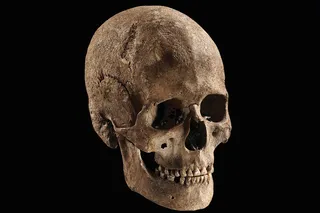
Campbell, a researcher at Purdue University, found 46 of them in the Duckworth Collection at the University of Cambridge. Most of the bodies from Petrie's digs at Abydos in Egypt went back into the ground, but he kept the skulls and sent some of them to the U.K. When Campbell looked again with current forensic techniques, 18 of the 46 showed fractures from around the time of death.
Her study, in Frontiers in Environmental Archaeology, says nearly four in ten of the people examined, and possibly more, may have been killed on purpose, which would fit what Petrie suspected.
“I was drawn to these retainers partly because, even though they were buried around royalty, they are mostly relegated to footnotes in the grander narrative,” Campbell said in a press release. “Who were these people and how did they view the ruler and their own role in his or her life and death?”
Why Archaeologists Suspected Human Sacrifice at Abydos
The tombs date to about 5,000 years ago, when Egypt's first kings ruled the newly united country. The graves run in rows around them, sometimes numbering in the hundreds, and each is a plain chamber, some with a coffin.

 Explore All Options
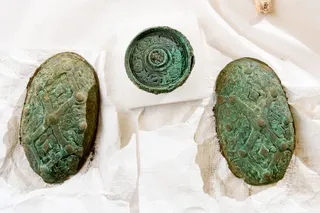
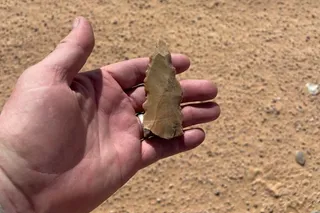
Most held a few objects, such as pottery, and many also held small ivory figurines, copper tools, or projectile points. A few markers name the person buried there, and the titles on them mostly suggest minor or mid-ranking officials and craftspeople.
To Petrie, so many graves in one place looked like retainer sacrifice. Campbell explained that some cultures practiced it because they believed the dead would keep serving the ruler in an afterlife, and that it could also be a show of the ruler's power. Some retainers may have gone willingly, while others could have been selected or made to.
Read More: The Tiny Black Dots on Your Oven Door Have Roots in Ancient Egypt
What Modern Forensics Found in the Skulls
Most of the fractures were linear, and Petrie appears to have put them down to natural causes. Better forensic methods now let researchers identify them as injuries from around the time of death.
Injuries like these would likely have knocked a person out quickly and led to death from internal bleeding, Campbell said. Some of the skulls also showed injuries from something sharp, and one person had a chopping wound to the eye.
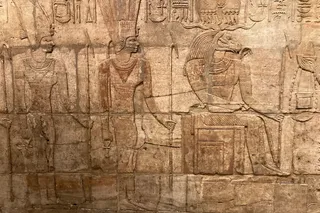
It isn't clear how they were killed, but a mace, which Egyptian art often shows kings swinging at their foes, would be expected to leave depressed fractures, or dents in the bone, rather than the linear fractures Campbell found. A broad, flat object could cause breaks like these, and so could a hard fall. But a fall like that would probably have injured other bones, and Petrie's photographs and notes don't appear to show any.
What the Skulls Still Can’t Tell Us
The study can't say what became of the other retainers, and some of them may have died naturally. Others could have died in ways a skull wouldn't show, such as suffocation, or in ways that would only appear on the rest of the skeleton, which Petrie reburied.
“Still, this study shows how much new information about the past can be revealed when we revisit previous data armed with updated methods and knowledge, even for datasets that are incomplete and imperfect like this one.”
The skulls and Petrie's records can only go so far, and Campbell would still like to study the rest of the remains.
“If I had unlimited resources, I would love to figure out where the bodies of these individuals might be and analyze them!” she concluded in the press release.
Article Sources
Our writers at Discovermagazine.com use peer-reviewed studies and high-quality sources for our articles, and our editors review for scientific accuracy and editorial standards. Review the sources used below for this article:
- This article references information from a study in Frontiers in Environmental Archaeology: New Data from Old Bones: Using Bioarchaeology and Forensics to Reassess Legacy Data from Ancient Abydos, Egypt