Wearable Device Could Transmit Smell Over the Internet, Low Dose Aspirin May Reduce Dementia Risk, and 2.8 Million Eels Gather Around an Underwater Volcano
Discover the top stories from Oct. 24 to Oct. 30, 2026, including how an AI-powered device could transmit smell over the internet and the mystery of why millions of eels gather around a volcano.
Stephanie Edwards is the Engagement Specialist at Discover Magazine, who manages all social media platforms and writes digital articles that focus on archaeology, the environment, and public health.
Jenny Lehmann is an Associate Editor at Discover Magazine who writes articles on microbiology, psychology, neurology, and zoology, and oversees the Piece of Mind column of the print issue.
Jack Knudson is an Associate Editor for Discover Magazine who writes articles on space, ancient humans, animals, and sustainability, and manages the Planet Earth column for print.
Monica Cull is a Digital Editor/Writer for Discover Magazine who writes and edits articles focusing on animal sciences, ancient humans, national parks, and health trends.
Did you catch the top stories this week? Check out our roundup below, covering the biggest science news and stories that matter.
This week's stories, from Oct. 24 to Oct. 30, 2026, include a wearable device that one day could send smells over the internet, 4,000-year-old dog paw prints from Turkey, how low-dose aspirin could reduce dementia risk in certain populations, a new dwarf planet candidate hiding beyond Pluto, the mystery of why 2.8 million eels gather around an underwater volcano, and how the scraps of fruits and vegetables we throw out actually contain a lot of fiber.
1. AI-Powered Wearable Device Could One Day Transmit Smells Over the Internet
(Image Credit: Bangkok Click Studio/Shutterstock)
Because olfaction relies on sensing chemical compounds rather than physical light or sound waves, technology faces limitations in accurately capturing a smell, transmitting that information across devices, and reproducing the odor at the destination. However, researchers have made a significant leap toward delivering smells through a screen one day.
2. 4,000-Year-Old Dog Paw Prints Discovered on a Mud Brick in a Burned Bronze Age House in Turkey
Maybe you remember pressing your hand into wet concrete as a kid, or stopping on a sidewalk because a squirrel or raccoon got there before it dried. There’s something endearing about those little marks, especially when they’re still there when you walk by decades later. At Tavşanlı Höyük, a Bronze Age city in western Turkey, a dog did just about that, only a little longer ago, about 4,000 years back.
3. Low-Dose Aspirin May Reduce Dementia Risk by 70 Percent in Older Adults With a Specific Genetic Profile
A familiar bottle in the medicine cabinet can become something different when scientists discover new details about what’s inside. Aspirin has been around for generations, yet researchers are still investigating how its effects vary from person to person — and whether those differences could matter for the aging brain.
4. Icy Object Spotted Beyond Pluto Emerges as New Dwarf Planet Candidate in the Solar System's Outskirts
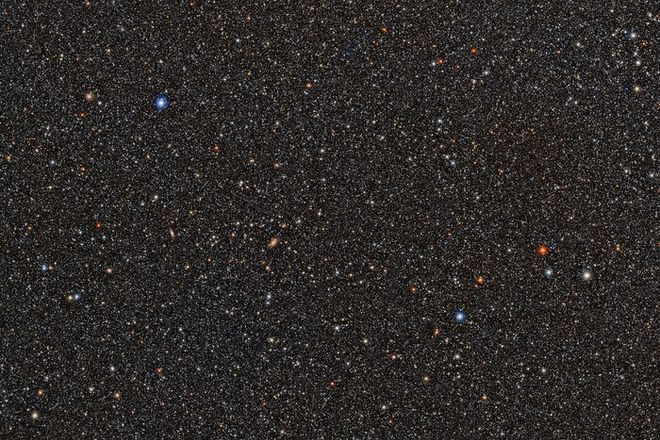
The area of the sky where the newly discovered dwarf planet candidate 2026 ED138 (ED138) was spotted by the Vera C. Rubin Observatory.
(Image Courtesy of NSF–DOE Vera C. Rubin Observatory/NOIRLab/SLAC/AURA)
The small clique of dwarf planets in our solar system may soon be joined by a newcomer after an astounding discovery from the Vera C. Rubin Observatory. Looking past Pluto, the observatory caught sight of a rare object that had evaded detection by other telescopes. Astronomers have now identified the icy object, called 2026 ED138, as a new dwarf planet candidate.
5. 2.8 Million Eels Gather Around an Underwater Volcano Off Tasmania to Spawn, but Why They Choose This Spot Remains a Mystery
Three times in three years, a research ship bound for the Southern Ocean paused above an undersea mountain more than 2,800 feet beneath the surface, listening for what lived below, and each time the sonar returned a cloud of echoes, rising roughly 500 feet off the seafloor, that sound alone could not identify.
6. Peels, Seeds, and Other Scraps Contain More Fiber Than the Parts We Eat in 10 of 12 Fruits and Vegetables
When you're cubing up a butternut squash for dinner, many recipes recommend removing the skin or peeling it. In fact, many recipes often suggest removing the peels, skins, seeds, or stalks of produce and discarding them. However, new research suggests that we may be losing out on vital nutrients and fiber by tossing them out.
Stephanie Edwards is the Engagement Specialist at Discover Magazine, who manages all social media platforms and writes digital articles that focus on archaeology, the environment, and public health.View Full Profile
Jenny Lehmann is an Associate Editor at Discover Magazine who writes articles on microbiology, psychology, neurology, and zoology, and oversees the Piece of Mind column of the print issue.View Full Profile
Anastasia Scott is an Assistant Editor at Discover Magazine. Her work focuses on bringing clarity and creativity to scientific ideas. View Full Profile
Jack Knudson is an Associate Editor for Discover Magazine who writes articles on space, ancient humans, animals, and sustainability, and manages the Planet Earth column for print.View Full Profile
Monica Cull is a Digital Editor/Writer for Discover Magazine who writes and edits articles focusing on animal sciences, ancient humans, national parks, and health trends. View Full Profile












 Explore All Options