

Helium is one of those chemical elements we’ve all heard of, but most of us only know about it for its most trivial uses. It’s great for birthday balloons, keeps blimps and Thanksgiving Day parade inflatables aloft, and has allowed countless jokers a chance to amuse their friends with comically high-pitched voices. (Which, by the way, Discover does not recommend.)
But helium is a serious gas with significant applications, especially in medical care and scientific research of all kinds. It’s also in short supply on Earth, which is a problem in many ways.
Based on current economics and available technology, a mere fraction of Earth’s helium — roughly 40 billion cubic meters — is available for practical extraction and use. That may sound like a lot, but many estimates suggest that unless we find new sources or develop some as-yet-unknown technology to efficiently extract the gas from the Earth, our available helium supply could be exhausted in as little as a century.
If that happens, many areas of scientific research will be devastated, or at least made prohibitively expensive.
Another issue with helium’s scarcity is that it lacks a practical substitute on the periodic table. For one thing, helium has the lowest boiling point of any substance we know of, which makes it practically unique in applications such as MRI machines, whose operation depends on ultra-cold cooling of magnets. That same cooling ability makes helium critical in other research devices, including the Large Hadron Collider.

 Explore All Options
“It’s been called ‘irreplaceable’ because it can do things that many other elements can’t,” Mark Jones, a chemist and science communicator based in Michigan, told Discover.
If Helium Is So Abundant, Why Is It in Short Supply?
It’s a special irony that helium (He) is one of the most common chemical elements in the universe, second only to hydrogen. Our own sun reflects this fact, since its elemental composition is about 75 percent hydrogen and 25 percent helium. (It’s worth noting that the name “helium” is itself derived from “Helios,” the Greek word for our sun.)
But the sun is 93 million miles away, and here on Earth, helium is in comparatively short supply. That’s because any terrestrial helium deposits are trapped within the planet itself and are somewhat tricky to extract.
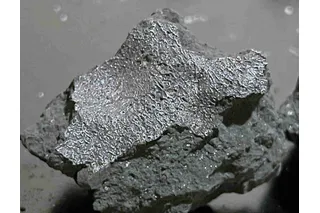
“While helium is abundant elsewhere in the universe and within our own Solar System, on Earth, it comes from radioactive decay, mostly from uranium and thorium,” said Jones. “And even then, we can’t really mine helium directly from the ground. We mainly get it as a component of natural gas extraction.”
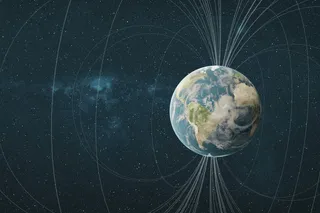
There is a lot of helium on Earth, or more specifically, within the Earth. According to some estimates, our planet contains as much as 470 trillion cubic meters of helium. But most of that is incredibly diffuse throughout the planet's substrates.
Read More: The Origin of Earth’s Helium
Helium Is in a Class All By Itself
Helium is also one of the so-called noble gases, which, you may remember from chemistry class, means that it is non-flammable and non-reactive with other materials, according to the U.S. Department of the Interior Bureau of Land Management. This makes it an eminently safe and stable element for use in creating high-tech components ranging from fiber optics to semiconductors, as well as the chips currently used to build and power artificial intelligence systems.
The next closest substitute — and it’s really not that close — would be hydrogen. Sure, it can be super-cooled and has the advantage of being lighter than helium, but it can’t hold a candle to helium in many other ways. By the way, you would never want to hold a candle near hydrogen at all, since it is insanely flammable, as any surviving passengers on the Hindenburg could have told you back in 1937.
So, helium is pretty much in a class by itself, and significant quantities of the element are currently only available in a few places on Earth, specifically: the U.S., Qatar, and Russia, according to the American Chemical Society. But even those resources are strained or restricted for a number of reasons, according to a study in Petroleum Science.
The U.S., for example, used to keep a federal helium reserve for national use, just like gold. But in 2024, the nation decided to sell off that reserve to private interests and now has to pay market price for the precious gas, just like everyone else. And the price and scarcity of helium are only increasing, according to the U.S. Department of the Interior Bureau of Land Management.
How Science Is Looking to Reuse Helium
For the moment, helium is worth the trouble and the increasing expense we have to incur to extract, source, and use it. And many research and medical establishments have begun implementing ways to capture and reuse helium on a small scale.
Larger-scale efforts to capture helium escaping from Earth — and helium is literally light enough that it can and does float off into space — would require a level of technology that we simply don’t command at present.
Until we’re prepared to make a heavy investment in researching such technology, humans will have to do their best to conserve this incredibly precious and valuable resource. Think about that the next time you go to buy some party balloons.
Read More: 10 Things You Didn't Know About the Periodic Table
Article Sources
Our writers at Discovermagazine.com use peer-reviewed studies and high-quality sources for our articles, and our editors review for scientific accuracy and editorial standards. Review the sources used below for this article:
- This article references information from the American Chemical Society: Endangered Elements: Helium
- This article references information from the Bureau of Land Management: About Helium
- This article references information from the Bureau of Land Management: BLM completes sale of Federal Helium System
- This article references information from a study published in Petroleum Science: Multi-attribute risk assessment on helium investment environment in host countries