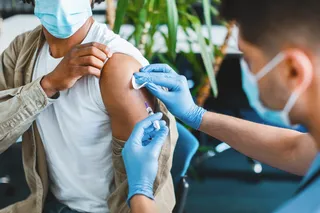
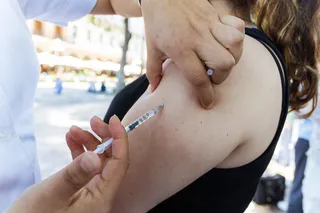
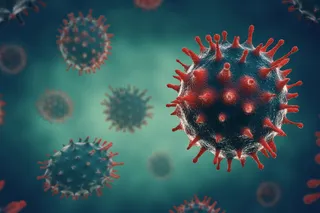
The emergence of mRNA vaccines has been an important contribution to modern medicine, and their further refinement has the potential to transform therapeutics even beyond infectious diseases. First widely introduced as the new COVID-19 vaccines during the pandemic, mRNA vaccines are now being tested globally as potential cancer treatments that train a patient’s immune system to directly target cancer cells.
To help design more effective mRNA vaccines, researchers from the Olivia Newton-John Cancer Research Institute (ONJCRI) and the Peter Doherty Institute for Infection and Immunity studied how three different COVID-19 vaccines distribute and persist within the body, as well as how they degrade, by analyzing blood samples from patients. This first-of-its-kind study, published in ACS Nano, offers insights that could help guide future cancer therapies and vaccine designs.
“mRNA vaccines do not all behave the same way in the bloodstream,” said senior study author Yi Ju, laboratory lead at ONJCRI, in a news statement. “We found differences in how quickly their mRNA and lipid components declined, and how long sections of the mRNA remained intact.”
Read More: First mRNA Flu Vaccine Approved in the U.S. Now Available for Adults 50 Years and Older
Measuring mRNA Vaccine Stability and Degradation in the Blood
Scientists already know that mRNA vaccines can be detected in the blood after administration. However, exactly how the various vaccines differ in terms of persistence and integrity is not clearly understood.

 Explore All Options
To better understand how mRNA vaccines behave in the body and improve them for future therapies, the research team analyzed over 300 blood samples from 73 participants who had received either the vaccine from Moderna, Pfizer, or a newly tested mRNA vaccine that only codes for parts of a viral protein.
They used state-of-the-art analytical methods, including a highly sensitive polymerase chain reaction (PCR) and liquid chromatography-mass spectrometry (LC-MS), to measure the presence of the mRNA in the blood, determine if it was still intact, and identify where degradation occurred. They also measured if the lipid-based packaging that carries the mRNA stayed intact.
They discovered that of the circulating mRNA originating from the Moderna and Pfizer vaccines, most of it had broken apart, with follow-up test showing the exact locations on the mRNA molecule where fragmentation happened.
How Do mRNA Vaccines Work?
Instead of introducing live, weakened, or dead viruses to train the immune system, mRNA vaccines give cells a temporary set of genetic instructions to make a harmless virus protein, which then produces a more robust and precise immune response compared to traditional vaccines, according to Vanderbilt University.
An mRNA vaccine includes mRNA-lipid nanoparticles (LNPs), which act as tiny bundles made of lipids that contain mRNA as their cargo. These small parcels are around 800 times smaller than the width of a human hair, and after administration they are absorbed by cells, where they deliver their cargo, triggering a biochemical cascade that eventually builds immunity against an intended target.
The researchers write that defining how vaccine components behave in human blood gives them a practical window into the behavior of mRNA-LNPs for weeks after vaccination without the need for sampling any human tissue.
Making mRNA Vaccines More Efficient and Reducing Side Effects
The research team states that their findings offer important input on how to create more stable vaccines, which may potentially improve their efficiency and reduce side effects.
Studies with small animal models have already shown that increasing mRNA stability or controlling its degradation can lead to greater antigen production and better vaccine responses.
“These findings give us a way to compare the mRNA cargo and lipid delivery components of different vaccines in people,’ added lead study author Stephen Kent, laboratory lead at the Doherty Institute, in the statement. “That knowledge will help us design and evaluate future improved, more efficient mRNA vaccines and therapeutics, including approaches being developed for cancer.”
This article is not offering medical advice and should be used for informational purposes only.
Read More: COVID Vaccines Appear to Be Boosting Cancer Therapy in a Surprising Side Effect
Article Sources
Our writers at Discovermagazine.com use peer-reviewed studies and high-quality sources for our articles, and our editors review for scientific accuracy and editorial standards. Review the sources used below for this article:
- This article references information from a study published in ACS Nano: In Vivo Blood Kinetics and Transcript Integrity of Three mRNA–Lipid Nanoparticle Vaccines in Humans
- This article references information from Vanderbilt University: How does an mRNA vaccine compare to a traditional vaccine?