Over the past 100 years, the tuberculosis vaccine has been administered, and doctors have documented other benefits that came with its application. Beyond lowering childhood mortality and offering potential protection against other infections, it has also been approved as a treatment for bladder cancer. But the list of ailments the tuberculosis vaccine, also known as the Bacillus Calmette-Guérin (BCG) vaccine, could target doesn’t end there.
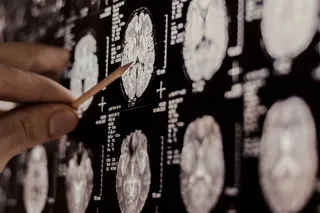
Researchers from Mass General Brigham describe how participants in their study showed increased immune cell responsiveness in the brain and changes in markers related to Alzheimer's disease in older adults. Basically, the scientists think the BCG vaccine "trains" the immune system to maintain brain health, potentially lowering the risk of memory and cognitive decline, as described in their paper published in Communications Medicine.
“The next step is to test this rigorously in larger, controlled studies, particularly in prevention, where the hope would be to preserve brain health before significant Alzheimer’s disease develops,” said study co-author Steven Arnold, managing director of the Interdisciplinary Brain Center at Mass General Brigham Neuroscience Institute, in a press release.
TB Vaccine May Help With Other Ailments
It’s not unheard of for medications designed for one specific purpose to also help with other, seemingly unrelated ailments. For instance, the BCG vaccine was officially approved as a first-line treatment for patients with non-muscle-invasive bladder cancer in the 1970s. These benefits are called “off-target” effects and, in the case of the BCG vaccine, have been studied by researchers at Mass General Brigham over the last 20 years.

 Explore All Options
Because of the TB vaccine’s ability to train our immune system to fight a variety of unrelated infectious diseases, scientists are expanding their research to see where else in the realms of autoimmunity and infection the vaccine could help. In addition to ongoing studies on type 1 diabetes and COVID-19, the BCG vaccine has also been linked to Alzheimer's disease.
In various previous studies, administration of the vaccine was associated with a reduced risk of Alzheimer's disease and related dementias. Experts believe the vaccine may train the brain's immune system, although this has not been studied before.
“The immune system and the brain may be far more connected than we once thought,” said Arnold.
Read More: New Tuberculosis Vaccine Shows Promise to Treat Bladder Cancer
Vaccine Activated the Immune System and Cleared Amyloid-β from the Brain
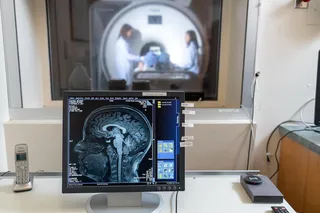
To find out, the research team invited 23 adults aged 55 years and older to receive two doses of the BCG vaccine and collected brain fluid and blood samples periodically over one year after vaccination. Half of the participants already showed characteristics of Alzheimer's disease, while the other half were healthy.
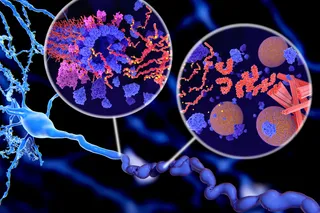
Their findings showed a distinct difference between the two groups. While the vaccine appeared to activate the immune system in the brain in both groups, only the healthy group showed a decrease in amyloid-β levels — an important marker of Alzheimer's disease — in their brain fluid.
As amyloid-β levels then rose in the blood of the healthy participants, it's as if the vaccine prompted the harmful, dementia-inducing protein to be flushed from the brain, an effect that was not observed in the group where Alzheimer's had already manifested to some extent.
The researchers suggest that this could mean the timing of BCG vaccine administration is crucial. Instead of having much effect once Alzheimer's is already established, it could influence early disease processes and help prevent progression by clearing Alzheimer's-related proteins from the brain before irreversible brain damage occurs.
Real Potential Needs to Be Solidified in Larger Studies
As promising as the results from the small clinical trial look, the study authors highlight the need for larger, placebo-controlled studies to determine whether BCG vaccine administration for Alzheimer's prevention has real potential.
“Although more research is needed,” said first author Marc Weinberg, research scientist at Mass General Brigham, “these findings suggest [vaccines] may also influence biological processes involved in brain aging and neurodegenerative disease."
Predominantly, the BCG vaccine is given to children to help prevent tuberculosis in sub-Saharan Africa, Southeast Asia, and Eastern Europe. However, children were not included in this study, so the vaccine's effects on Alzheimer's prevention observed here are limited to adults aged 55 years and older.
Read More: Once Called the “White Death,” Tuberculosis Lingers as Trends Shift in the U.S. and Globally
Article Sources
Our writers at Discovermagazine.com use peer-reviewed studies and high-quality sources for our articles, and our editors review for scientific accuracy and editorial standards. Review the sources used below for this article:
- This article references information from a study published in Communications Medicine: Bacillus Calmette–Guérin (BCG) immunotherapy reprograms CNS immunity and alters Alzheimer’s biomarkers: results from two open-label clinical trials