


A medical capsule has plenty to do after someone swallows it. Depending on its design, it might monitor the body, release medicine, or send information back out. But if that job requires electricity, engineers face an awkward question — what happens to the battery once its work is done?
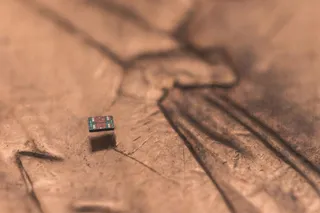
Researchers at MIT are developing a power source with an exit strategy built into its chemistry. Their tiny batteries can run ingestible electronics before breaking down into materials the body can absorb.
Published in Nature Chemical Engineering, the study demonstrates batteries that produce 1.84 volts and power two different devices in animal experiments. One sends a wireless signal from the digestive tract. The other delivers electrical stimulation to the stomach, encouraging it to release a hormone involved in hunger.
How Bioresorbable Batteries Break Down in the Stomach

Digestible battery.
(Image Courtesy of researchers/MIT)
Swallowable electronics aren’t new territory for this research team. Over the past decade, they have developed capsules to track vital signs, administer drugs, and identify opioid overdoses.
Powering those tools, however, can involve trade-offs. Some draw energy from outside the body or harvest it from the gastrointestinal tract. Others use small conventional batteries, whose contents could become a safety concern if their protective coating gets damaged.
For this new design, the researchers chose magnesium and molybdenum trioxide, materials considered tolerable in small amounts.

 Explore All Options
Magnesium forms the anode, while molybdenum trioxide forms the cathode — the battery’s two electrodes. An ionic liquid gel acts as the electrolyte, allowing ions to move between them.
Together, the components make the battery bioresorbable, meaning it can break down and be absorbed by the body. In an acidic solution resembling stomach fluid, the batteries worked normally for roughly three days. Their output then gradually weakened, with complete breakdown occurring within a few weeks.
Read More: First Diagnostic X-rays in Space Mark a New Era for Astronaut Health
Electrical Stimulation Boosted a Hunger Hormone
To test whether the power could accomplish something useful, the team placed a rectangular battery inside a device that applies a gentle electrical current to the stomach lining.
Earlier research showed that this stimulation could prompt stomach cells to release ghrelin, often called the hunger hormone. Increasing its production might eventually help people with conditions involving nausea or diminished appetite.
The new battery supported continuous stimulation for as long as three days. In animal tests, just 20 minutes of stomach stimulation increased ghrelin levels by about 50 percent.
Tracking Medicine With Ingestible Electronics
A disc-shaped version of the battery also powered a radio-frequency identification, or RFID, tag designed for a capsule that could help track medication-taking. In animals, the battery enabled continuous transmission from the digestive tract and extended the system’s communication range.
Human testing is still ahead. The researchers are planning a clinical trial for the medication-tracking system, called SAFARI, that they expect to begin in about two years.
The potential payoff of this invention extends beyond the clinical. Degradable battery materials could also reduce the environmental burden of electronics that leave the body and enter sewage systems.
Read More: From the Big Bang Theory to Vaccines, These Are the 10 Scientific Discoveries That Changed the World
Article Sources
Our writers at Discovermagazine.com use peer-reviewed studies and high-quality sources for our articles, and our editors review for scientific accuracy and editorial standards. Review the sources used below for this article:
- This article references information from a study published in Nature Chemical Engineering: Bioresorbable batteries for transient ingestible bioelectronics