Megan Carpenter works with animals whose idea of a busy day can include several hours of sunbathing. The Chester Zoo keeper’s three new rock hyrax pups, however, have been finding other ways to occupy themselves, darting around their habitat and practicing a little parkour.
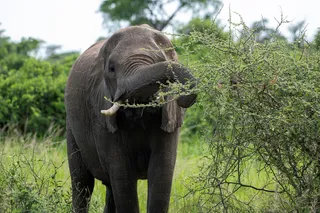
Russ, Spud, and Jackie were born in late summer to Maris and Albert and have now passed their first vet check. Each weighs around 350 grams, small enough for a keeper to cradle in their hands. Their family tree is another matter, with connections to elephants, manatees, and dugongs.
"It’s incredible to think these little animals are so closely related to elephants and manatees. They’re a brilliant example of how misleading appearances can be when it comes to evolution,” said Lyndon Howson, the zoo’s assistant team manager in visitor engagement, in a press release. "That’s what makes species like hyraxes so interesting — they challenge what we think we know about the natural world and show just how surprising animal evolution can be."
How Rock Hyraxes Are Related to Elephants
Rock hyraxes grind up tough plants with strong back teeth called molars, and they share elephants’ keen hearing.
“They look completely different, but there are some clues to their unusual family history. Their long front teeth, for example, are a little bit like miniature elephant tusks, and their feet have some resemblance to elephant feet, with flattened hoof-like nails,” Carpenter said in the press release.

 Explore All Options
Those front teeth are called incisors, and they continue growing throughout a hyrax’s life. Similarities in their skulls also helped researchers establish the evolutionary relationship between hyraxes and elephants. And the hyrax family hasn’t always been so small. Millions of years ago, some members were as large as modern tapirs, according to the San Diego Zoo.
Hyraxes have a few other useful features for daily life, including a bulge in each eye's iris that acts like a built-in sun visor and a long claw on the inner toe of each hind foot for scratching and combing through their fur.
Rock Hyrax Pups Put Their Parkour Skills to the Test

(Image Courtesy of Chester Zoo)
At Chester, the pups are putting those feet to work, with considerably more enthusiasm than the adults around them.
"The pups are little chaos potatoes. They are much more energetic than their parents and sometimes get the zoomies, darting about and testing their climbing and parkour skills," Carpenter said.
For an animal shaped rather like a potato, a hyrax comes well equipped for life on the rocks. Its feet have moist pads that give them traction, helping to hold on even where the stone is steep, according to Chester Zoo.
Those climbing skills have plenty of uses in the wild, where hyraxes live among boulders and cliffs across sub-Saharan Africa and parts of the Middle East. Gaps in the rock offer shelter, while the exposed areas provide places to sunbathe. Food does double duty for a hyrax, providing nourishment and most of the water its body needs. Before going in search of a meal, a hyrax may spend hours letting the sun warm its body.
Growing Up in a Rock Hyrax Colony

(Image Courtesy of Chester Zoo)
For such small mammals, hyraxes have a long pregnancy, lasting six to seven months. According to the San Diego Zoo, mothers share childcare in nursery groups. Pups also have other teachers, learning from siblings and adults as they figure out what to eat, how to get along, and how to avoid predators.
Hyraxes share these rocky homes in colonies of around 26 animals, and they have plenty of ways to make themselves heard. They communicate using more than 20 distinct calls, some with regional dialects.
Visitors can now watch Russ, Spud, and Jackie exploring their habitat at Chester Zoo. The adults may have the sunbathing routine down, but the three pups are still finding out what those little feet can do.
Article Sources
Our writers at Discovermagazine.com use peer-reviewed studies and high-quality sources for our articles, and our editors review for scientific accuracy and editorial standards. Review the sources used below for this article:
- This article references information from Chester Zoo: Three rock hyrax pups have been born at Chester Zoo - tiny, potato-shaped animals with a surprising connection to some of the biggest animals on the planet.
- This article references information from Chester Zoo: Rock Hyrax Procavia capensis
- This article references information from San Diego Zoo: Rock hyrax