Thousands of Snakes Close an Illinois Road, a Mysterious Space Object in a Farmer's Field, and an Update on the Flesh-Eating Screwworm
Discover the top stories from Oct. 17 to Oct. 23, 2026, including why thousands of snakes close a road in Illinois twice a year and a mysterious space object found in a farmer's field.
Stephanie Edwards is the Engagement Specialist at Discover Magazine, who manages all social media platforms and writes digital articles that focus on archaeology, the environment, and public health.
Jenny Lehmann is an Associate Editor at Discover Magazine who writes articles on microbiology, psychology, neurology, and zoology, and oversees the Piece of Mind column of the print issue.
RJ Mackenzie is a freelance science reporter based in Glasgow, Scotland. He covers biological and biomedical science, and has bylines in National Geographic, Popular Science, Nature, and The Scientist.
Monica Cull is a Digital Editor/Writer for Discover Magazine who writes and edits articles focusing on animal sciences, ancient humans, national parks, and health trends.
Jack Knudson is an Associate Editor for Discover Magazine who writes articles on space, ancient humans, animals, and sustainability, and manages the Planet Earth column for print.
Did you catch the top stories this week? Check out our roundup below, covering the biggest science news and stories that matter.
This week's stories, from Oct. 17 to Oct. 23, 2026, include a look into Illinois' Snake Road, how mRNA vaccines may one day help fight cancer, a Minnesota farmer who found a mysterious object, an ancient Alaskan basecamp with diamond-shaped tools, an update on the flesh-eating New World screwworm, and strange ground movements explained by a Nicaraguan volcano.
1. Thousands of Snakes Close This Illinois Road Twice a Year as They Move Between Seasonal Habitats
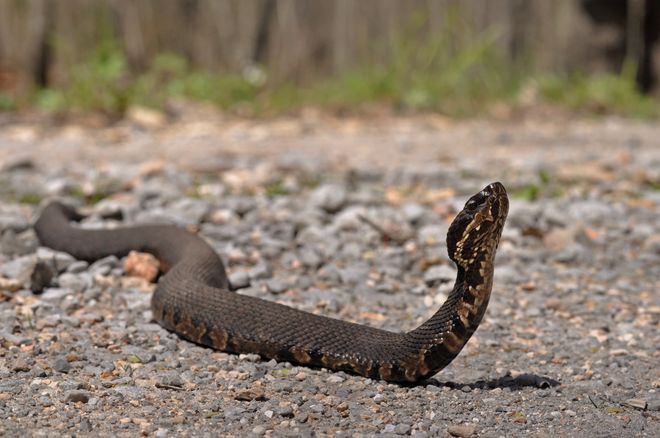
Cottonmouth snake crossing the road (not associated with the event). (Image Credit: Mike Wilhelm/Shutterstock)
Known as Snake Road, this roughly 2.5-mile stretch of Forest Road 345 closes to vehicles as reptiles and amphibians move between seasonal habitats. According to the Union County Illinois Chamber of Commerce, the closures help protect thousands of animals making the trip. For visitors on foot, it’s a chance to watch a movement that happens much closer to the ground than the familiar autumn flights overhead.
2. Understanding How mRNA Vaccines Break Down in the Body May One Day Help Fight Cancer
The emergence of mRNA vaccines has been an important contribution to modern medicine, and their further refinement has the potential to transform therapeutics even beyond infectious diseases. First widely introduced as the new COVID-19 vaccines during the pandemic, mRNA vaccines are now being tested globally as potential cancer treatments that train a patient’s immune system to directly target cancer cells.
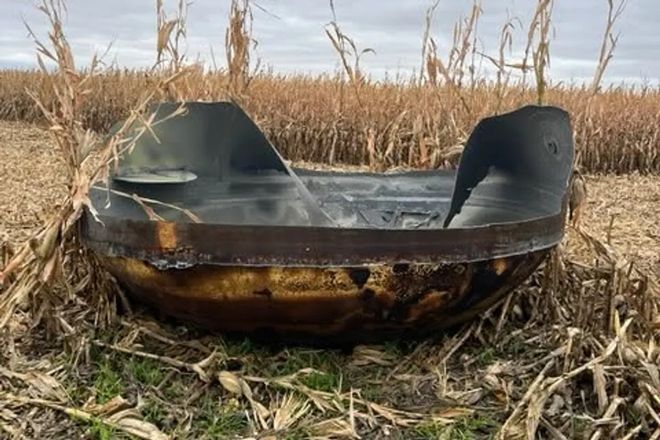
3. A Minnesota Farmer’s Fall Harvest Came With a Surprise — an 11-Foot Object That Likely Fell From Space
A large, metallic object, about 11 feet in diameter, presumably a space object, was present in the cornfield in Minnesota.
(Image Courtesy of Stevens County Minnesota Sheriff's Office)
Harvesting corn usually means collecting items grown on Earth. For one Minnesota farmer, it meant encountering something that may have taken a much longer route into the field. Deputies called to investigate found an object approximately 11 feet across — a very unexpected addition to the fall harvest.
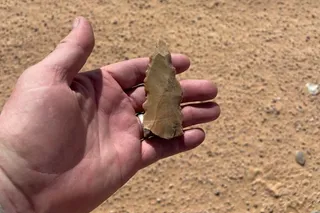
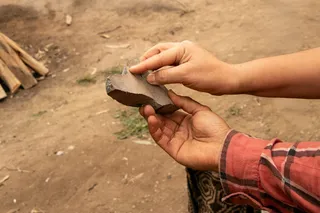
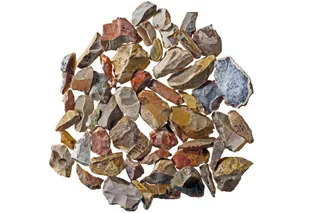
4. 13,800-Year-Old Alaskan Base Camp Reveals Rare Diamond-Shaped Stone Tools and Other Ancient Artifacts
For roughly 23,000 years, the Bering Land Bridge served as a gateway between the east and west. Countless humans and animals used the passage, now sunken under the waters of the Bering Strait, to travel between Asia and North America. Now, archaeologists digging in interior Alaska have found numerous clues about the peoples who lived there.
5. Flesh-Eating New World Screwworm Found in Texas Wildlife During Current U.S. Outbreak
On June 3, 2026, the U.S. confirmed its first case of the current New World screwworm outbreak, according to the Centers for Disease Control and Prevention (CDC). Officials in Texas reported screwworm larvae in a 3-week-old calf.
Since then, the United States Department of Agriculture (USDA) has worked to slow the parasite's spread. Despite their efforts, New World screwworms have now been detected in U.S. wildlife.
6. Two Magma Reservoirs Beneath Nicaragua's Masaya Volcano May Reveal Source of Strange Ground Movements
At Masaya volcano, just southeast of Nicaragua’s capital city of Managua, two distinct magma sources have been stirring for years. Although the volcano hasn’t produced a major lava flow since 1772, it’s still very much active today; along with landslides and emissions of sulfur dioxide volcanic gas, Masaya has experienced ground deformation that points to a complex magma system.
Stephanie Edwards is the Engagement Specialist at Discover Magazine, who manages all social media platforms and writes digital articles that focus on archaeology, the environment, and public health.View Full Profile
Jenny Lehmann is an Associate Editor at Discover Magazine who writes articles on microbiology, psychology, neurology, and zoology, and oversees the Piece of Mind column of the print issue.View Full Profile
RJ Mackenzie is a freelance science reporter based in Glasgow, Scotland. He covers biological and biomedical science, and has bylines in National Geographic, Popular Science, Nature, and The Scientist.View Full Profile
Monica Cull is a Digital Editor/Writer for Discover Magazine who writes and edits articles focusing on animal sciences, ancient humans, national parks, and health trends. View Full Profile
Jack Knudson is an Associate Editor for Discover Magazine who writes articles on space, ancient humans, animals, and sustainability, and manages the Planet Earth column for print.View Full Profile











 Explore All Options