The Universe May Be a Hologram, a Strange "Cold Blob" in the Atlantic, and a Rare Lyme Bacterium Found in New York
Discover the top stories from June 6 to June 12, 2026, that you may have missed, including whether or not the universe could be a hologram and a rare Lyme bacterium found in New York.
Paul M. Sutter is a theoretical cosmologist, NASA advisor, host of the "Ask a Spaceman" podcast, and a U.S. Cultural Ambassador. He is the author of "Your Place in the Universe" and "How to Die in Space."
Monica Cull is a Digital Editor/Writer for Discover Magazine who writes and edits articles focusing on animal sciences, ancient humans, national parks, and health trends.
Jenny Lehmann is an Associate Editor at Discover Magazine who writes articles on microbiology, psychology, neurology, and zoology, and oversees the Piece of Mind column of the print issue.
Missed some of our top stories from the week? Check out our round-up below, covering the biggest science news and stories that matter.
For this week's stories, from June 6 to June 12, 2026, you'll learn about a strange physics theory that claims the universe is a hologram, how a cold blob in the Atlantic may signal danger for ocean currents, and a rare and possibly more severe Lyme bacterium.
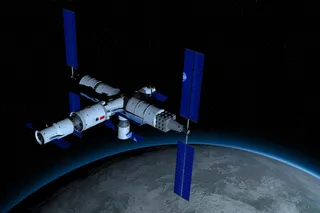
1. Black Holes May Hint at the Universe Being a Hologram — but Is It True?
Could the universe be a hologram? (Image Credit: Anton Vierietin/Shutterstock)
When a black hole absorbs information, it’s the surface area that expands, not the volume, which is technically the definition of a hologram. Some physicists think the rest of the universe may work the same way, with our entire three-dimensional world encoded on a two-dimensional surface somewhere far away.
2. A Strange “Cold Blob” in the Atlantic May Signal a Weakening Ocean Current Beneath the Surface
Look at a map of global temperature change since the 19th century, and one thing stands out — almost everywhere, the colors run warm. Except for one patch of ocean south of Greenland and Iceland, which has been cooling while much of the world around it heats up.
A new study points to the cooling being driven mainly by weakening ocean circulation, not by heat escaping through the sea surface, as some researchers had proposed.
3. Rare, Possibly More Severe Lyme Bacterium Found in New York Ticks for the First Time
In late June 2025, a Herkimer County resident fell ill with symptoms consistent with a tick-borne infection. When the test results came back, they showed something that had never been detected in New York before: Borrelia mayonii, a bacterial cause of Lyme disease previously identified only in Minnesota and Wisconsin.
4. A Buried Ontario Runestone May Be North America’s Longest Runic Inscription — and the Only Known One to Preserve the Lord’s Prayer
Overhead view of the Wawa Runestone (Image Courtesy of Ryan Primrose)
In 2017, a wind-thrown tree on a property near Wawa, Ontario, uprooted and exposed a section of bedrock. Avelino Pablo Cruz, an agricultural crew supervisor working nearby, took a break and noticed strange markings carved into the newly exposed rock. He reported them to the landowner. It would be years before anyone understood what he had found.
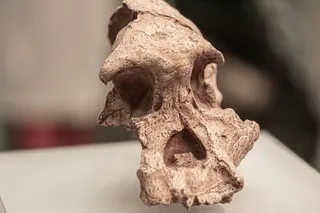
5. Lunar Meteorite Reveals Clues to 3.5-Billion-Year-Old Impacts that Struck Multiple Worlds
Earth’s formative years — a few billion years ago — saw the rise of the atmosphere, the filling of the oceans, and the beginnings of life. However, due to natural events such as subduction, burial, and erosion, much of the geological evidence from that time has been lost.
By using moon samples and ancient meteorites, researchers may have uncovered new evidence of a large asteroid impact that may have shaped Earth and everything that followed.
6. Even Light Drinking Linked to an Increased Risk of Several Types of Cancer — What You Need to Know
A recent study offers one of the most comprehensive looks yet at alcohol's effects on health. The analysis examined how alcohol consumption is connected to 20 common health outcomes.
The findings suggest that alcohol does not affect every disease in the same way. While risks rise consistently, particularly for cancers, the picture is more nuanced for certain heart, metabolic, and neurological disorders. However, once alcohol consumption reaches higher levels, risks increase across all outcomes observed.
Paul M. Sutter is a theoretical cosmologist, NASA advisor, host of the "Ask a Spaceman" podcast, and a U.S. Cultural Ambassador. He is the author of "Your Place in the Universe" and "How to Die in Space."View Full Profile
Anastasia Scott is an Assistant Editor at Discover Magazine. Her work focuses on bringing clarity and creativity to scientific ideas. View Full Profile
Monica Cull is a Digital Editor/Writer for Discover Magazine who writes and edits articles focusing on animal sciences, ancient humans, national parks, and health trends. View Full Profile
Jenny Lehmann is an Associate Editor at Discover Magazine who writes articles on microbiology, psychology, neurology, and zoology, and oversees the Piece of Mind column of the print issue.View Full Profile









 Explore All Options