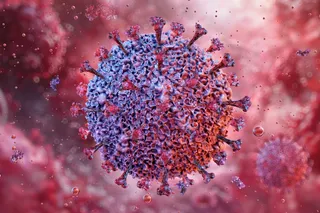


Someone coughs in a waiting room, gathers their belongings, and leaves. Two hours later, the measles virus they released can still infect someone arriving for their appointment. With this virus, people do not even have to cross paths to share an infection.
That ability to linger helps explain why measles has the dangerous potential to turn into an epidemic. As U.S. measles cases climb, doctors are also confronting a particularly vulnerable group of patients — babies whose exposure begins before birth.
Why U.S. Measles Cases Are Rising
By Sept. 17, 2026, the United States had recorded 3,471 confirmed measles cases, according to the CDC. That is roughly 52 percent more than the 2,289 cases reported throughout 2025, with months remaining in the year.
Thirty-nine new outbreaks have been reported this year, and 95 percent of cases were linked to outbreaks, including those that began in 2025. Children and teenagers ages 5 to 19 represented the largest share of cases, at 44 percent.
Widespread vaccination helped eliminate measles in the U.S. in 2000, ending sustained local transmission. However, the virus continued circulating elsewhere across the globe.
Now, declining vaccination coverage is weakening that protection. National kindergarten coverage for the measles, mumps, and rubella (MMR) vaccine remains below the 95 percent target, with deeper gaps in some communities. Increasing measles activity abroad also creates more opportunities for infected travelers to bring the virus home.

 Explore All Options
Read More: Vaccine Schedule Changes May Contradict Decades of Research — Here's What To Know
Why Congenital Measles Threatens Newborns
For babies, exposure can happen before their first breath. Congenital measles occurs when an infection passes from a pregnant person to their baby before birth.
The American Academy of Pediatrics (AAP) recently issued guidance to help clinicians recognize and manage these infections. It estimates that 25 to 30 percent of babies born to someone infected shortly before delivery may become infected, although research remains limited.
And the danger is not always obvious. Some newborns develop fever, rash, or jaundice, while others initially show no symptoms. Serious complications can develop quickly, including multi-organ failure, while neurological consequences may emerge later. A missing rash does not necessarily mean a baby is in the clear.
Prevention also requires planning because MMR is a live-virus vaccine and cannot be administered during pregnancy. Unvaccinated pregnant people exposed to measles are advised by the AAP to promptly contact their healthcare team about immune globulin, which can provide protection after exposure.
Could Measles Become Endemic Again?
Larger epidemics are one concern. Another is endemic transmission, when measles keeps circulating rather than arriving in outbreaks that eventually stop.
A 2025 modeling study published in JAMA explored that possibility using vaccination data from 2004 through 2023. Under its baseline scenario, measles became endemic again in 83 percent of simulations, with an estimated 851,300 infections over 25 years.
A 10 percent relative decline in MMR vaccination pushed that projected total to 11.1 million. A 5 percent relative increase reduced it to approximately 5,800 and prevented a return to endemic transmission.
These are conditional projections, not a countdown or a prediction based on September 2026 case totals. But the results still show how strongly the outcome depends on vaccination coverage.
Two MMR doses are about 97 percent effective against measles, according to the CDC. Keeping vaccinations up to date also helps shield people who cannot receive the vaccine, including pregnant women and newborns.
This article is not offering medical advice and should be used for informational purposes only.
Read More: Measles, Polio, and Other Vaccine-Preventable Diseases Are Re-emerging — Here's What To Know
Article Sources
Our writers at Discovermagazine.com use peer-reviewed studies and high-quality sources for our articles, and our editors review for scientific accuracy and editorial standards. Review the sources used below for this article:
- This article references information from the CDC: Measles Cases and Outbreaks
- This article references information from the CDC: How Measles Spreads
- This article references information from The American Academy of Pediatrics: AAP addresses questions about congenital measles prevention, evaluation, management
- This article references information from a study published in JAMA: Modeling Reemergence of Vaccine-Eliminated Infectious Diseases Under Declining Vaccination in the US