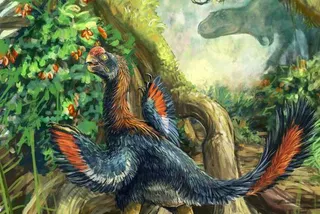
Why would an eagle as heavy as 33 pounds be closely related to one that weighs about 2 pounds? For Haast’s eagle, an extinct giant of New Zealand, DNA gave an answer that surprised the people who tested it.
New Zealand once had an eagle that could be likened to the giant eagles that soar in Lord of the Rings. Haast’s eagle was the top predator in pre-human New Zealand, had a wingspan of about 10 feet, and hunted moa, flightless birds weighing up to 440 pounds.
Canterbury Museum calls it the world’s largest eagle, and according to a 2005 study in PLoS Biology, it was 30 to 40 percent heavier than the biggest eagle alive today, the harpy eagle, and near the weight limit for a bird that can still fly.
Michael Bunce, who did the DNA work, expected the bird to be kin to Australia’s large wedge-tailed eagle. Instead, the study tied it to a much smaller Australian bird, the little eagle.
“The DNA results were so radical that at first we questioned their authenticity," Bunce said in a press release. His finding raised another question, which was how an eagle could grow so big so quickly.
How Did the Haast Eagle Grow So Big So Fast?
According to the 2005 authors, the bird became nearly 10 times heavier than its small relatives once the two family lines split.

 Explore All Options
A 2019 study in Molecular Phylogenetics and Evolution put the split at less than 2.5 million years ago, and according to Canterbury Museum, the small ancestor likely arrived from Australia during the Ice Age period, when glaciers probably cleared dense forest.
New Zealand then had no land mammals except for three kinds of bats, so about 250 bird species dominated the ecosystem.
“The size of available prey and the absence of predators are, we think, the key factors driving the size increase,” said Richard Holdaway, a paleobiologist on the research team, in the press release.
The museum calls this island gigantism, in which isolated animals grow much larger than their mainland relatives, and like Eyles’ harrier, a hawk more than three times larger than New Zealand’s swamp harriers, is another example.
Why Did the Skeleton Point to the Wrong Cousin?
An earlier skeleton study had placed Haast’s eagle beside the wedge-tailed eagle, which weighs about 10 pounds. The 2005 authors note that body size often shifts on islands and may distort the skeletal features scientists use to judge kinship.
To check the DNA, the team compared two Haast’s eagle bones with 16 living eagles and sent one bone to University College London for independent testing, where the results matched.
The 2019 team pointed to the same close relatives, the little eagle and the Eurasian booted eagle, using DNA from a shoulder bone in the museum’s collection.
What Was Haast’s Eagle Like?
Damage to moa skeletons shows the eagle attacked from the side, seized the pelvis in one foot, and delivered the fatal blow to the head or neck with the other, according to the press release.
Its claws could pierce and crush bone up to about a quarter inch thick under about 2 inches of skin and flesh.
It was the only animal able to hunt the larger moa species, and with no mammal predators in New Zealand, competition did not limit how large the eagle could evolve to be.
Rock-shelter drawings on the South Island suggest Māori knew of the bird, according to the museum, and the 2005 paper found no evidence that it hunted people.
The eagle died out after humans arrived about 700 years ago, and the museum suggests such island giants could not compete with people for the large birds they preferred to hunt.
Read More: Elusive Baby Giant Armadillo Caught on Camera, a Rare Sighting in the Peruvian Rainforest
Article Sources
Our writers at Discovermagazine.com use peer-reviewed studies and high-quality sources for our articles, and our editors review for scientific accuracy and editorial standards. Review the sources used below for this article:
- This article references information from a study published in PLoS Biology: Ancient DNA Provides New Insights into the Evolutionary History of New Zealand's Extinct Giant Eagle
- This article references information from a study published in Molecular Phylogenetics and Evolution: Mitogenomic evidence of close relationships between New Zealand’s extinct giant raptors and small-sized Australian sister-taxa
- This article references information from the Canterbury Museum: Decoding the DNA of New Zealand's extinct giant eagle