

Right now, a faraway region of the universe is pulling the Milky Way and neighboring galaxies toward it. We’re technically moving at blistering speeds of around 1.3 million miles per hour in its direction, but we can’t feel this movement at all. The mysterious area that’s drawing us in, called the Great Attractor, has intrigued scientists for years.
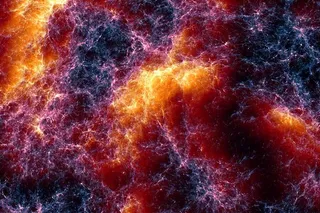
The Great Attractor is a concentration of mass at the heart of the Laniakea supercluster, a massive structure encompassing the Milky Way and some 100,000 other galaxies. Its influence on multiple galaxy clusters spanning hundreds of millions of light-years plays an important role in the broader discussion on universal expansion.
Even though being forcefully dragged toward the Great Attractor sounds like a recipe for our gradual demise, it isn’t as menacing as it sounds. Find out why this region has such a strong grip on galaxies, and what this means for research on the universe’s mysteries.
The First Signs of the Great Attractor
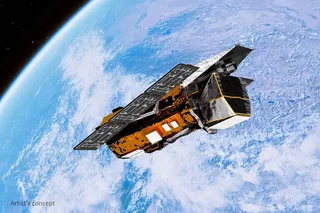
To understand the Great Attractor and its gravitational influence, it’s important to first know about the cosmic microwave background (CMB); this refers to the faint radiation leftover from the Big Bang that fills all space in the observable universe. Scientists study the CMB to access a snapshot of the cooling and expanding universe just 380,000 years after the Big Bang.

 Explore All Options
The CMB generally serves as a sign that the universe is homogeneous and isotropic on a large scale — homogeneous meaning that the universe looks the same at every point, and isotropic meaning that the universe looks the same in all directions.
But taking a closer look at the CMB, not everything is completely uniform. Strewn throughout the radiation are subtle temperature fluctuations, collectively referred to as the CMB’s anisotropy.
This is where the Great Attractor comes in. In the 1970s, researchers noticed a significant anomaly that had materialized in a dipole pattern: The space ahead of Earth appeared hotter, while the space trailing behind appeared colder, according to the University of Southern California. Scientists have since determined that this is likely not an intrinsic effect of the Big Bang, but an illusion caused by the Solar System speeding through space.
Regardless, one thing became clear: the Solar System — and our whole galaxy — was being pulled by some unknown force.
Read More: How Many Stars Are in The Milky Way? More Than You Can Imagine
A Gravitational Hierarchy
A group of astrophysicists known as the “Seven Samurai" discovered the force pulling the Milky Way in 1986. While studying the distances and velocities of over 400 elliptical galaxies, these scientists found that the galaxies were moving toward a region they promptly named the Great Attractor, located somewhere between 150 and 250 million light-years from Earth.
One way to envision the Great Attractor’s influence is to look at it as a hierarchy. The Local Group of galaxies, which includes the Milky Way, is at the bottom rung, being pulled toward the Virgo cluster. These two are both being pulled toward the larger Virgo Supercluster, which itself is being pulled toward the Laniakea Supercluster.
All this pulling comes from a central gravitational point in the Laniakea supercluster, which is attracting the aforementioned galaxy clusters due to its immense mass.
It might be hard to believe, but this isn’t even the end of the hierarchy. Scientists believe that the Laniakea supercluster is pulled by the Shapley supercluster, an even larger collection of galaxy clusters with a center that’s about 650 million light-years from Earth. In short, not even the puller is immune from being pulled.
Is the Great Attractor a Threat?
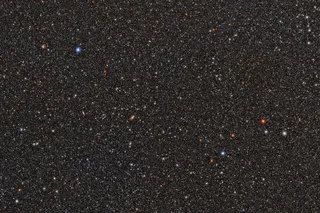
We don’t have a full picture of the Great Attractor since it lies behind the Zone of Avoidance, an area obscured by the dust and stars of the Milky Way.
There are still lingering questions about the Great Attractor, such as how its gravitational pull works. Scientists have also wondered how it fits into discussions of universal expansion, as the motion of galaxy clusters at this local scale contrasts with the homogeneous and isotropic properties expected of the universe as a whole.
So what is the endgame for the Great Attractor? Will the Milky Way end up in its clutches? Surprisingly, our galaxy will likley never end up arriving at the Great Attractor. That’s because the Laniakea supercluster isn’t gravitationally bound. In other words, due to continuous universe expansion — possibly driven by dark energy — the cluster will continue drifting away.
While the Great Attractor will continue to haul the Milky Way along for billions of years, at some point, its gravitational influence will have waned so much that it won’t pull us any longer. So despite its enigmatic qualities, it’s safe to say that it won’t ever pose any danger to us.
Read More: We May Finally Understand Where the Universe’s Missing Matter Has Been Hiding
Article Sources
Our writers at Discovermagazine.com use peer-reviewed studies and high-quality sources for our articles, and our editors review for scientific accuracy and editorial standards. Review the sources used below for this article:
- This article references information from The University of Southern California Dornsife: Cosmologists find way to verify if the universe is hotter at one end than the other