Around 40,000 basalt columns crowd the shoreline of County Antrim, their flat tops and straight edges giving the Giant’s Causeway an almost built appearance. They formed when thick lava cooled, contracted, and cracked around 60 million years ago.
The volcanic period behind the landmark was thought to have lasted more than 13 million years. New dating, published in Geology, has cut that span to roughly 5.5 million years, placing Northern Ireland’s eruptions between about 61.6 million and 55.9 million years ago.
That shorter window connects the Giant’s Causeway to volcanic activity that reached from Ireland and Scotland to Greenland as the North Atlantic began to open.
“Our research shows that this activity was far more concentrated, with geological processes acting much faster than previously thought,” said Mark Cooper, chief geologist at the Geological Survey of Northern Ireland, in a press release.
Why the Giant’s Causeway Did Not Fit the Old Timeline
Earlier dates made Northern Ireland look out of step with the rest of the North Atlantic. Its first eruptions appeared to predate major activity elsewhere. At the same time, other dates suggested molten rock continued to move beneath the region long after the main North Atlantic volcanic pulse and the opening of the ocean around 56 million years ago.

 Explore All Options
If these eruptions belonged to the same event, geologists expected the dates to line up more closely. The mismatch also shaped debate over whether the activity came from hot material rising beneath the early North Atlantic or from local stretching as Greenland and Europe pulled apart.
Northern Ireland’s apparently separate timeline favored the second explanation. The revised dates bring the region back into line with volcanic activity elsewhere.
Read More: After a Massive Eruption, This Underwater Volcano Removed Methane from the Atmosphere
Airborne Maps and Zircon Dating Narrowed the Timeline
Researchers from the Geological Survey of Northern Ireland and the British Geological Survey combined airborne magnetic maps with dating of volcanic rocks.
The surveys showed long bands of hardened magma that were difficult to trace from the ground. Many were dikes, formed when magma entered cracks below the surface and cooled. The order in which these features crossed one another helped researchers reconstruct the sequence of events.
They then dated zircon crystals from selected rocks. Zircon preserves a chemical record of when molten rock cooled, allowing geologists to calculate its age.
Slieve Gullion, a volcanic complex in County Armagh, was about 4 million years older than previously estimated, while the Scrabo Sill, a sheet of hardened magma in County Down, moved from around 50 million to 61.3 million years old.
Those changes removed the dates that had stretched Northern Ireland’s volcanic history across more than 13 million years.
Northern Ireland Shared Greenland’s Volcanic Pulse
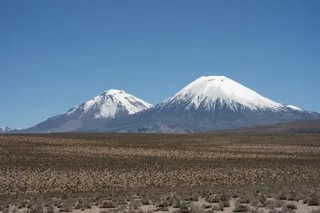
The new timeline places the region within the North Atlantic Igneous Province, an area of volcanic rock created as Greenland and Europe separated.
Northern Ireland’s first major lava flows now appear to have begun around the same time as eruptions in Scotland. Its final activity ended near the point when the separating continents gave way to newly forming ocean floor about 56 million years ago.
The timing supports the idea that repeated surges of hot material beneath the North Atlantic fueled eruptions across the region. This source is considered an early version of the deep heat system that still feeds Iceland’s volcanoes.
The final eruptions also occurred near the Paleocene-Eocene Thermal Maximum, when global temperatures rose. The study does not show that Northern Ireland’s volcanoes caused that warming, but the improved dates may help researchers examine the relationship.
The Giant’s Causeway remains an unusual sight along the County Antrim coast, but its volcanic history no longer stands apart. The new dates connect its formation to the same concentrated period of eruptions that affected Ireland, Scotland, and Greenland.
Read More: For Over 100,000 Years, a Hidden Magma Reservoir Grew Beneath Greece’s “Extinct” Methana Volcano
Article Sources
Our writers at Discovermagazine.com use peer-reviewed studies and high-quality sources for our articles, and our editors review for scientific accuracy and editorial standards. Review the sources used below for this article:
- This article references information from a study published in Geology: Feeling the pulse? Paleogene chronostratigraphy of Northern Ireland and the north of Ireland temporally coupled to the North Atlantic Igneous Province