Somewhere among more than 60,000 bone fragments from a cave in southwestern China, Qiaomei Fu and her colleagues were looking for pieces of our ancient human relatives. Four teeth had already turned up during excavation. Finding more remains meant picking them out from thousands of broken animal bones.
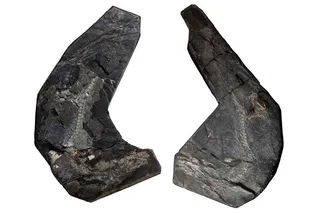
Their search uncovered about 1.7 inches (4.5 centimeters) of someone’s forearm, the first confirmed bone of its kind from a Denisovan, one of our extinct human relatives who lived across Asia. Enough of the bone survived near the elbow for the team to study how the arm worked.
The bone is part of a radius, one of the two long bones in the forearm. Fu, a professor at the Chinese Academy of Sciences, led the team that identified it and four other fossils as Denisovan from Bianfu Cave in Yunnan Province. The study appears in Nature.
Until now, the only confirmed Denisovan bones from below the skull were a finger bone and a rib. For Fu’s team, the radius offers a chance to investigate how Denisovans used their arms, including how their muscles pulled and their bones handled strain.
Finding Denisovan Bones Among 60,000 Fragments
Testing every fragment would have been expensive, so the team began by looking at their size, thickness, and surface markings. They picked out 22 that might have belonged to humans or our extinct relatives.

 Explore All Options
They then used ZooMS, a technique that examines collagen, a protein that helps hold bone together. Differences in collagen can help identify which animal a bone came from. The results identified two skull fragments and part of a radius as bones from humans or our extinct relatives.
Attempts to recover ancient DNA from those bones didn’t work, but enough protein had survived for a closer look. The team analyzed it alongside proteins from two teeth excavated earlier. All five fossils carried a small change in collagen found in other Denisovan remains. More comparisons of their proteins also grouped them with a previously identified Denisovan.
Proteins in the teeth’s enamel, their hard outer coating, also showed that both teeth came from males.
Read More: Submerged Leg Bones Suggest Denisovans May Have Stood Much Taller Than Other Hominins in Asia
What a Denisovan Forearm Can Tell Us
The radius probably belonged to an adult or someone nearing adulthood. Its surviving elbow end was large, resembling those of Neanderthals. But its overall shape was closer to ours, including a relatively short neck beneath the rounded end that forms part of the elbow joint.
The fragment also preserved part of the raised area where the biceps muscle attaches. This attachment point probably faced the same direction as it did in many later Neanderthals. Its position affects how effectively the muscle pulls on the bone, while the bone’s size and shape influence how it handles physical strain.
The researchers think these features suggest Denisovans used their arms differently from Neanderthals and modern humans. One fragment cannot tell us how strong this person was or which tasks they performed, but it does give the team a starting point.
A Place to Live During an Ice Age
The fossils came from two layers dating to roughly 167,000 to 134,000 years ago, confirming that Denisovans lived in Yunnan. Only Siberia’s Denisova Cave has more known Denisovan remains.
During this cold stretch of the ice age, a milder local climate and plenty of animals to hunt may have made the surrounding plateau a good place to live. The fossils show Denisovans were there at different times, but cannot tell us whether they stayed in between.
Fu and her colleagues hope similar protein analyses will help identify more Denisovan arm and leg bones. Those discoveries could help answer basic questions about how tall these people were and how they moved.
Read More: Ghost DNA in Living Humans Reveals Two Unknown Ancient Human Lineages
Article Sources
Our writers at Discovermagazine.com use peer-reviewed studies and high-quality sources for our articles, and our editors review for scientific accuracy and editorial standards. Review the sources used below for this article:
- This article references information from a study published in Nature: Ancient proteins identify various Denisovan remains from Southwest China