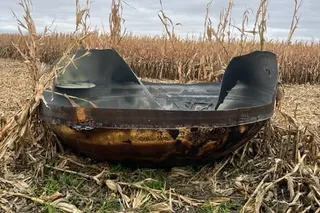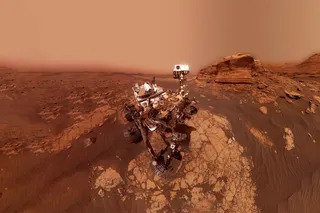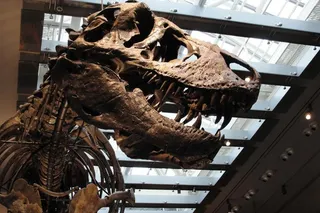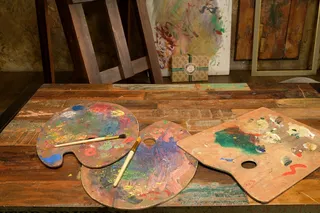


It seems like everything has been sent to space at this point, from paintings to tortillas and even dinosaur bones. This eccentric list of spacefaring odds and ends will also include whisky, but not for astronauts to sip on during missions. Rather, engineers will be studying the liquor while it's in orbit to find out how its chemical profile changes in space.
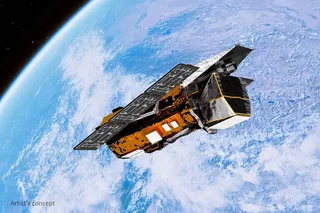
To send whisky into orbit, researchers are designing a spacecraft that will carry 0.3 fluid ounces — just about 2 teaspoons — of the liquid. The small satellite will be launched in 2028 with whisky-making materials, and over five years, the researchers will investigate how distillation works in space. In the process, they hope to gather vital clues on synthesizing chemicals that could potentially be used to make medications for diabetes, cancer, and Alzheimer's disease.
“Whisky gives us a very recognizable, very well-understood model for studying and monitoring biological and chemical processes in microgravity. This project will provide valuable new insights into how fermentation and chemical evolution can be monitored and controlled in space, as well as how ethanol can be made in orbit,” said Gilles Bailet, a researcher at the University of Glasgow who is leading the project, in a statement.

 Explore All Options
Sending Whisky Into Orbit
A collaboration between the University of Glasgow in Scotland and the Kyushu Institute of Technology in Japan is developing the ongoing whisky project. Researchers from both universities will spend three months designing a “CubeSat,” a type of nanosatellite that typically measures around 4x4x4 inches, according to NASA.
The CubeSat is expected to launch into space in 2028 and will remain in orbit for five years with whisky in tow. During this time, an artificial tongue onboard will measure changes in the liquor’s chemical composition. This “tongue,” first unveiled in a 2019 study in Nanoscale, consists of sub-microscopic slices of gold and aluminum arranged in a checkerboard pattern, according to the University of Glasgow.
In the 2019 study, researchers poured samples of whisky over the slices of the two metals, which act as taste buds. They looked for subtle differences in how the metals absorbed light based on which whisky was poured, ultimately finding that the tongue could pick up on differences between drinks with greater than 99 percent accuracy.
Read More: Astronauts Tend to Get Constipated in Space, a Blood Test May Reveal Why
Tasting Terpenes
Whisky production involves numerous steps, including malting of barley, fermentation of cereals, distillation (heating to separate alcohol from water and solids), and maturation. During the maturing stage, the whisky must spend at least 3 years in oak casks in Scotland to become Scotch whisky. It’s thought that the interaction between the spirit and the cask produces a complex mixture containing thousands of chemical compounds, according to a 2016 study in the Journal of the American Society for Mass Spectrometry.
One particular class of compounds called terpenes — which are responsible for the distinct aromas of whiskies and other alcohols — will be "tasted" by the artificial tongue on the CubeSat.
Making Molecules in Space
The researchers behind the current project are also interested in ethanol, the byproduct that’s created during whisky production, when yeasts break down sugars in barley. They hope to explore how ethanol can be extracted in orbit; this may set the foundation for “orbital factories” that could someday harness space conditions to produce molecules that are difficult or impossible to synthesize on Earth.
“Our ultimate aim is that our project could help to scale up chemistry and biomanufacturing in space, where there is a great deal of potential to produce high-value pharmaceuticals and next-generation cancer therapeutics,” said Bailet.
Read More: Aluminum Eggshells Could One Day Help Protect Spacecraft From Dangerous Space Debris
Article Sources
Our writers at Discovermagazine.com use peer-reviewed studies and high-quality sources for our articles, and our editors review for scientific accuracy and editorial standards. Review the sources used below for this article:
- This article references information from NASA: What are SmallSats and CubeSats?
- This article references information from the University of Glasgow: Artificial tongue could have whisky counterfeiting licked
- This article references information from the Journal of the American Society for Mass Spectrometry: Chemical Diversity and Complexity of Scotch Whisky as Revealed by High-Resolution Mass Spectrometry