Mike Turpin had a photograph and a hunch. The image, taken during the hot summer of 1995, showed odd patch marks on the lawns of Temple Newsam, a stately home in Leeds, England. To Turpin and his fellow archaeology enthusiasts, those marks suggested the foundations of a building might still be there, buried beneath the grass.
Months of fieldwork later, members of South Leeds Archaeology uncovered foundations of an outbuilding dating back more than 280 years. Their discovery raised a question about a painting from around 1750. It shows what may be the same building, matching an existing stable block, in a scene previously thought to depict renovations that were only planned. Had the artist painted something that was actually built?
“Our primary project objective from there was to confirm this and, if possible, understand more about the history of the building and how it might relate to the house and other buildings in the park,” Turpin, the group’s chair, said in a press release.
Excavating Temple Newsam’s Lost Building
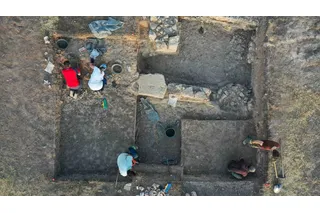
Jim Jackson and Phil Jones led the fieldwork for the group, which meets monthly in nearby Rothwell. Working with fellow members, they dug several trenches and uncovered the suspected building’s foundations.
The team hasn’t determined what the building was used for or how much of it was ever completed. Although the structure in the painting resembles an existing stable block, the excavated remains have yet to settle whether this building served the same purpose.

 Explore All Options
Read More: This 3,000-Year-Old Pottery May Have Been One of History's First Brands
From a Prehistoric Arrowhead to Festival Leftovers

(Image Courtesy of South Leeds Archaeology)
North of the main house, the team also uncovered a lost road or carriageway. Other discoveries were small enough to pick up, including pieces of a fruit bowl from the 1500s and window glass dating to the 1700s. The house’s former kitchens had left animal bones and oyster shells behind.
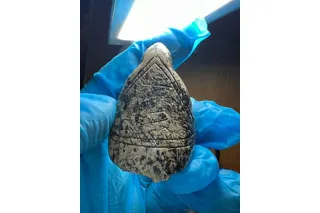
Those household remains belong to only part of the site’s past. An arrowhead found during the excavation could be up to 5,000 years old, potentially predating the house by thousands of years.
And some objects were recent enough that visitors might remember the event they came from. The team recovered leftovers from a music festival held on the grounds in the 1990s.
“Everywhere that we've dug, we've had a few surprises. The grounds of the house have been re-modeled and landscaped many times over history,” Jones said in the press release.
Temple Newsam House has stood for more than 500 years. Lord Darnley, Mary, Queen of Scots' husband, was among its former residents. Today, people come to explore the gardens, walk beside the lake, and visit the rare-breed animals at Home Farm.
During the excavation, some also stopped to find out what the archaeologists were doing.
Plenty of Questions, but No Buried Treasure

Remains of a 16th century fruit bowl held by Phil Jones.
(Image Courtesy of South Leeds Archaeology)
Visitors had their own ideas about what might turn up. According to Jones, the questions they asked most often concerned dinosaur bones, Roman remains, and gold or treasure. The team hadn’t found any of those.
Jones enjoyed talking with people about the work, though, and thought a few might end up joining South Leeds Archaeology. He also credited staff at the house and estate with helping the group feel welcome.
For the archaeologists, the foundations were what they had come looking for. Finding them answered the question raised by the marks in the photograph, while leaving plenty to investigate about the building itself.
Jones hopes the group can return next year. Another season of digging could help them figure out what the building was for and how much of the structure shown in the painting ever stood on the grounds.
Read More: 5,000-Year-Old Tooth Necklace, Stone Axe, and Two Human Skulls Found in a Nearly Overlooked Grave
Article Sources
Our writers at Discovermagazine.com use peer-reviewed studies and high-quality sources for our articles, and our editors review for scientific accuracy and editorial standards. Review the sources used below for this article:
- This article references information from the Leeds City Council: City’s time team dig in to unearth mansion’s hidden history