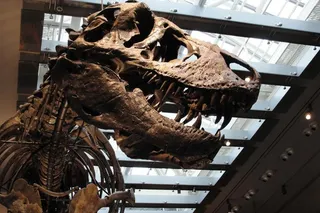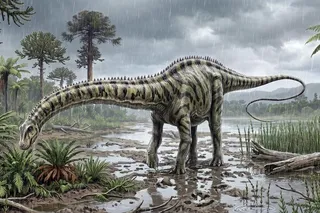


When we think of dinosaurs, we often think of the most enormous creatures. Tyrannosaurus rex dining on enormous plant eaters like Triceratops or the duck-billed Edmontosaurus. And then there’s the plant-eating giants like Diplodocus and Brontosaurus or their even bigger cousins Patagotitan mayorum and Argentinosaurus.
What we think of most when we look back to the Age of Dinosaurs is a world of giants, but that’s mostly because larger creatures are easier to find and their bones are much more likely to survive compared to smaller creatures with tiny, fragile bones. But while smaller animals might be harder to see, that doesn’t mean that they didn’t play an outsized role in their ecosystem.
The Smallest of the Small Were Mammals
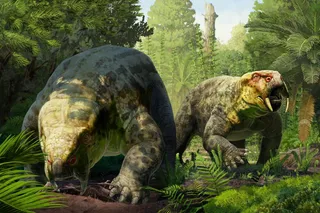
Research in recent years suggests that while dinosaurs may have been small, they weren’t small by today’s standards. In fact, they may have been precluded from inhabiting the smallest ecological niches by the earliest teeny-tiny mammals, according to the American Museum of Natural History. Compared to vertebrates today, the smallest dinosaurs that researchers have found aren’t nearly as tiny.
But that doesn’t mean they weren’t small. We used to think that smaller dinosaurs were less common because they were harder to find, but new techniques are helping change that.

 Explore All Options
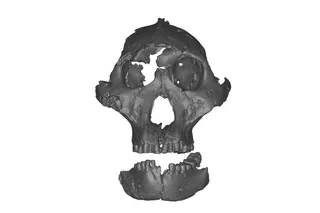
The latest research methods allow paleontologists to look at very small dinosaurs using CT scanning so that the bones never have to be extracted from the rock they inhabit, according to the American Museum of Natural History. This allows researchers to look at the very delicate bones of smaller creatures that used to be off limits.
Read More: The Smallest Dinosaur Ever Was Just 11 Inches Long, and Had Beautiful Tail Feathers
The Smallest Non-Avian Dinosaurs Lived in Trees

Epidexipteryx fossil with insert of UV light on its feathers
(Image Credit: Society of Vertebrate Paleontology)
To preface, the smallest dinosaurs that we know of today still exist because the smallest dinosaur is a bird, and the smallest bird is the bee hummingbird, weighing in at less than an ounce.
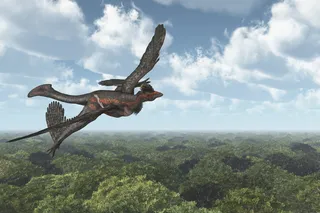
That said, one of the smallest non-avian dinosaurs that’s been discovered thus far was less than a foot long and likely had feathers. The species, called Epidexipteryx, likely lived in modern-day China during the Middle Jurassic Period, according to a study in Nature. These guys had gliding structures, similar to modern flying squirrels or sugar gliders that can move from tree to tree.
“They were at home in the treetops, and if you’re living an arboreal life, there’s only so big you can get," W. Scott Persons, a paleontologist and curator of natural history at the South Carolina State Museum in Columbia, said to Discover.
Of course, there may still be smaller dinosaurs that we just don’t yet know of. By and large, the smallest dinosaurs we have are incomplete, and we can’t know their size for sure.
We’ve also learned that dinosaurs started small. The oldest species that we know of are about the size of a chicken. Nyasasaurus, for example, lived 243 million years ago when the world was made up of one continent known as Pangea, according to a study in Biology Letters.
Additionally, at sites in China like Liaoning Province, volcanic soil has preserved several smaller dinosaurs within a larger ecosystem, according to a study in PNAS.
“It’s given us a true snapshot of the entire prehistoric ecosystem, and under those circumstances we can see that small dinosaurs were actually outnumbering big dinosaurs,” Persons said to Discover.
He adds that this may be true across all periods of the Age of Dinosaurs and throughout dinosaur ecosystems. It also opens us up to the idea that small dinosaurs filled more niches than we initially thought. For example, tiny dinosaurs that burrowed underground and those that were insectivores.
The Evolutionary Benefits of Remaining Small
Today, small creatures make up most of the species in our ecosystem because they are less vulnerable to extinction. In fact, being large can be difficult from an evolutionary perspective over a broader geological timescale because extinction rates among large-bodied groups tend to be higher.
From a modern perspective, larger animals require more space, they eat more, and they’re harder to hide.
“A city park can support an entire population of squirrels, but it’s only good for like one or two elephants, which isn’t a viable population,” Persons said to Discover.
As a result, if your population is smaller in number, bad things can wipe you out. Volcanic eruptions, the degradation of your habitat, or an end to the food source that you previously ate in abundance can spell disaster.
That’s why remaining somewhat small can be a net positive, as it is now. Though again, the smallest of the small and the teeniest of the tiny were likely mammals rather than dinosaurs.
Article Sources
Our writers at Discovermagazine.com use peer-reviewed studies and high-quality sources for our articles, and our editors review for scientific accuracy and editorial standards. Review the sources used below for this article:
- This article references information from the American Museum of Natural History: New Study Asks: “Where Are the Tiny Dinosaurs?”
- This article references information from the American Museum of Natural History: Where are All the Tiny Dinosaurs?
- This article references information from a study published in Nature: A bizarre Jurassic maniraptoran from China with elongate ribbon-like feathers
- This article references information from a study published in Biology Letters: The oldest dinosaur? A Middle Triassic dinosauriform from Tanzania
- This article references information from a study published in PNAS: Extremely rapid, yet noncatastrophic, preservation of the flattened-feathered and 3D dinosaurs of the Early Cretaceous of China