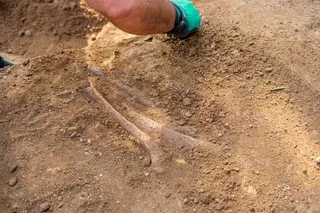
In 1934, workers digging trenches for sewer construction in Bad Dürrenberg, Germany, made a surprising discovery: a human skeleton adorned with a variety of animal bones and teeth. Experts who visited the site soon after immediately recognized the significance of the finding.
Today, the remains are known as the Bad Dürrenberg shaman, a site that is not only one of the oldest burials in central Germany but also gives a detailed insight into why we believe in her spiritual significance and the lives of hunter-gatherers after the last ice age — all based on the burial objects and an unusual medical condition revealed by her skeleton.
The woman, expected to have died around 9,000 years ago between the ages of 30 and 40, was adorned with rare animal parts and tools that were only reserved for special figures within a community. She was not alone in her grave. Her 6-month-old child was buried alongside her, telling a story of family bonds, prehistoric rituals, sickness, and survival in a changing world.
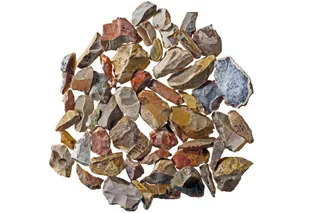
Read more: Stone Age People Traveled Miles To Source Stunning Raw Materials, Like Red Jasper, for Tools
Burial Goods Tell a Detailed Story

Display of the grave goods from Bad Dürrenberg, including the skeletons of the shaman and the infant, dating to approximately 7000 B.C.
(Image Courtesy of LDA Saxony-Anhalt, Juraj Lipták)
Today, the skeletal remains of the Bad Dürrenberg shaman and the extraordinary burial objects that accompanied her are displayed at the State Museum of Prehistory in Halle, Germany. A diversity of animal bones and teeth, such as turtle shells, mussels, a deer skull, and bird and boar bones, was buried alongside her, hinting at an elaborate headpiece and decorative adornments that she may have worn during her lifetime.

 Explore All Options
Based on the variety and amount of artifacts, experts believe she was not just a hunter of the Mesolithic forests that covered the area after temperatures rose around 11,500 years ago, but also an important spiritual practitioner based on ethnographic comparisons from other burial sites.
Another highlight was the discovery of one of the oldest color pencils and remnants of the precious prehistoric red ochre, used for artistic expression in caves and on the skin. But it was not just the objects that were buried with her that link her to this very special role within prehistoric human communities.
Skeletal Clues Reveal Shamanistic Abilities and Cause of Death
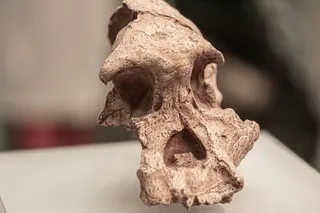
After taking a closer look at her skeleton, researchers found malformed vertebrae close to her skull. This anomaly may have made it possible for the woman to induce seizure-like episodes by restricting the blood flow to her brain by tilting her head at a certain angle. This could have manifested as hallucinations, ecstatic eye movements, or unusual tingling sensations, which could be part of shamanistic techniques aiming to connect with the beyond for her community.
The shaman was found in a squatting position, which was a usual method to place the dead in their graves at the time. At her feet, archaeologists recovered the remains of an infant, which later turned out to be her own child or perhaps a distant relative.
So how did they meet their end? Further analysis of the shaman's skull revealed a tooth infection that may have led to a systemic blood infection that could've spread to the child through breast milk, killing both in the process.
Researchers Are Still Discovering More
After the initial recovery of the remains and burial objects in the 1930s, experts had a feeling that this first excavation was not extensive enough. After returning to the site in 2019, archaeologists expanded the search and found undisturbed sections of the grave that still held important clues of the past.
One of the most exciting new discoveries was rare traces of feathers that surprisingly didn't decay over thousands of years. Further analysis identified them as goose feathers, located around where the woman's head was, solidifying evidence that feathers were part of her elaborate headpiece.
This research project around the Bad Dürrenberg shaman is still ongoing. The newest insights are part of the current exhibition at the State Museum of Prehistory, which opened in the spring of 2026, to help us understand rituals and life in the prehistoric past.
In the meantime, the mysterious shaman rests in a room covered in illustrations of shady oak forests, accompanied by a variety of flying birds guiding her spirit into the afterlife.
Read more: Grave Goods Reveal Beliefs About the Afterlife
Article Sources
Our writers at Discovermagazine.com use peer-reviewed studies and high-quality sources for our articles, and our editors review for scientific accuracy and editorial standards. Review the sources used below for this article:
- This article references information from the State Museum of Prehistory: Human succession: The Shaman from Bad Dürrenberg
- This article references information from the book Feathers in Mesolithic burials