

Down syndrome affects roughly 5,775 U.S. births each year, making it the most common chromosomal condition in the country, according to the Centers for Disease Control and Prevention (CDC).
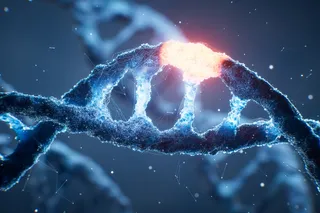
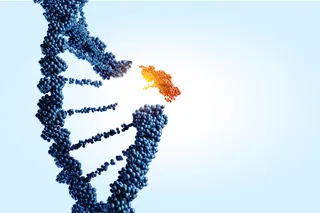
In the 1950s, scientists determined its cause, discovering the condition develops when there is an additional copy of chromosome 21. Now, decades later, researchers are investigating the potential of gene-editing technology CRISPR, which modifies the genome by removing genes and inserting new ones, a little like a pair of molecular scissors.
Two proof-of-concept studies have been published in the last two years — one that shows it may be possible to remove the extra chromosome in human trisomy 21 cells without harming the remaining cells, and one that uses the X-chromosome inactivation gene (XIST) to silence the third copy of chromosome 21.
While research is very much in its early stages, these studies may one day pave the way for medical interventions that could benefit those with Down syndrome, who are at a higher risk of experiencing cardiovascular disease and developing Alzheimer’s, according to the American Heart Association and the National Institute on Aging.
Using CRISPR to Remove The Third Chromosome
Researchers based at Mie University in Japan have shown it is possible to remove an entire chromosome without damaging the two that remain.

 Explore All Options
In a study published in the journal PNAS Nexus, the team described a technique using the CRISPR-Cas9 gene-editing system. First, by picking up subtle genetic cues, it identified which of the three chromosomes were duplicates. Then, with a few cuts, it was able to remove a copy, leaving two chromosomes, one from each parent, intact. By temporarily suppressing biological mechanisms that normally repair DNA, the team prevented the cell from repairing the third chromosome, resulting in higher rates of chromosome elimination.
Experts successfully carried out the procedure in both stem cells and skin cells from people with Down syndrome and showed that it is feasible to take a more targeted (allele-specific) approach that hones in on a single allele. This contrasts with previous strategies that have taken a broader approach, knocking out non-target chromosomes.
The study’s authors say the findings “lay the groundwork for more sophisticated medical interventions,” but they are a proof of concept. There are significant hurdles to overcome, not least eliminating the risk of impacting the remaining chromosomes.
“In conclusion, this study showcases the potential of employing an [allele-specific] CRISPR/Cas9 approach to effectively correct the chromosomal abnormality in human trisomy 21 cells by selectively removing the extra copy of chromosome 21, demonstrating the feasibility and efficacy of this strategy as a therapeutic intervention for [Down syndrome],” the researchers wrote.
Using CRISPR to Silence The Third Chromosome
A second approach, described in a paper published in the journal PNAS, examined how XIST can be used to silence the third chromosome in human trisomy 21 cells. It’s not the first time XIST has been explored in this context, but technical limitations have stymied progress. This new technique uses a modified version of CRISPR-Cas9, which researchers from Beth Israel Deaconess Medical Center and Harvard Medical School reported: “paves a road for therapeutic treatment for DS.”
The approach hinges on the long noncoding RNA XIST, which is naturally expressed in biological females, silencing one of the X chromosomes to prevent people with two X chromosomes from receiving a double dose of X-linked proteins. The technique involves inserting XIST into the third chromosome 21 to silence it. Like the previous study, the research took place in a lab and involved human stem cells. Additional studies are required to prove the safety and efficacy of the approach.
This article is not offering medical advice and should be used for informational purposes only.
Read More: How a CRISPR Gene Therapy Could Change Life for Young Children With Sickle Cell Disease
Article Sources
Our writers at Discovermagazine.com use peer-reviewed studies and high-quality sources for our articles, and our editors review for scientific accuracy and editorial standards. Review the sources used below for this article:
- This article references information from a study published in PNAS Nexus: Trisomic rescue via allele-specific multiple chromosome cleavage using CRISPR-Cas9 in trisomy 21 cells
- This article references information from a study published in PNAS: A modified CRISPR/Cas9 approach in silencing the triplication in Down syndrome: A treatment path XISTs
- This article references information from the CDC: Down syndrome
- This article references information from the American Heart Association: Cardiovascular Complications of Down Syndrome: Scoping Review and Expert Consensus
- This article references information from the National Institute on Aging: Alzheimer's Disease in People With Down Syndrome