

All life, from the smallest algae to the largest animal, depends on fundamental processes involving the transfer of energy from one form to another. Photosynthesis, for example, involves the conversion of light energy to chemical energy, while respiration converts glucose to an energy-carrying molecule called adenosine triphosphate (ATP). Without these processes, life as we know it simply couldn’t exist.
To understand how energy is being converted from one form to another, you have to zoom in to the molecular level, where you might catch the movement of both negatively charged electrons and positively charged protons from one atom to another — a process known as a proton-coupled electron transfer (PCET) reaction.
The coupling of electrons and protons forms an incredibly efficient system because it doesn’t affect the atom's overall charge. But it is also extraordinarily quick, meaning it’s very tricky to observe. Now, researchers writing in Nature Communications have, for the first time, taken snapshots of the changes that occur to both the molecule and the surrounding water.
“We were able to watch, on extremely fast timescales — picoseconds, or trillionths of a second — what happens when a specific atomic site in a molecule receives a proton. Specifically, we could see how charge flows toward this site and how its interactions with the surrounding water molecules change in response,” Elisa Biasin, Principal Investigator at the Pacific Northwest National Laboratory (PNNL), told Discover.

 Explore All Options
“Until now, it has been difficult to directly observe how these different components evolve together.”
Read More: Want to Understand How Lithium-Ion Batteries Work? Play a Game of 'Jenga'
Taking “Snapshots” of PCET
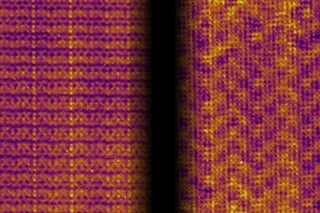
So, how did they do it? The team used a ruthenium-based molecule that absorbs light and captures protons from its surroundings under acidic conditions. Then, using several ultrafast X-ray techniques, including element-specific X-ray absorption spectroscopy and time-resolved X-ray scattering, the researchers monitored how electrons move between molecular sites and how atoms in the surrounding water rearrange during a PCET reaction.
Biasin compares X-ray scattering to taking a series of snapshots with a camera — “except that our “camera” uses extremely short X-ray pulses, and the images are reconstructed from changes in the X-ray scattering signal.”
“By measuring how the X-ray scattering signal changes after triggering the reaction with light, we can determine how the distribution and arrangement of the surrounding water molecules evolve as the reaction takes place,” said Biasin.
The team’s experimental research was combined with simulations and theoretical calculations, which provided the researchers with the tools and information needed to interpret the X-ray signals and connect those signals to specific changes that had taken place in both the molecule and its surroundings.
The relationship works both ways, co-author Christopher Larsen, Senior Lecturer at the School of Chemical Sciences at the University of Auckland, New Zealand, told Discover. “The calculations help us interpret the experimental observations, while the experimental measurements provide stringent tests of the molecular models.”
“The agreement between the two gives us confidence that the molecular processes identified in the simulations and calculations are responsible for the dynamics we observe experimentally,” Larsen added.
Studying the Reaction
Biasin describes the reaction as a crowd of people reacting to someone running through its center.
“The initial photoexcitation is very fast — it is like one person suddenly changing position,” Biasin explained. “The surrounding people then respond and rearrange themselves, but they do not all move simultaneously. Some changes happen almost immediately, while others take much longer.”
In PCET, the researchers noticed that the redistribution of electrons occurs extremely quickly, but the movement of protons and the rearrangement of the water surrounding the molecule take longer.
“The important point is that the molecule and its environment are constantly responding to one another,” said Biasin.
PCET and Battery Design
While the research was primarily fundamental — that is, knowledge for knowledge’s sake — there may be practical implications, particularly in the field of energy conservation and energy storage.
Deepening understanding of what is happening on the molecular level could one day help engineers improve the efficiency and design of flow batteries, fuel cells, and catalysts.
Read More: 3 Battery Innovations That Will Energize Our Future
Article Sources
Our writers at Discovermagazine.com use peer-reviewed studies and high-quality sources for our articles, and our editors review for scientific accuracy and editorial standards. Review the sources used below for this article:
- This article references information from a study published in Nature Communications: Electronic and solvent reorganization inproton-coupled electron transfer captured by ultrafast X-rays