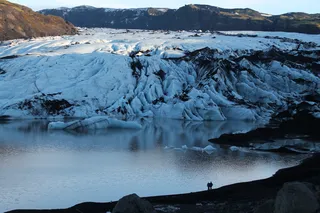
Climate scientists agree that human-caused global warming is shrinking Arctic sea ice. But changes in specific regions can fluctuate with the seasons, and local environmental conditions also influence changes in ice thickness.
In line with this, a small region of the Greenland Sea east of Iceland has actually been gaining sea ice over the past few winters. While these findings don’t dispute the catastrophic warming effects that are changing polar ecosystems, they raise interesting questions about what factors can alter sea ice levels in unexpected ways.
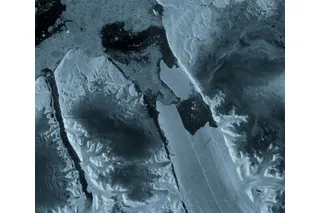
The sea ice patch in question is called the Odden ice tongue. The mass, particularly prominent in the 1980s and 1990s, extends from Greenland toward a smaller island, the Norwegian territory of Jan Mayen. But by the late 2010s, satellite images of the Greenland Sea in the area showed that the sea didn’t freeze over at all throughout winter. But during the 2023 and 2024 winters, the tongue partially reappeared, freezing the sea again.
Read More: Manhattan-Sized Iceberg Breaks Off Greenland Glacier, and Two More Could Follow
Analyzing Ice With Satellites
In a new paper, published in the journal Polar Science, researchers said over 20,000 square kilometers (7,700 square miles) of sea was frozen over in January 2024. They measured the ice using data from the European Space Agency’s Sentinel-1 mission, which consists of two orbiting satellites. These satellites take pictures of Earth’s surface using a technique called synthetic aperture radar (SAR). The satellites beam energy pulses at Earth and measure the reflected response. The SAR technique allows clear surface images regardless of light or weather conditions.

 Explore All Options
The scientists behind the new study say no single factor explains the Odden ice tongue’s partial re-emergence, but they point to changes in salt levels in the surrounding water as a possible factor. In the 1970s and 1980s, events called Great Salinity Anomalies caused drastic changes in salt levels in the Greenland Sea. Freshwater from melting Arctic sea ice flowing south reduced the sea's average salt content. Freshwater freezes more easily, so these reductions allowed much larger areas of the sea to freeze over.
An Uncertain Future
Other contributing factors could include short-term colder weather, although this is thought to have had less influence than higher freshwater levels.
It’s unlikely that these changes will herald a return to the Odden’s glory days. Even at its peak, the recent expansion in sea ice did not match the surface coverage noted at the height of the Odden, and later measurements in 2024 suggested the sea ice was returning to the sparse levels noted in recent years.
Nevertheless, continued Arctic sea-ice melt may make the future hard to predict.
“Whether the Odden sea ice tongue will occur more frequently in the future remains uncertain, but continued freshwater input from the Arctic and episodic cold winters could create conditions favorable for Odden formation again,” the authors wrote.
Read More: Whales Once Rare Along East Greenland Now Gather by the Thousands in Feeding Frenzies
Article Sources
Our writers at Discovermagazine.com use peer-reviewed studies and high-quality sources for our articles, and our editors review for scientific accuracy and editorial standards. Review the sources used below for this article:
- This article references information from a study published in Polar Science: Monitoring changes in sea-ice extent near West Jan Mayen Ridge in the Greenland Sea using Sentinel-1 SAR remote sensing data