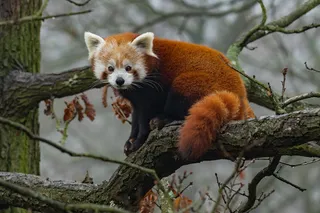
A red panda cub born this summer in Virginia could soon share a name with Dolly Parton. Her caretakers at the Smithsonian’s conservation campus in Virginia have chosen three possible names, and now the public gets a say in which one she’ll grow up with.
Born June 11, 2026, to 3-year-old Keahi and 7-year-old Rocket at the Smithsonian Conservation Biology Institute in Front Royal, the female was one of three red panda cubs born at the campus this summer. Her caretakers describe her as having “bold and feisty behavior,” a personality voters can consider as they choose among Dolly, Pyra, and Dolpa.
Read More: Newest Baby Snow Leopard at the Bronx Zoo Pounces and Crouches as She Stalks Her Mother
How to Pick a Name for the Smithsonian Red Panda Cub
Dolly honors country singer Dolly Parton, while Pyra means “heat” in Greek, as the zoo’s ballot explains. Dolpa takes its name from a region of Nepal where red pandas live in the wild.
Voters can select their favorite name and submit their choice through the zoo’s online poll.
About two weeks before her arrival, 3-year-old Sequoia gave birth to a male and a female on May 29, fathered by 12-year-old Mow Mow.
To help the mothers stay comfortable as summer warmed up, staff brought the pandas inside where they could control the temperature. They also gave the mothers nesting boxes above ground level and used cameras to follow the families’ progress without repeatedly approaching them.

 Explore All Options
Why Every Red Panda Cub Counts
Red pandas are endangered, with habitat loss, human disturbance, and poaching threatening their survival in the wild. Maintaining breeding populations in human care provides a safeguard against extinction and gives researchers opportunities to learn more about the animals’ biology.
Successfully raising cubs can be difficult, however, and the families’ previous litters had different outcomes. Last year, Keahi and Rocket had a daughter named Kuna, while neither of Sequoia and Mow Mow’s two cubs survived.
“Having both dams being relatively inexperienced moms, we knew going into it there could be challenges,” said Jessica Kordell, assistant curator of carnivores, in the zoo’s August birth announcement.
This summer marked the second litter for each pair, although both males had previously fathered cubs with other females. The mothers take responsibility for raising the young, as male red pandas do not provide care for their offspring.
What Comes Next for the Cubs
Red panda cubs generally stay with their mothers for about a year, reaching full size around that time. In the wild, their mothers prepare sheltered nests in places such as tree hollows and hollow stumps, lining them with moss, leaves, and other soft material.
As the cubs grow, they develop into capable climbers, using their long tails for balance and flexible ankles to go down trunks headfirst. Their mountain forests also supply bamboo, which makes up about 95 percent of their diet, so losing those forests means losing both shelter and their main food source.
The Smithsonian’s cubs and their families will remain at Front Royal, which is closed to the public. While voters can help choose the youngest cub’s name online, anyone hoping to see a red panda can visit adult female Asa on the National Zoo’s Asia Trail in Washington, D.C.
Read More: New Baby Colobus Monkey at Lincoln Park Zoo has a Bright Pink Face and Stark White Fur
Article Sources
Our writers at Discovermagazine.com use peer-reviewed studies and high-quality sources for our articles, and our editors review for scientific accuracy and editorial standards. Review the sources used below for this article:
- This article references information from the Smithsonian's National Zoo & Conservation Biology Institute: Three Adorable Red Panda Cubs Born This Summer at the Zoo’s Front Royal Campus
- This article references information from the Smithsonian's National Zoo & Conservation Biology Institute: What Should We Name Our Red Panda Cub?
- This article references information from the Smithsonian's National Zoo & Conservation Biology Institute: Red Panda