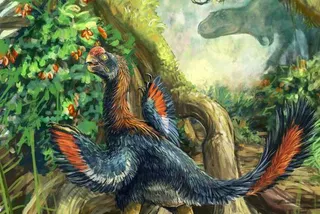
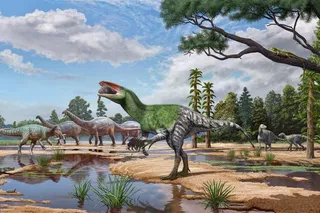
The Cretaceous–Paleogene extinction event, which wiped out all non-flying dinosaurs 66 million years ago, reset the world’s ecological balance. It kickstarted a new “Age of Mammals,” which we are still living in today. Fossil analysis has helped paleontologists understand how mammals came to fill the huge ecological gap left by the demise of the dinosaurs.
New research has examined ancient teeth to map how mammal populations evolved following a mass extinction event millions of years ago. The study showed that mammals prioritized size over shape or function during this period.
The new research was published in the journal eLife.
Read More: Tiny Fossil Teeth in Colorado Expand the Range of the Earliest Known Primate
Fossils From 10 Million Years After The Cretaceous–Paleogene Extinction
While fossil analysis helps researchers understand life after the Cretaceous–Paleogene extinction event, the fossil record from the first 10 million years after the event is not evenly distributed across the Earth.
“Most known fossil sites worldwide are found in North America, while only 3 percent are in Asia and most of those contain species that are not found elsewhere. As far as we know, previous analyses of recovery dynamics following the end-Cretaceous Period have not included samples from Asia,” said Jack Tseng, an integrative biologist at the University of California, Berkeley, and co-author of the new study, in a statement.

 Explore All Options
In response, the team assembled the largest dataset of fossil samples from Asian placental mammals from the Paleocene epoch. covering roughly the first 10 million years after the Cretaceous–Paleogene extinction event.
Analyzing Ancient Teeth
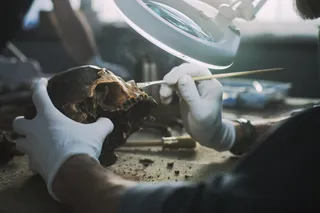
The sample database included 200 teeth taken from 48 ancient mammal specimens. The samples were all found at three fossil-rich sites in present-day south China. The species included were from three groups: the Pantodonta (large, plant-eating mammals), Arctostylopidae (thickset, plant-eating and omnivorous mammals), and Anagaloidea (a mammal group resembling modern-day rodents).
Teeth fossils are particularly useful because they can tell us both about the animals they came from and the flora and fauna they ate.
“The fact that teeth interact directly with the environment through biting and chewing behaviors makes them crucial in helping us identify potential links between their structure and ecological context,” said Qian Li, a paleontologist at the Chinese Academy of Sciences in Beijing and co-author of the new study in the statement.
The team used advanced 3D modeling techniques to study the function and shape of the fossil teeth. The results showed that these mammals had relatively large, unspecialized teeth. Over the next several million years, the tooth fossils became more variable as the mammals evolved to eat more specialized foodstuffs.
This order of adaptation, with size prioritized before function or shape, mimics a similar “brawn before bite” pattern seen in the jaws of ancient European and North American mammals.
While these findings mainly tell us about the evolution of herbivorous mammals, they are still important steps towards filling in a significant gap in the fossil record that could have implications for ecologists today, said Tseng.
“We hope the insights will be useful for developing predictive models and conservation strategies aimed at understanding how modern animals could respond to biodiversity crises in future,” Tseng concluded.
Read More: Fossil Skull From a Museum Drawer Reveals Obscure Saber-Toothed Cat Species With Knife-like Teeth
Article Sources
Our writers at Discovermagazine.com use peer-reviewed studies and high-quality sources for our articles, and our editors review for scientific accuracy and editorial standards. Review the sources used below for this article:
- This article references information from a study published in eLife: Brawn before bite in endemic Asian eutherian mammals after the end-Cretaceous extinction