Rare Antelope Species Spotted, Strange Particle Behavior, Cannibalistic Single-Celled Organism, and an Anti-Aging Drug's Strange Side Effect
Discover the top stories from May 31 to June 5, 2026, that you may have missed, including a rare antelope species believed to be locally extinct and strange particle behavior that could rewrite physics.
Monica Cull is a Digital Editor/Writer for Discover Magazine who writes and edits articles focusing on animal sciences, ancient humans, national parks, and health trends.
Stephanie Edwards is the Engagement Specialist at Discover Magazine, who manages all social media platforms and writes digital articles that focus on archaeology, the environment, and public health.
Jenny Lehmann is an Associate Editor at Discover Magazine who writes articles on microbiology, psychology, neurology, and zoology, and oversees the Piece of Mind column of the print issue.
Jack Knudson is an Associate Editor for Discover Magazine who writes articles on space, ancient humans, animals, and sustainability, and manages the Planet Earth column for print.
Missed some of our top stories from the week? Check out our round-up below, covering the biggest science news and stories that matter.
For this week's stories, from May 31 to June 5, 2026, you'll learn about the reemergence of a rare antelope species in Kenya, how an anti-aging drug combo vanished parts of mice's brains, and a single-celled organism that cannibalizes its own relatives.
1. A Rare Antelope Species Was Just Spotted in
Mountain bongo and baby at the Chester Zoo(Image Courtesy of the Chester Zoo)
Kenya, Years After Being Thought Locally Extinct
In the past few decades, the wild mountain bongo — an antelope found in Kenya — has seen its population dwindle to small, fragmented areas, including in the mountains of Aberdare National Park. That is, until trail cam photos captured something incredible: bongos in a fragment of the Maasai Mau forest about 125 miles (about 200 kilometers) away.
2. Strange Particle Behavior at CERN Could Challenge 50-Year-Old Physics Theory
For the last half century, particle physics has been dominated by a framework known as the Standard Model. But now, strange particle behavior detected by scientists working at CERN’s Large Hadron Collider (LHC) could undermine the theory and hint at new physics.
This is due to a group of subatomic particles called B mesons, specifically the way they decay. According to the researchers, the decay of B mesons observed at the LHC does not accord with the predictions of the Standard Model as we currently understand it.
3. A Popular Anti-Aging Drug Combo Triggers Severe Brain Damage in Mice
One of the drug combinations widely studied for its potential to slow aging may come with an alarming downside. New research suggests the pairing of dasatinib and quercetin — commonly known as D+Q — can strip away protective insulation in the brain and even cause part of a critical brain structure to disappear in mice.
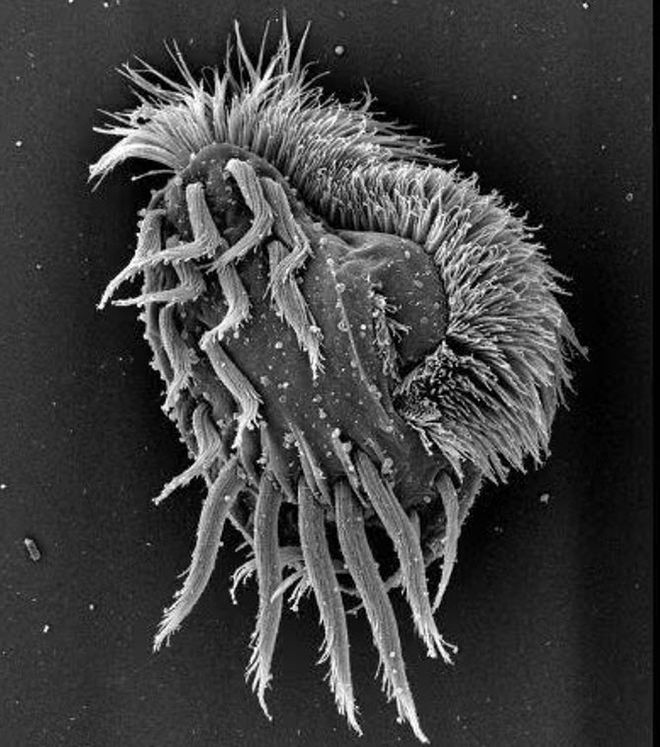
Euplotes gigatrox cell.(Image Courtesy of Samuel J. Lord and Ben T. Larson)
Cannibalistic Predator, Swallowing Its Own Relatives Whole
Single-celled organisms aren't usually thought of as dramatic. With no organs, nervous systems, or complex bodies, they often seem like the simplest forms of life imaginable.
But a newly discovered microbe from the Caribbean island of Curaçao is challenging that assumption in spectacular fashion. Researchers from the Rensselaer Polytechnic Institute (RPI) have identified a species that can transform into a giant cannibalistic version of itself, abandoning its usual diet to stalk, capture, and devour its own relatives.
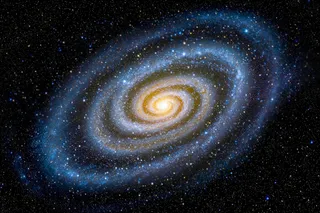
5. The Great Attractor Is Drawing the Milky Way at 1.3 Million Miles per Hour — What Does It Mean for Our Galaxy?
Right now, a faraway region of the universe is pulling the Milky Way and neighboring galaxies toward it. We’re technically moving at blistering speeds of around 1.3 million miles per hour in its direction, but we can’t feel this movement at all. The mysterious area that’s drawing us in, called the Great Attractor, has intrigued scientists for years.
6. GLP-1 Weight Loss Drugs May Increase Brain Connectivity — and Faster Than Expected
Preliminary research investigating the impact of GLP-1 receptor antagonists on the brains of adolescent girls diagnosed with Polyendocrine Metabolic Ovarian Syndrome (formerly PCOS, now PMOS) suggests that the drugs increase brain connections related to the hypothalamus and salience network. And it does so remarkably quickly.
Monica Cull is a Digital Editor/Writer for Discover Magazine who writes and edits articles focusing on animal sciences, ancient humans, national parks, and health trends. View Full Profile
Rosie McCall is a London-based freelance writer who frequently contributes to Discover Magazine, specializing in science, health, and the environment.View Full Profile
Stephanie Edwards is the Engagement Specialist at Discover Magazine, who manages all social media platforms and writes digital articles that focus on archaeology, the environment, and public health.View Full Profile
Jenny Lehmann is an Associate Editor at Discover Magazine who writes articles on microbiology, psychology, neurology, and zoology, and oversees the Piece of Mind column of the print issue.View Full Profile
Jack Knudson is an Associate Editor for Discover Magazine who writes articles on space, ancient humans, animals, and sustainability, and manages the Planet Earth column for print.View Full Profile












 Explore All Options