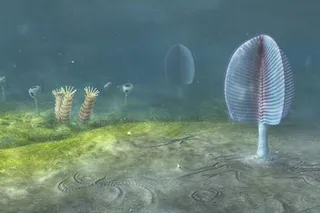
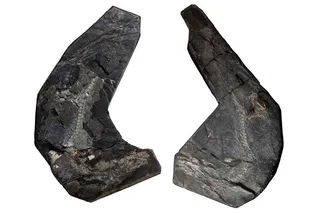
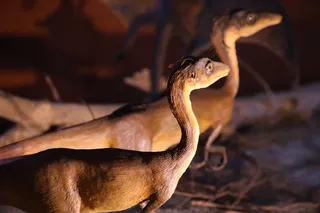
Around 252 million years ago, life on Earth came close to collapse. Global temperatures surged, carbon dioxide levels rose sharply, and ecosystems broke down so severely that up to 81 percent of marine species and 89 percent of land vertebrates disappeared. Forests died off, leaving much of the planet stripped of vegetation. But one group of plants didn’t just survive, but took over.
New research led by the University of Leeds finds that primitive plants called lycophytes made it through this period and spread across the landscape that was left behind. The study, published in Nature Ecology and Evolution, shows these plants likely used a different strategy by taking in carbon dioxide at night instead of during the day.
“Our results suggest that under future warming, plants with CAM photosynthesis traits could become far more important,” said lead author Zhen Xu in a press release. “If the world experiences sustained extreme heat, plant communities may shift toward species that are better able to tolerate high temperatures and water stress.”
Extreme Heat After the Permian–Triassic Mass Extinction
The extinction event, often called the “Great Dying,” was followed by a prolonged stretch of extreme heat. For roughly five million years, carbon dioxide levels remained high, climbing to more than four times modern levels, pushing temperatures past what most plants can survive.

 Explore All Options

Lycophytes.
(Image Courtesy of Dr Zhen Xu)
Under these conditions, many plants could no longer function as they normally would. Water loss became harder to control, and the process that powers photosynthesis began to fail.
Fossil records show dense forests gave way to low, sparse plant cover dominated by small, fast-growing species that could tolerate heat and drought.
Read More: How Index Fossils Help Reconstruct Earth's Ancient and Mysterious Past
How Plants Survived With Nighttime Photosynthesis
To piece this together, researchers combined fossil evidence, climate modeling, and chemical data preserved in ancient plant remains.
Carbon isotope signatures, which show how plants processed carbon, showed that lycophytes behaved differently from other plants of the time. Their signatures closely match those of modern plants that use CAM photosynthesis, a way of taking in carbon dioxide at night to conserve water.
Instead of following the usual daytime cycle, these plants likely stored carbon dioxide and used it later, reducing water loss and avoiding heat stress.
Climate simulations back this up, as many fossil sites were located in regions where average daily temperatures exceeded 104 degrees Fahrenheit (40 degrees Celsius), with peaks reaching as high as 149 degrees Fahrenheit (65 degrees Celsius). These are the kinds of conditions these plants could handle.
"The analysis pulled together many separate scientific disciplines to test how this group of enigmatic plants not only survived the great dying but also how they were able to thrive in a highly stressed environment,” said co-author Barry Lomax in the press release.
How Lycophytes Took Over After the Mass Extinction
As other plants disappeared, lycophytes quickly spread across continents, becoming what scientists call “disaster taxa,” species that quickly take hold after environmental collapse.

Lycophytes.
(Image Courtesy of Dr Zhen Xu)
These smaller, less productive plants likely removed less carbon from the atmosphere than the forests they replaced, and cycled fewer nutrients through ecosystems, shaping how the planet recovered over millions of years.
“Understanding how plants’ diverse physiological strategies shaped ecosystems in the past helps us to anticipate how vegetation might reorganize in the future, and because plants are the base of terrestrial food webs, changes in dominant plant strategies can alter the functioning of the entire Earth system,” added co-author Benjamin Mills.
What followed wasn’t a return to earlier ecosystems, but a shift to something new, shaped by plants built for extreme conditions. If temperatures continue to rise, similar shifts may not stay in the past.
Read More: Animals of the Cambrian Period Experienced a Great Evolutionary Surge, Shaping Life Today
Article Sources
Our writers at Discovermagazine.com use peer-reviewed studies and high-quality sources for our articles, and our editors review for scientific accuracy and editorial standards. Review the sources used below for this article:
- This article references information from a study published in Nature Ecology and Evolution: CAM photosynthesis may have conferred an advantage during the Permian–Triassic mass extinction event