Octopuses Hitching Rides on Dolphins, the Largest Viking Silver Hoard Discovered, and Daily Sugary Drinks Could Raise Stomach Cancer Risk
Discover the top stories from Sept. 5 to Sept. 11, 2026, including photos of an octopus riding a dolphin and how a daily sugary drink could increase your stomach cancer risk.
Jenny Lehmann is an Associate Editor at Discover Magazine who writes articles on microbiology, psychology, neurology, and zoology, and oversees the Piece of Mind column of the print issue.
RJ Mackenzie is a freelance science reporter based in Glasgow, Scotland. He covers biological and biomedical science, and has bylines in National Geographic, Popular Science, Nature, and The Scientist.
Stephanie Edwards is the Engagement Specialist at Discover Magazine, who manages all social media platforms and writes digital articles that focus on archaeology, the environment, and public health.
Missed some of our top stories from the week? Check out our round-up below, covering the biggest science news and stories that matter.
This week's stories, from Sept. 5 to Sept. 11, 2026, include how an octopus boom in England is causing odd behavior, a recent experiment that may help us solve one of physics biggest questions, how breaking up long sitting sessions may be important to reduce cancer risk, a gardener who discovered the largest Viking silver hoard in Denmark, how Scotty the T. rex may have healed a broken bone, and the possible link between daily sugary drinks and stomach cancer.
1. Octopus Clinging to a Risso’s Dolphin May Offer Clues to Southwest England’s Remarkable Octopus Boom
Octopus seen riding on the back of a Risso's dolphin (Image Courtesy of Bill Coulson)
Bill Coulson was taking photos off Berry Head, Devon, when he captured something unexpected across a Risso’s dolphin’s back. A common octopus (Octopus vulgaris) was clinging to its dorsal fin like a passenger who forgot to get off. The encounter came amid the largest surge in octopus numbers recorded off southwest England in at least 75 years, an event researchers call a bloom.
2. Einstein's Equivalence Principle Passes a Quantum Test
How quantum mechanics fits with Einstein’s theory of general relativity remains one of the biggest unanswered questions in physics today. While the former explains the behavior of quarks, photons, and other quantum particles, the latter describes gravity as the warping of space-time. Both theories are widely accepted by the scientific community. However, they appear incompatible.
3. How You Sit Matters, and Breaking Up Long Sessions May Lower Cancer Death Risk
A large health record database showed that uninterrupted sedentary behavior was linked to a 9 percent higher risk of cancer death, while substituting one hour of sedentary behavior with light physical activity lowered the risk.
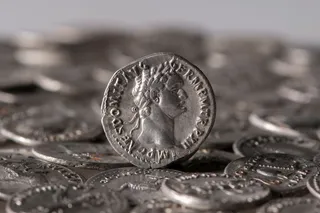
4. Gardener Uncovers the Largest Viking Silver Hoard in Danish History, Containing 700 Pieces and Weighing Over 40 Pounds
A silver hoard was recently found in Denmark. (Image Courtesy of Nordjyske Museer)
A gardener in Northern Denmark was spending the afternoon digging in their garden when they came upon something that would change their life. The gardener had unearthed over 40 pounds of Viking silver.
The 700-piece hoard, including jewelry, coins, and silver bars, is the largest collection of Viking silver ever unearthed in Denmark, and is three times bigger than the previous record haul.
5. 66-Million-Year-Old Mineralized Blood Vessels Reveal How the Largest Known T. rex Began Healing a Broken Rib
Jerit Mitchell was an undergraduate when he showed his supervisors an odd structure in a scan of a dinosaur rib. He hadn’t given it much thought, he later recalled, but they suggested he might have found preserved blood vessels.
The rib belonged to Scotty, the largest Tyrannosaurus rex skeleton ever discovered. Inside the 66-million-year-old bone was a mineralized network of blood vessels that grew around the break as Scotty’s rib began to heal.
6. People Who Drink Sugary Beverages Every Day May Have More Than Double the Risk of Developing Stomach Cancer
New research suggests that people who regularly consumed sugar-sweetened beverages had a higher risk of developing stomach cancer. The finding may be especially relevant in the U.S., where roughly 65 percent of adults report drinking at least one sugar-sweetened beverage each day.
Anastasia Scott is an Assistant Editor at Discover Magazine. Her work focuses on bringing clarity and creativity to scientific ideas. View Full Profile
Rosie McCall is a London-based freelance writer who frequently contributes to Discover Magazine, specializing in science, health, and the environment.View Full Profile
Jenny Lehmann is an Associate Editor at Discover Magazine who writes articles on microbiology, psychology, neurology, and zoology, and oversees the Piece of Mind column of the print issue.View Full Profile
RJ Mackenzie is a freelance science reporter based in Glasgow, Scotland. He covers biological and biomedical science, and has bylines in National Geographic, Popular Science, Nature, and The Scientist.View Full Profile
Stephanie Edwards is the Engagement Specialist at Discover Magazine, who manages all social media platforms and writes digital articles that focus on archaeology, the environment, and public health.View Full Profile











 Explore All Options