

A bird launches from a branch to take flight, and the whole maneuver is over before you have much time to appreciate it. For paleontologists, though, that everyday departure presents a puzzle stretching back millions of years: How did dinosaurs acquire the equipment to take to the air, and did their different lineages follow the same evolutionary route?
A small skeleton from northeastern China adds another twist to that story. Discovered by a local farmer and donated to the Museum of Hebei GEO University in 2023, the feathered fossil is now helping researchers investigate how flight-related anatomy evolved.
The findings, published in Nature Communications, suggest that similar anatomical features did not necessarily come together in the same sequence. Evolution, it seems, had more than one way of assembling the pieces.
Meet Norellraptor, a Newly Discovered Feathered Dinosaur
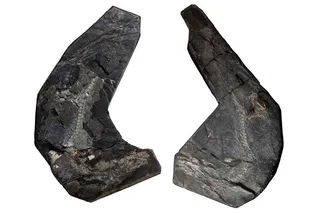
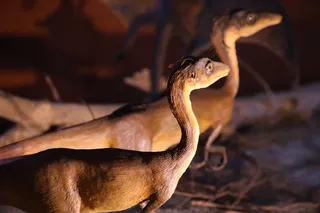
Named Norellraptor barsboldi, the species comes from the Lower Cretaceous Jiufotang Formation in Liaoning, China. Its exceptionally preserved fossil includes a complete skeleton measuring about 22 inches long, along with portions of its plumage. Growth marks in a forearm bone, together with evidence that earlier bone tissue had been lost, led the team to estimate that it was at least three years old when it died.
It belonged to the microraptorines, a group of small, feathered predatory dinosaurs closely related to birds. Its name honors paleontologists Mark Norell and Rinchen Barsbold for their contributions to understanding bird-like dinosaurs.

 Explore All Options
Microraptorines are important to the story of flight as some microraptorine fossils preserve long feathers extending from both the front and back limbs — an arrangement that suggests different adaptations for aerial movement.
Read More: 240-Million-Year-Old Fossil Turns Out to Be a New Species That Could Rewrite Dinosaur Evolution
How Dinosaur Flight Features Evolved in Different Lineages
The researchers identified a collection of flight-related anatomical features in Norellraptor and compared their findings across an evolutionary tree. That allowed them to examine which characteristics different lineages shared and the sequence in which those characteristics appeared.
In microraptorines, certain finger bones shortened before some wrist and hand bones fused and the breastbone became relatively longer. However, the bird lineage acquired those wrist and breastbone changes before the finger shortening.
The early hand changes may have reduced microraptorines’ ancestral ability to grasp. Their different timing gives researchers a concrete reason to question whether the two groups followed the same route toward flight.
The results challenge the idea that microraptorines and birds inherited a single ancestral flight apparatus. They also question whether a shared developmental process steered both groups through the same evolutionary steps.
What the Fossil Reveals About the Origins of Flight
The authors suggest that different selective pressures probably shaped flight-related features in each lineage. Similar anatomical solutions may therefore have emerged under different evolutionary demands.
That conclusion supports the possibility that flight-related adaptations developed independently within Paraves, the broader group that includes birds and microraptorines. Preliminary bone-growth comparisons also hint at developmental differences from living birds, although more specimens are needed to test that hypothesis.
For now, this little skeleton shows us that the history of flight may look less like a single runway and more like several paths toward the sky.
Read More: First-Ever Adult T. rex Trackway Shows the Dinosaur Took 13-Foot Strides
Article Sources
Our writers at Discovermagazine.com use peer-reviewed studies and high-quality sources for our articles, and our editors review for scientific accuracy and editorial standards. Review the sources used below for this article:
- This article references information from a study published in Nature Communications: Independent assembly of the flight apparatus in a non-avian dinosaur clade