After defeating the Macedonians in battle, the Romans took apart the school where Aristotle is thought to have taught a young Alexander the Great. At some point, fire tore through what was left; however, beneath the rubble, some floors lasted, including mosaics in two halls built for banquets.
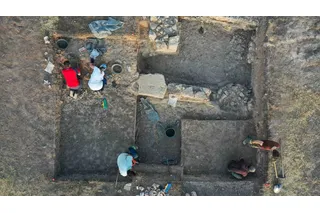
This year (2026), archaeologists discovered the halls at ancient Mieza, near the modern town of Naousa in northern Greece, within the part of the complex used for teaching. They share a central entry room, and the whole suite covers more than 1,700 square feet, about the size of a small house.
Each hall was fitted for 10 couches, so each could host a dinner for at least 20, and the raised bases the couches rested on are still in place. The floors are so finely made that the ministry likens them to those in the Macedonian royal palace at Aigai.
Greek officials said the find makes it more likely that this is the school, built in the mid-300s B.C.E., where Aristotle taught Alexander.
“This is an excavation that must continue and will continue, as the important new archaeological findings shed light on the form, architecture, and functions of the Gymnasium," Greek culture minister Lina Mendoni said in a translated press release. "For Alexander and his partners, Mieza was the place of initiation and preparation for leadership.”

 Explore All Options
What Archaeologists Found at the Royal Gymnasium of Mieza
Archaeologist Angeliki Kottaridi, an honorary superintendent of antiquities, has led the dig since 2024 in partnership with the town of Naousa, and the excavation spans about 7 acres so far. The ministry ranks the gymnasium among the most significant monuments of ancient Macedonia. Built during the reign of Alexander's father, Philip II, it was made on a grand scale to train both body and mind.
Excavators have found parts of a wrestling ground and a stadium, colonnaded walkways, a water supply system, and a running track under a roof, nearly two football fields long. This season's digging centered on the complex's east end, home to the classrooms and their stone benches.
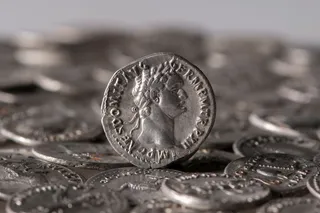
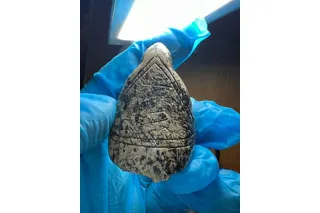
Smaller finds include coins, pottery, and four styluses. Styluses were the pens of their day, pointed tools for writing in wax, according to the Metropolitan Museum of Art.
In ancient Greece, aristocratic banquets like the ones held in those two mosaic-floored halls were called symposia, and guests spent them drinking wine, reciting poetry, and debating philosophy and politics, according to Encyclopedia Britannica. If you've seen a Greek painting with men lounging on couches, cups of wine in hand, you've seen a symposium.
Was Aristotle Really Here?
Philip II summoned Aristotle to the royal capital, Pella, in 343 or 342 B.C.E. to tutor Alexander, then 13, according to Encyclopedia Britannica. The ministry is careful about what happened next. It says that, by scholars' reckoning, Mieza is where Aristotle taught Alexander and other royal children, and that the new finds reinforce that identification. The resemblance to Aigai's floors makes a royal link more likely, but it can't show that Aristotle taught there.
What the Romans Left Behind
According to the ministry, the Romans pulled the gymnasium apart after the Second Battle of Pydna. That fight, in 148 B.C.E., ended the reign of Andriscus, who had seized the Macedonian throne, according to Encyclopedia Britannica.
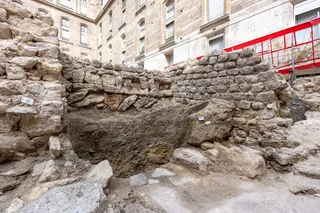
Little of the gymnasium's stonework was left standing. The parts that made it through were the ones that got buried: walls still coated in fine plaster, original floors, and carved stonework such as pieces of an Ionic frieze and columns. One rare find, a corner block from the Doric colonnade around the wrestling ground, should help archaeologists work out what that courtyard looked like.
Whatever lessons were once scratched into wax at Mieza have since vanished, but archaeologists have found four of the styluses that may have been used to write them.
Read More: Hidden Mozart Manuscript Reveals Rare Lesson Notes and Music Never Performed Publicly Before
Article Sources
Our writers at Discovermagazine.com use peer-reviewed studies and high-quality sources for our articles, and our editors review for scientific accuracy and editorial standards. Review the sources used below for this article:
- This article references information from the Hellenic Ministry of Culture: Lina Mendoni: "The major development advantage of Imathia is its cultural reserve, to which the Royal High School is added"
- This article references information from the Met: Wooden Writing Tablets
- This article references information from Encyclopedia Britannica: symposium, Aristotle, and Quintus Caecilius Metellus Macedonicus