Two human relatives shared the same patch of South Africa outside Johannesburg two million years ago. One had oversized molars and serious chewing muscles, and its remains outnumber those of the other at a fossil site called Drimolen. The less common species in the fossil record was Homo erectus, an early member of the lineage thought to have led us. Judging by the bones, our side of the family looked like the one less likely to make it.
The species with the oversized molars was Paranthropus robustus. A new study of fossils from the site includes the first adult Homo erectus found there, a piece of skull the authors think may belong to the species. Until now, the only Homo erectus skull described from Drimolen was a 2- to 4-year-old child's, so the adult is more evidence that the species lived in southern Africa at the time. The rest of the fossils, mostly P. robustus, back the idea that this species was changing over time, with larger teeth and chewing muscles over roughly 200,000 years.
“While we know that Homo erectus and the lineage leading to us was ultimately the successful one, 2 million years ago P. robustus outnumbered Homo erectus at Drimolen by more than 10 to one. During this time period it was our ancestors that looked like the outside long-odds chance to survive,” said lead author Jesse Martin in a press release.

 Explore All Options
An Adult Homo erectus Skull Fragment at Drimolen

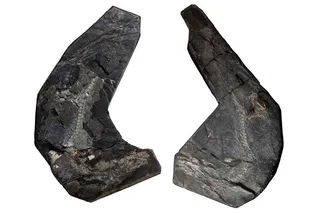
DNH 127 adult H. Erectus cranial fragment with DNH 134 juvenile H. Erectus cranium
(Image Courtesy of Dr. Jesse Martin)
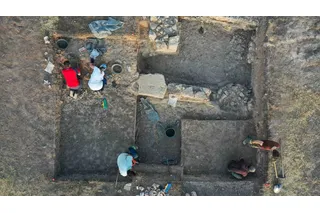
Drimolen has produced more than 100 hominin fossils since 1992. A team led by La Trobe University describes 18 of them in Annals of Human Biology. Fourteen belong to P. robustus and one to Homo erectus. Three could not be assigned to a species, and two had been filed as animal bones until the team found them in 2015 in a primate specimen box and an unsorted bag.
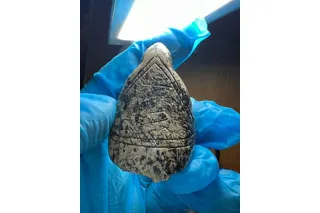
The Homo erectus fossil, DNH 127, is a piece from the right side of a skull. The authors say it looks like Homo erectus because the bump behind the ear is small, unlike Paranthropus, and a seam where two skull bones meet runs straight.
How Paranthropus robustus May Have Changed Over Time

DNH 8 Mandible
(Image Courtesy of Dr. Jesse Martin)
Some researchers had put the differences between Drimolen's P. robustus and those from Swartkrans, where the fossils are up to about 200,000 years younger, down to sex, with mostly females at one site and mostly males at the other. The new fossils, together with two male skulls found in 2018, support the other explanation, that the species changed over time. The team says climate pressures drove the change.
Martin said Homo erectus was growing a bigger brain and smaller molars, possibly linked to eating meat, while P. robustus grew huge molars for tough, hard food.
One very large jaw, DNH 6, is about as big as the largest jaw from Swartkrans, but it came from loose mining rubble, so nobody knows its age. If it is as old as the other Drimolen fossils, it could undercut the idea that the species grew bigger over time.
Why Small Fossil Fragments Matter for Human Evolution
“Hominin fossils are so rare that generally the differences between them are huge, and researchers are left to make educated guesses regarding what existed in the missing parts of the fossil record,” Martin said.
With more Drimolen fossils, researchers can test whether differences between populations come from small evolutionary changes. The authors argue that even small, broken fossils should be published (fragments like these are often neglected), because together they provide enough material to test ideas about evolution.
No complete adult Homo erectus skull has come out of Drimolen, so much about what our ancestors looked like there is still unknown.
Article Sources
Our writers at Discovermagazine.com use peer-reviewed studies and high-quality sources for our articles, and our editors review for scientific accuracy and editorial standards. Review the sources used below for this article:
- This article references information from a study published in Annals of Human Biology: New hominin cranial and mandibular remains from Drimolen Main Quarry, South Africa