

On Oct. 5, 2026, New York Governor Kathy Hochul declared a State Disaster Emergency as measles cases continue to climb across the state.
The decision comes as the U.S. experiences its worst year for measles since 1991. According to the Centers for Disease Control and Prevention (CDC), more than 4,000 cases have been confirmed nationally to date, almost twice the total reported in 2025.
Governor Hochul announced the measures, explaining the decision would help strengthen efforts to tackle the outbreak. It will remain in effect until November 4, 2026.
"No one should get seriously ill or die from a vaccine-preventable disease,” Hochul said in a statement. “That is why I have taken steps to increase the number of health professionals who can vaccinate and test. These emergency measures will protect New Yorkers and support our community partners as they work tirelessly to address the spread of this disease."
James McDonald, New York State Department of Health Commissioner, said he appreciated Governor Hochul’s swift action and explained the department’s staff are working with local health departments and regional partners to monitor the outbreak and contain the disease.
McDonald urged state residents to check their vaccination status and ensure both they and their families are protected.

 Explore All Options
“The measles, mumps, and rubella vaccine is the best protection — protecting nearly all people against disease who receive the recommended doses,” McDonald said in a statement.
Read More: Measles, Polio, and Other Vaccine-Preventable Diseases Are Re-emerging — Here's What To Know
Rising Measles Cases
According to the New York State Department of Health, New York has confirmed more than 100 measles cases since the start of the year. Rural counties have been hit hardest, with Otsego County, Seneca County, and Steuben County showing some of the highest caseloads to date in 2026.
Measles is a highly contagious disease, passed from person to person through respiratory droplets — according to the CDC, it can spread to 90 percent of an infected person’s close contacts who are not immunized
The distinguishing symptom of measles is a rash that initially appears as flat red spots, usually starting on the face before spreading down the neck and to the rest of the body. It can be preceded by fever, cough, runny nose, and red, watery eyes.
In severe cases, measles can require hospitalization and may lead to complications such as pneumonia, miscarriage, brain swelling, and a type of inflammation called subacute sclerosing panencephalitis that can cause lasting brain damage.
In extreme cases, measles can also be fatal. According to the CDC, 3 deaths were reported in 2025. Young people and immunocompromised people are the most vulnerable.
Falling Vaccination Rates
While supporting the order, State Senator Gustavo Rivera linked the rising caseload to falling vaccination rates and highlighted the risk diseases like measles and the flu pose to vulnerable groups.
"The concerning rise in measles cases is due to a decrease in childhood vaccines driven by misinformation and is causing a public health emergency,” Rivera said in a statement.
A single shot is considered 93 percent effective, while a second shot boosts effectiveness to 97 percent.
According to the World Health Organization (WHO), 95 percent of a population must be immune to achieve herd immunity, meaning even those who cannot be vaccinated are protected. According to state data, New York vaccination rates currently stand at 80.9 percent, but this varies significantly from county to county and may be an underestimation.
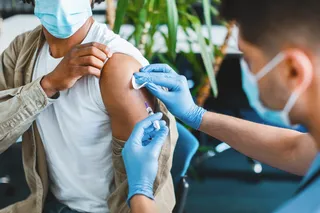
One consequence of the Executive Order will be to expand the number of people eligible to administer vaccines, which will now include paramedics, pharmacists, and midwives. The order will also enable nurses to order testing.
Cases in Other States
In 2000, the U.S. officially eliminated measles, and the country retains its elimination status. However, outbreaks have risen in recent years, and the status will be reviewed in November, according to the WHO.
Forty-two outbreaks have been reported across 47 jurisdictions since January. (As per the CDC, an outbreak is any incident involving three or more related cases.) New York’s neighbor, Pennsylvania, has seen the largest surge, with over 1,100 confirmed cases as of Oct. 11, 2026.
National vaccination coverage has steadily declined in recent years, with 95.2 percent of kindergartners covered in 2019-2020 compared to 92.4 percent in 2025-2026, according to the CDC.
This article is not offering medical advice and should be used for informational purposes only.
Read More: The U.S. May Be Approaching a Measles Crisis, and Some Babies Face Risks Before Birth
Article Sources
Our writers at Discovermagazine.com use peer-reviewed studies and high-quality sources for our articles, and our editors review for scientific accuracy and editorial standards. Review the sources used below for this article:
- This article references information from New York State: No. 65: Declaring a Disaster Emergency in the State of New York Due to an Ongoing Measles Outbreak
- This article references information from the Centers for Disease Control and Prevention: Measles Cases and Outbreaks
- This article references information from New York State: Governor Hochul Declares State Disaster Emergency in Response to Ongoing Measles Outbreak
- This article references information from New York State: Measles Dashboard
- This article references information from the Centers for Disease Control and Prevention: How Measles Spreads
- This article references information from the WHO: Coronavirus disease (COVID-19): Herd immunity, lockdowns and COVID-19
- This article references information from New York State: About New York State MMR Vaccination Rates
- This article references information from the WHO: Update on the review of measles elimination status
- This article references information from the Centers for Disease Control and Prevention: Vaccination Coverage and Exemptions among Kindergartners