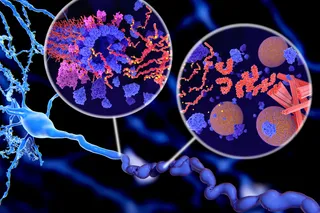
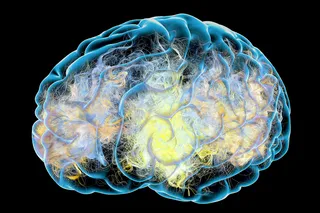
The brain is our busiest organ, and like any complex production site, it generates plenty of waste. Normally, that’s not a problem: metabolic byproducts such as proteins, gases, and cellular debris are cleared through an intricate waste-disposal network. But when this drainage system falters and waste accumulates, the risk of neurological diseases like Alzheimer’s rises significantly.
To better understand how exactly the brain disposes of toxic waste, and potentially uncover ways to prevent neurodegenerative disease, researchers at the Gladstone Institute of Neurological Disease in San Francisco developed a new tracer that reveals the brain’s waste-removal system in unprecedented detail without disrupting the delicate process itself, as earlier contrast fluids often did.
“We finally have a way to study how the brain cleans itself,” said study lead Andrew Yang in a press release. “And we used it to discover a lot of unexpected biology.”
Tracking the Brain’s Waste-Disposal System
The gold standard for studying movement within neurological networks involves injecting tracer substances into cerebrospinal fluid, the liquid surrounding the brain and spinal cord. But due to the extra volume introduced to the brain system, extra fluid can disrupt normal brain processes and often produces only a broad picture of fluid flow rather than highlighting pathways that could be linked to neurological disease.

 Explore All Options
“These injected tracers disturb the very system we’re attempting to measure,” said Yang. “We wanted to find a better way.”
Instead of tracking fluid movement through the drainage system, the researchers decided to follow the waste products themselves. To do this, they engineered neurons in mice to produce and excrete an easily traceable fluorescent protein called ZsGreen. The team could then observe the protein as it exited the brain through the dura — the membrane surrounding the brain — as well as through the nasal cavity and lymph nodes.
Read More: Do Omega-3s Really Protect The Brain? The Answer May Depend on Your Health
New Tracer Reveals Unknown Waste Routes
Using the new system, scientists observed for the first time how cells along the brain’s waste-removal pathways interacted with byproducts. They also mapped drainage routes that had not been detected using traditional tracers.
“We were surprised to find that very little ZsGreen drained to the cervical lymph nodes,” Yang explained. “Instead, waste drained through the dura, skull, and nasal cavity.”
The researchers also discovered that drainage routes depended on where the waste originated. Proteins from upper brain regions exited through upper drainage pathways, while waste from deeper, more centralized regions followed different routes.
The speed of drainage varied as well. The scientists hypothesized that slower drainage in certain areas may allow immune cells to become familiar with brain-derived proteins, preventing them from mistakenly attacking healthy brain tissue.
Waste Removal Breaks Down With Disease and Aging
The new method also revealed how waste drainage changes during disease. In mice with Alzheimer’s, the fluorescent tracer became trapped inside the brain instead of being efficiently cleared.
“It’s like each brain region has a biological ZIP code system to ensure waste will be sent to the correct drainage site,” said study co-author Nalini Rao in the statement. “We think that in aging or disease, these ZIP codes may get scrambled, leading to waste ending up in the wrong places. This could explain why certain brain regions are more vulnerable to diseases like Alzheimer’s.”
Now that the researchers have a clearer understanding of the brain’s drainage dynamics, they hope to investigate how aging and disease disrupt the system. They also aim to develop therapies targeting specific drainage pathways and study how healthy habits, such as quality sleep, may support waste clearance.
“With these new methods, we’ll be able to start addressing some really long-standing questions about the biology of brain waste clearance,” said Yang.
Read More: A Future Nasal Spray Could Help Reverse Brain Aging and Restore Memory — At Least in Early Tests
Article Sources
Our writers at Discovermagazine.com use peer-reviewed studies and high-quality sources for our articles, and our editors review for scientific accuracy and editorial standards. Review the sources used below for this article:
- This article references information from a study published in Cell: Physiological brain clearance architecture revealed by neuronal protein tracing