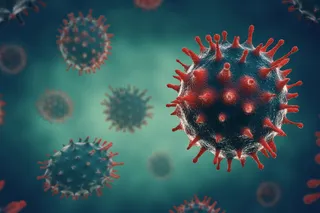
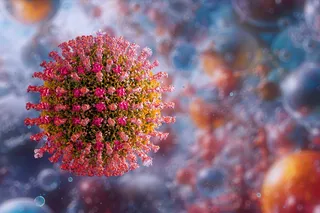
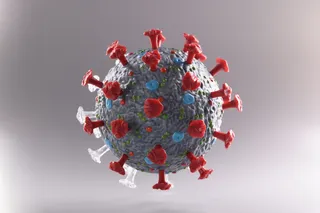
As spring approaches, a new type of cicada is emerging — not an insect, but a new variant of COVID-19.
As detections increased in late 2025, the “Cicada” variant, officially known as BA.3.2 and recently reported on in the Centers for Disease Control and Prevention (CDC) Morbidity and Mortality Weekly Report, has now appeared in more than 20 countries. While it hasn’t triggered widespread alarm, its unusual genetic profile — particularly mutations in its spike protein — is raising important questions about how well existing immunity holds up.
Unlike earlier waves, where one variant rapidly dominated, BA.3.2 is spreading more gradually. But its ability to partially evade immune defenses means it could still contribute to seasonal upticks in infections, especially in populations with prior exposure or vaccination.
“In the United States, BA.3.2 was detected in nasal swabs from four travelers, three airplane wastewater samples, clinical samples from five patients, and 132 wastewater samples from 25 U.S. states,” the CDC stated in their report.
Read More: Catching COVID-19 or the Flu Could Triple Your Risk of Stroke and Heart Attack
What Is the Cicada Variant and Where Did It Come From?
According to the CDC, BA.3.2 is a highly distinct offshoot of the Omicron family, emerging independently from the JN.1 lineage that has circulated widely since early 2024. It was first identified in a respiratory sample collection in South Africa in November 2024, although signs of its spread appeared months earlier.

 Explore All Options
By mid-2025, the variant had surfaced in international travel hubs, including a detection at San Francisco International Airport linked to a traveler arriving from the Netherlands. Since then, researchers have identified it through a mix of clinical testing and wastewater surveillance.
Researchers have also identified at least two emerging sublineages of BA.3.2, suggesting the virus is continuing to evolve as it circulates. Despite this, it hasn’t yet outcompeted other variants, which is a key reason why it remains under monitoring rather than being classified as a high-concern strain.
Why Spike Protein Mutations Matter
The defining feature of the Cicada variant lies in changes to its spike protein — the structure the virus uses to enter human cells. This protein is also the main target of immune defenses built through vaccination or previous infection.
"Since the COVID-19 pandemic began in late 2019, new SARS-CoV-2 variants with mutations in the spike protein have continued to emerge, generating antigenic diversity and immune escape characteristics that necessitate periodic reevaluation and reformulation of the COVID-19 vaccine composition,” the CDC stated in its report.
When mutations alter the spike protein, antibodies may bind less effectively, reducing their ability to neutralize the virus. Laboratory studies suggest BA.3.2 shows enhanced immune escape, meaning it can partially dodge these defenses.
That doesn’t necessarily mean vaccines stop working, but it can increase the likelihood of breakthrough infections.
What to Watch For and How to Stay Protected
For now, the Cicada variant doesn’t appear to cause any new or unusual symptoms. According to Stony Brook Medicine, its clinical profile mirrors other Omicron variants, with common signs including cough, fatigue, fever, and body aches. Some people may also experience sore throat, runny nose, headaches, or shortness of breath.
While the Cicada variant isn’t cause for panic, it is a reminder of how adaptable the SARS-CoV-2 virus remains and why ongoing vigilance is still a necessary part of living with COVID-19.
“Robust surveillance data will continue to guide CDC’s preparedness, ensure timely responses to emerging SARS-CoV-2 variants, and guide decision-making on COVID-19 vaccine composition updates,” concluded the CDC in its report.
This article is not offering medical advice and should be used for informational purposes only.
Read More: Once Called the “White Death,” Tuberculosis Lingers as Trends Shift in the U.S. and Globally
Article Sources
Our writers at Discovermagazine.com use peer-reviewed studies and high-quality sources for our articles, and our editors review for scientific accuracy and editorial standards. Review the sources used below for this article:
- This article references information from the CDC: Early Detection and Surveillance of the SARS-CoV-2 Variant BA.3.2 — Worldwide, November 2024–February 2026
- This article references information from Stony Brook Medicine: Understanding the COVID-19 Cicada Variant (BA.3.2): Symptoms, Spread and Protection