

Key Takeaways on Neanderthal Strength
- Compared with Homo sapiens, then and now, Neanderthal bodies were robust and stocky, with short, thick arm and leg bones. They also had greater muscle mass.
- Neanderthals’ stocky bodies probably didn’t have much to do with strength. It was likely an adaptation to cold weather.
- Though Neanderthals were likely stronger, they were not just mindless brutes. Recent evidence shows that Neanderthals created art, buried their dead with great care and ceremony, and tended to the ill and wounded.
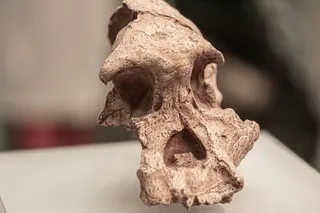
Neanderthals, officially Homo neanderthalensis, were one of at least 21 human species to have lived on Earth, including, of course, Homo sapiens, the only human species to have survived to the present. Neanderthals are special, though. They are our closest extinct human relative. In many ways, Neanderthals were similar to modern humans, and in fact most of us carry a small percentage of Neanderthal DNA. But how do we compare in strength?
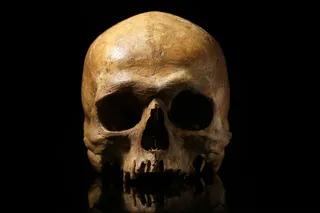
While size varies, the average male Neanderthal was about five and a half feet tall and weighed around 143 pounds. Females were likely smaller, but not much, averaging about five feet and 120 pounds. Though small, Neanderthals weren’t delicate. Compared with Homo sapiens, then and now, Neanderthal bodies were robust and stocky, with short, thick arm and leg bones. And they had greater muscle mass.
According to a 2026 paper in Current Biology, this abundant muscle was due to a genetic variation in their hypothalamic-pituitary-somatotropic (HPS) axis, a variant that a few modern humans have inherited.
But does this mean a Neanderthal could best the average modern human in a wrestling match?
Maybe.
Read More: Did Ancient Humans Ever Go to War With Neanderthals?
Neanderthals Were Likely Stronger
Josh Akey, a professor at Princeton’s Lewis-Sigler Institute for Integrative Genomics, has studied the Neanderthal genome. He told Discover that while Neanderthals were clearly stockier, heavier, and more muscular, it’s difficult to convert anatomical differences into estimates of strength.

 Explore All Options
“The assumption is that Neanderthals were probably stronger on average than modern humans, but I think it's hard to quantify exactly how much stronger,” said Akey.
In any case, he said, Neanderthals’ stocky bodies probably didn’t have much to do with strength. It was likely an adaptation to cold weather. While our ancestors evolved in balmy Africa, Neanderthals evolved in much colder climates in Europe and Asia. That compact body minimized the skin’s surface area, helping Neanderthals conserve body heat.
Nonetheless, Neanderthals' physical shape and strength may have contributed to the idea that they were brutish and dull-witted. This view was prevalent until recently and still lingers in some places. But this slur on Neanderthals is not only unfair; it’s likely incorrect.
Benevolence and Brawn
Recent evidence shows that Neanderthals created art, buried their dead with great care and ceremony, and tended to the ill and wounded. A 2026 study in Nature Scientific Reports found that a Neanderthal skeleton that had been carefully buried had died from a spear wound, possibly the result of violence or a hunting accident. However, the intriguing thing was that the skeleton showed evidence of a previous, severe facial injury. The researchers told Science News that recovering from this wound — and the man obviously did recover from the facial wound — would have required a great deal of care and attention from others.
In her book Hidden Depths: The Origins of Human Connection, Penny Spikins, professor of the archaeology of human origins at the University of York, in the U.K., wrote, “Neanderthal communities were highly collaborative, showing strong altruistic motivations within their own groups, being willing to care for others for extended periods and to risk their lives to bring back food.”
Research by Spikins and colleagues, published in Quaternary Science Reviews, highlights many cases of Neanderthals caring for their ill and injured, many of whom lived for years with severely disabling injuries. The paper argues that although caring for community members who can contribute little in return might seem costly, such practices were adaptations that helped the group survive.
Spikins told Discover why early humans might have looked after their ill and injured companions: “If you're living in a small, highly collaborative group, the welfare of everyone affects everyone else, and it just makes sense to be motivated to care,” she said. “The importance of people we trust and being trustworthy ourselves goes back a very long way; I would speculate at least 2 million years.”
So were Neanderthals strong? Yes, but in benevolence as well as brawn.
Read More: A Broken Neanderthal Spear Survives as a 40,000-Year-Old Imprint
Article Sources
Our writers at Discovermagazine.com use peer-reviewed studies and high-quality sources for our articles, and our editors review for scientific accuracy and editorial standards. Review the sources used below for this article:
- This article references information from a study published in Current Biology: Increased signaling of the Neanderthal growth hormone receptor
- This article references information from a study published in Quaternary Science Reviews: Living to fight another day: The ecological and evolutionary significance of Neanderthal healthcare
- This article references information from ScienceNews: A telling hole in a Neandertal bone hints at a bitter end
- This article references information from a study published in Nature Scientific Reports: Evidence for funerary behaviour and lethal trauma in a new Neanderthal individual from Shanidar Cave
- This article references information from the Smithsonian National Museum of Natural History: Homo neanderthalensis