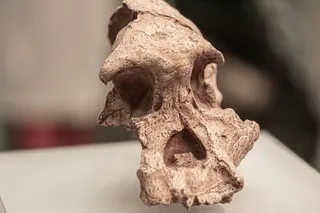


Recent findings from the Max Planck Institute for Evolutionary Biology help reconstruct the genetic relationships of late Neanderthals in Northwestern Europe before they went extinct around 40,000 years ago.
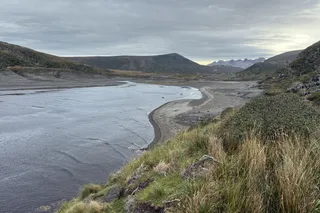
The study, published in Nature, examines ancient DNA from 27 Neanderthals whose remains were found in Belgium and France, though the international research team focused primarily on the Neanderthals from the Meuse Basin in Belgium. This region is a hotspot for late-era Neanderthals (individuals that lived near the end of Neanderthal existence)
"Until now, we only had four high-quality Neandertal genomes and a limited number of lower-quality ones, so most questions about the regional diversity of Neandertals have been difficult to address," first author Alba Bossoms Mesa, a doctoral researcher at the Max Planck Institute for Evolutionary Anthropology, said in a press release. "By generating genetic data from multiple individuals from the region of present-day Belgium and France, we can now examine late Neandertal populations in much greater detail."
Unlike Other Neanderthal Groups
Previous research indicates that some Neanderthal groups, like those in the Altai region of Siberia, likely lived in genetically isolated communities. Evidence also shows that there was inbreeding.
According to the study, however, the late Neanderthals from Northwestern Europe show no signs of incestual or close-relative mating. These Neanderthals were actually part of a larger regional population

 Explore All Options
"Our results show that the picture emerging from one region cannot simply be applied to all Neandertals," senior author Benjamin M. Peter, a group leader at the Max Planck Institute for Evolutionary Anthropology, said in the press release. "The late Neandertals from Northwestern Europe appear to have been part of a connected regional population, rather than small, isolated groups with frequent mating between close relatives."
One-Way Genetic Flow
From their findings, the research team discovered that the Neanderthal population history is much more complex than previously thought.
"The genetic data show both connection and complexity," Senior Author Mateja Hajdinjak, a group leader at the Max Planck Institute for Evolutionary Anthropology, said in the press release. "Most late Neandertals from Northwestern Europe are closely related at the population level, but some lineages point to much deeper and more diverse Neandertal history."
According to the study, this group of Neanderthals lived around the same time as early modern humans in parts of Europe. While it is known that early modern humans and Neanderthals interbred, with some humans having Neanderthal DNA, this study found no evidence that gene flow went the other way.
“Our results add to a striking asymmetry,” added Bossoms Mesa. "We repeatedly find Neandertal ancestry in early modern humans, but so far, we have not found clear evidence of recent modern human ancestry in late Neandertals."
Changing Our Understanding of Neanderthal Extinction
Past research has linked the extinction of Neanderthals to decreasing population size, which led to inbreeding and the buildup of harmful genetic variants. To test this theory, the research team compared genetic diversity and genetic load across Neanderthal genomes over time and across regions. Surprisingly, although all Neanderthals had limited genetic diversity, there was no evidence that late Neanderthals carried more harmful mutations.
While these findings do not explicitly rule out demographic vulnerability as a cause for the Neanderthal's decline, they do challenge the theory that genomic deterioration was the cause of Neanderthal extinction.
"This study highlights the power of ancient DNA to reveal variation within Neandertals on a much finer scale than was previously possible," co-author Janet Kelso, a group leader at the Max Planck Institute for Evolutionary Anthropology, said in the press release. "Rather than viewing late Neandertals as a single declining population, we are beginning to recognize a more complex picture of regional diversity, connectivity, and population history."
Read More: 100,000-Year-Old Neanderthal Teeth May Reveal How Early Humans Moved Across Europe
Article Sources
Our writers at Discovermagazine.com use peer-reviewed studies and high-quality sources for our articles, and our editors review for scientific accuracy and editorial standards. Review the sources used below for this article:
- This article references information from a study published in Nature: Genetic diversity of late Neanderthals in northwestern Europe