People still pick up shells for no reason other than wanting to keep them. At a cave in southern Turkey, that impulse may go back further than our species alone. Over a span of more than 20,000 years, both Neanderthals and modern humans appear to have collected the same kind of marine shell, even though it had little food value and no obvious use.
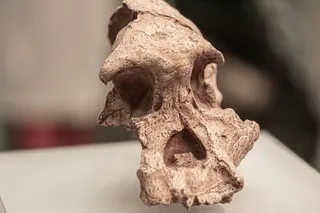
That shared behavior is at the center of a new PNAS study from researchers in Japan, Turkey, and France. At Üçağızlı II Cave in the Levant, fossils, stone tools, and shells trace a long period of overlap between Neanderthals and modern humans, who appear to have used the cave in similar ways. The pattern raises the possibility that the two species shared more than a landscape, including parts of a culture.
"Given that daily survival and food procurement were literally matters of life or death, their shared focus on a non-utilitarian seashell is highly revealing. It demonstrates that even under intense survival pressures, both human groups placed a high value on potentially symbolic behaviors," co-author Naoki Morimoto told Discover.
Neanderthals and Modern Humans May Have Shared Culture in Turkey

Üçağızlı II Cave in southern Türkiye.
(Image Courtesy of KyotoU / Naoki Morimoto)
Üçağızlı II lies in the Levant, where Africa opens toward Eurasia, and early modern humans moved through during migrations out of Africa. Fossils from this period are limited, making it difficult to reconstruct what happened as Homo sapiens entered a landscape already occupied by Neanderthals.

 Explore All Options
The modern human remains recovered from the cave date to between roughly 50,000 and 60,000 years ago, placing them at a critical moment in human prehistory. Whether these individuals were direct ancestors of all non-African people alive today or members of an earlier migration that predated the main dispersal is a question the researchers leave open.
Read More: Humans Outlived Neanderthals Likely Because of Differences in Anatomy and Social Skills
A Shell With No Obvious Use
Neanderthal use of non-utilitarian objects has been documented elsewhere. In a 2018 study published in Science Advances, researchers reported marine shells, pigments, and possible shell containers from Cueva de los Aviones in Spain, with evidence dating to about 115,000 to 120,000 years ago. Üçağızlı II adds a new kind of evidence.
"One of [the] biggest surprises was that Neanderthals shared a strong preference for Columbella rustica—a behavior that was previously thought to be exclusive to modern humans. This finding forces us to reconsider the nature of cultural boundaries and perhaps cognitive capacities among different human groups in the Levant," Morimoto shared with Discover.
Finding it in contexts linked to both groups raises the possibility that the behavior was not independently developed by each species but was transmitted between them through direct contact, observation, or traditions built over long coexistence. The study argues that cultural exchange is probable rather than proven, and the evidence from this single site offers researchers a rare opportunity to examine that possibility directly.
The Boundary Between Two Human Species
The site captures a window of coexistence between two branches of the human family at a time when Homo sapiens were expanding beyond Africa. It also adds fossils and artifacts to a thin record of early modern humans moving through the Levant.
Many people alive today carry traces of Neanderthal ancestry, a biological sign that the two species met and interbred during this period. Üçağızlı II adds something more elusive, pointing not to bones or genes, but to behavior.
Two species, shaped by hundreds of thousands of years of separate evolution, drawn to the same object from the same shoreline, for reasons the archaeological record can only begin to suggest.
Article Sources
Our writers at Discovermagazine.com use peer-reviewed studies and high-quality sources for our articles, and our editors review for scientific accuracy and editorial standards. Review the sources used below for this article:
- This article references information from a study published in Proceedings of the National Academy of Sciences: Long-term cultural continuity across the Neanderthal–modern human sequence at Üçağızlı II Cave, northern Levant
- This article references information from a study published in Science Advances: Symbolic use of marine shells and mineral pigments by Iberian Neandertals 115,000 years ago