


Missed some of our top stories from the week? Check out our round-up below, covering the biggest science news and stories that matter.
For this week's stories, from June 20 to June 26, 2026, we're covering the arrival of the Roman Grace Telescope, a new non-invasive procedure for chronic knee pain, how Neanderthals may have lived in connected communities, a new spider species that creatively traps its aggressive prey, what might be the first evidence of sex-specific burial in non-modern humans, and the latest hydrothermal explosion at Yellowstone.
1. NASA’s Roman Space Telescope Arrives in Florida Ahead of Late-Summer 2026 Launch

Roman Optical Telescope Assembly. (Image Credit: NASA/CC-BY-NC-ND 2.0/Flickr)
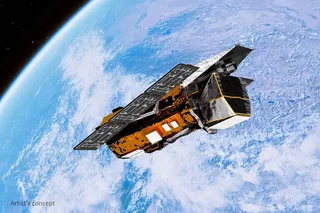
NASA’s Nancy Grace Roman Space Telescope has arrived in Florida for the final work needed before its planned launch later this summer.
Roman reached NASA’s Kennedy Space Center on June 21, 2026. The move came after assembly and testing wrapped at NASA’s Goddard Space Flight Center in Greenbelt, Maryland. The nearly 18,000-pound spacecraft is targeted to lift off no earlier than Sunday, Aug. 30, 2026, on a SpaceX Falcon Heavy rocket from Launch Complex 39A at Kennedy.
Read More: NASA’s Roman Space Telescope Arrives in Florida Ahead of Late-Summer 2026 Launch
2. Not Ready for a Knee Replacement? A Minimally Invasive Procedure May Ease Chronic Pain Without Joint Replacement
Originally developed in Japan a little over a decade ago, genicular artery embolization works by targeting inflammation inside the knee rather than replacing the joint itself. Researchers say the outpatient treatment is showing encouraging results, with some patients reporting pain reduction that lasts for years.

 Explore All Options
3. Neanderthals in Northwestern Europe Lived in Connected Communities — Challenging Ideas About Their Extinction
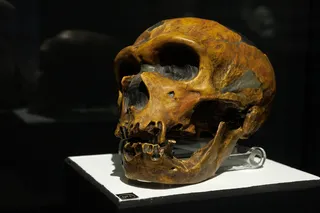
Recent findings from the Max Planck Institute for Evolutionary Biology help reconstruct the genetic relationships of late Neanderthals in Northwestern Europe before they went extinct around 40,000 years ago.
According to the study, the late Neanderthals from Northwestern Europe show no signs of incestual or close-relative mating. These Neanderthals were actually part of a larger regional population.
4. Newly Discovered Australian Spider Species Uses a Spring-Loaded Trap to Snare Aggressive Ants

Ballista spider waiting for ant to spring its trap. (Image Credit: Professor Ajay Narendra et al)
A newly discovered spider species has developed a highly sophisticated trap that catches an aggressive tree ant that many other predators would avoid.
Home to the rainforests of northern Queensland, Australia, the arachnid, nicknamed the "ballista spider" after the ancient projectile-launching weapon, creates a snare triggered by only a single ant species. Once activated, the ant is propelled into the spider's net with an acceleration far beyond what humans could withstand.
Read More: Newly Discovered Australian Spider Species Uses a Spring-Loaded Trap to Snare Aggressive Ants
5. A Cave Full of Homo naledi Fossils May Point to an All-Female Burial Site, a First for a Non-Modern Human Species
A new study analyzed ancient proteins extracted from H. naledi teeth and found no male markers in the group. Every individual tested appeared to be female, or possibly male, with a mutated or deleted sex-linked gene. The finding raises the possibility that the Dinaledi Chamber of the Rising Star Cave may be the first known sex-specific burial site created by a non-modern human species.
6. Recent Hydrothermal Explosion at Yellowstone National Park — Later, a New Thermal Pool Appears
Yellowstone National Park’s Biscuit Basin is back at it again with another hydrothermal explosion, though this one isn’t anywhere near as large as the notable 2024 eruption.
Since that eruption on July 23, 2024 — which shot mud, rocks, and hot water from Black Diamond Pool anywhere between 400 and 600 feet into the air while park visitors ran for cover — the area has been a hotbed of activity.
Read More: Recent Hydrothermal Explosion at Yellowstone National Park — Later, a New Thermal Pool Appears