Narcissism isn’t a personality trait that some of us clearly possess, and others don’t; rather, it’s understood as a spectrum, with all of us displaying some degree of narcissism in our everyday lives. People with strong tendencies toward so-called “grandiose narcissism” tend to believe they’re superior to others, crave attention, and feel entitled.
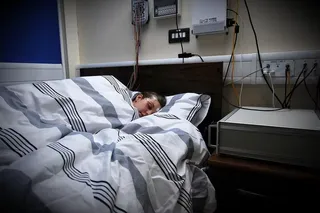
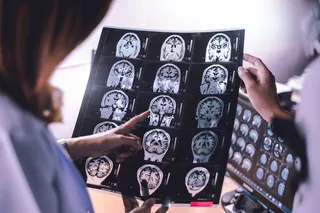
Researchers at Aalto University in Finland wanted to understand what happens in the brains of people with grandiose narcissistic traits. Using functional MRI (fMRI), they examined participants’ brain activity as they watched scenarios involving other people experiencing embarrassing situations.
The study, published in Cerebral Cortex, found less synchronized brain activity in areas associated with empathy among participants with more narcissistic traits. This could help explain why they sometimes struggle with social interactions.
“People with a high number of narcissistic traits respond to another person’s vulnerable experience differently than others,” said first study author Matias Piispanen, a researcher at the Department of Neuroscience and Biomedical Engineering at Aalto, in a statement. “They may attune to interaction in a different way, pay attention to different aspects of it, or make different interpretations of what is happening.”
Testing Narcissistic Traits' Impact on “Saving Someone’s Face”
To understand these social dynamics, the researchers drew on the work of sociologist Erving Goffman, who explored how people manage their public image during social interactions in the 1950s.

 Explore All Options
According to Goffman, we all try to present ourselves in a certain way, and when that image is challenged, we may feel embarrassed or anxious. Sociologists call protecting this image “saving face.” Goffman suggested that people also work together to protect one another's social image, a process known as facework.
To investigate how narcissistic traits might influence this process, the researcher first surveyed nearly 1,000 people about their personalities. They then invited people with high narcissistic trait scores to undergo brain scans, alongside a comparison group with low scores. In the end, the study included 58 participants.
Read More: People With Dark Personality Traits Use Physical Touch As Manipulation
Brains of Narcissists Struggle to Build Supportive Connections
During the brain scans, participants watched videos of a professional actor sharing personal stories about experiences of either being admired or excluded during youth and adulthood. Another person then responded in a way that threatened the storyteller’s social image. For instance, they might question whether the person’s achievements deserved admiration or suggest they were responsible for being excluded.
The research team found differences in how participants’ brains synchronized while processing these socially challenging situations, depending on their levels of narcissistic traits. The findings suggest that people with stronger narcissistic tendencies may engage in facework differently from those with fewer such traits.
“People with higher levels of narcissistic traits may not necessarily build supportive or genuine connections with others, which can lead to difficulties and misunderstandings in interaction,” said Piispanen.
Studying Personality Traits During Real-Life Scenarios
Normally, empathy research relies on relatively simple stimuli, such as pictures of emotional facial expressions. But real social situations involve more context, interpretations, and judgment.
“A real-life-scenario is much more complex and requires more interpretation and evaluation of the situation,” explained Piispanen. “In addition, participants were not specifically instructed to empathize with the narrator’s experience. This allowed us to observe how they spontaneously tracked and processed a complex social situation as it played out.”
Overall, the team suggests that more realistic and complex experimental designs may help clarify how personality traits present on a neural basis during socially important instances.
Read More: In Social Situations, Narcissists Tend to Feel More Left Out and Ostracized
Article Sources
Our writers at Discovermagazine.com use peer-reviewed studies and high-quality sources for our articles, and our editors review for scientific accuracy and editorial standards. Review the sources used below for this article:
- This article references information from a study published in Cerebral Cortex: Reduced social brain coupling to others’ face threats in narcissism