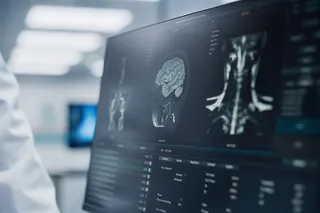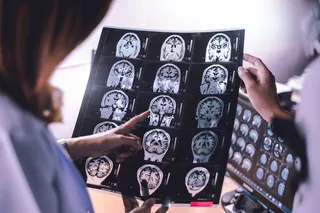


Over the course of three years, Liz Chrastil had her brain scanned, not once, not twice, but a total of 26 times. And yet, there wasn't anything wrong. She wasn’t sick or injured, and she had none of the conditions that would typically prompt such an intensive series of MRIs. She showed no surprising symptoms, no concerning changes — nothing.
Well, not exactly nothing. Chrastil, a neuroscientist at the University of California, Irvine (UCI), was experiencing an extreme change: She was pregnant with her first child. But rather than being a part of her prenatal care, the scans served as the basis for a pioneering study — the first to track the changes in a person’s brain throughout the course of a complete pregnancy.
The study, published in Nature Neuroscience in 2024, showed astonishing changes in Chrastil’s gray and white matter, some of which stuck around, and some of which went away as quickly as they came. But to Chrastil, who acted as both a participant and researcher on the study, the results barely scratched the surface of pregnancy’s influence on the brain.
“There’s a lot more that needs to be known,” she told Discover.
While she and her team tackled the basics, addressing questions about brain structure and volume, they left brain function — and how cognition and emotion change over the course of a pregnancy — largely untouched.

 Explore All Options
“All those kinds of questions,” she said, “are just waiting to be looked at.”
A large percentage of the population has had firsthand experience with pregnancy. And if you haven’t ever been pregnant yourself, you certainly came out of someone who was. Despite that, however, scientists know a lot less about the neurological impacts of pregnancy than you might think.
For a long time, the neuroscience of pregnancy was considered an untouchable topic, too complex to study and too niche to be necessary. In the last 30 years, for instance, only 0.5 percent of neuroscience studies have looked at topics like pregnancy, menstruation, and menopause, according to a Nature article published in 2023. That means that there’s a lot left to learn about the neurological components of the process.
But Chrastil and her colleagues are working to change that. Over the past few years, they’ve laid the foundations for a new field of neuroscience — one that’s focused on the brain as the body transforms to support a fetus. And their work is far from finished.
Researchers still have more questions than answers when it comes to pregnancy and the brain. But the unknowns are slowly becoming known, hinting that the biggest changes before birth may happen inside the head.
Scanning the Brain During Pregnancy
If you ask Chrastil, she ended up in the scanner by “being at the right place at the right time” and by “being the right person.”
Back in 2019, she was working with Emily Jacobs, a neuroscientist at the University of California, Santa Barbara (UCSB), on a study on menopause. (Jacobs, coincidentally, had been working on another paper, all about menstruation, in addition to the study on menopause.)

Emily Jacobs, a professor at UCSB, is also the director of the Ann S. Bowers Women’s Brain Health Initiative, a research center at UCSB that aims to advance the study of women’s brain health.
(Image Courtesy of Matt Perko)
“We were working on this menopause project,” Chrastil told Discover, “and then at that same time, I was planning a pregnancy. I was like, ‘Hey, you know what? I’m planning a pregnancy, and we should scan my brain.’”
When Chrastil, Jacobs, and their team (including Laura Pritschet, a student at UCSB and the lead author of the study) first looked into the topic, there wasn’t much research on the neuroscience of pregnancy available, and what was available was lacking, to say the least.
“What was known was pretty limited,” Chrastil said. “There were a few studies from animals, so rodent models,” and there were a few studies from humans that were pre-pregnancy versus post-pregnancy, “but we didn’t really know what happened in between.”
Part of the reason for this absence is that the neuroscience of pregnancy is often seen as a tough topic to study, particularly from a safety standpoint.
“It’s totally safe to scan pregnant women,” Jacobs told Discover, but the standard in scientific settings is to avoid putting pregnant people in MRI scanners out of an abundance of precaution. The idea, she said, is to avoid any potential risks to the parent or fetus — though no such risks are currently known — and to preclude any possible liability problems.
But that same standard isn’t applied in clinical settings. “We’re scanning pregnant women,” she said. “We’re already doing it, and it’s not contraindicated.”
If a pregnant person trips and falls and needs an MRI, for example, or if they have a stroke or a concussion, they are scanned. If the proper safety procedures are followed, she added, the concern that it’s not safe “just doesn’t stand up to scrutiny.”
Another part of the reason is that it’s commonly considered niche — or isn’t considered at all — although 85 percent of women experience a pregnancy at some point in their lifetimes, according to UCSB.
“You can’t answer questions you don’t see, and when 80 percent of tenured neuroscientists are male,” Jacobs said, “there [are] questions that are not being answered because they’re not visible.”
Of course, tracking the brain throughout the course of a pregnancy from start to finish takes a lot of time and a lot of scans — an amount that many researchers hesitate to ask of an average study participant. But Chrastil, with her commitment to the cause and her experience with scanning, made the perfect test subject.
“Liz was just the ideal first participant,” Jacobs added. “She was a neuroscientist. She understood the fact that MRI is safe and not contraindicated for pregnant women, and she was motivated to understand the answers, so it was the perfect opportunity.”
Certainly, the process had its fair share of inconveniences. “It’s not the most comfortable thing to do an MRI,” Chrastil told Discover, “especially being pregnant.”
But she knew how to situate herself and how to stay still in the scanner. “I know what it’s like to be in there, and what kinds of things you can learn and not learn,” she said. “I’d been a participant before, but this particular [project] really raised the bar.”
Read More: Your Brain Has Five Ages — And They Shape How You Think for Life
Taking Snapshots, Pre- and Post-Pregnancy
While Chrastil and Jacobs had little research to draw from, Elseline Hoekzema, a neuroscientist at the Amsterdam University Medical Center, had even less. When she first took an interest in the neuroscience of pregnancy and reviewed the literature in the 2000s, she found next to nothing.
“It seemed to be this neglected field of research,” Hoekzema told Discover, “which was astonishing because so many women undergo this process.”
Setting out to address this gap, she and a team took MRI images of 25 pregnant people before and after their pregnancy, and compared them to MRI images of 20 non-pregnant controls. The results of their research, published in Nature Neuroscience in 2016, showed a decrease in gray matter volume in the cortices — in other words, a decrease in the tissue containing the neurons and neuronal connections, or synapses, in the outermost layers of the brain — and particularly in areas of the cortices that are tied to social cognition.
Involved in our ability to respond to others, these areas inform how people perceive, process, and interpret information in social situations, including those that involve parents and children.
When she reviewed the data, Hoekzema was surprised by the clarity and consistency of the results. “First, you see these very strong changes, and then you think, ‘Really? Could it really be?’” she said.
Each participant showed a similar pattern of shrinkage — if they were pregnant, that is. In fact, the reductions were so distinctive that a computer algorithm could distinguish between the pregnant participants and the non-pregnant ones simply by comparing the changes in their brains. Still, the data took years to analyze and years to confirm, with so little information in the field.
The results have since been replicated by researchers around the world, though there’s still a lot to learn about what they might mean. “It was this snapshot approach of, ‘Here are women before pregnancy and after pregnancy. Here are their brains,’” Jacobs told Discover. “It really launched the field.”
In the years following the publication, Hoekzema continued her research, expanding her initial results in a paper published in Nature Communications in 2022. The new study found similar reductions in gray matter volume in the cortices, as well as both structural and connective changes in the default mode network.
This network — an interconnected system spanning several areas in the brain, including the frontal, parietal, and temporal lobes — is involved in self-referential thinking, shaping your image of yourself and your relationships to others.
“We also tried to look for the first time at what is causing these brain changes. We looked at various aspects, so, sleep and stress, for instance,” Hoekzema told Discover, “but also hormones. And what we saw was that there were very strong associations with hormones, especially the different types of estrogens.”
Essentially, as the body is flooded with pregnancy hormones, the social and self-referential areas of the brain transform, Hoekzema found. But there was still something missing — a map of the brain throughout the course of a pregnancy — and that was where Chrastil and Jacobs came in.
Permanent and Temporary Changes to the Brain
Chrastil’s scans started in 2019, three weeks before she became pregnant through in vitro fertilization (IVF), and included a total of four pre-pregnancy MRIs and seven post-pregnancy ones, which took place in the two years after she gave birth in 2020. Most of the scans were accompanied by a blood draw, which allowed the researchers to monitor her health and to track her hormones throughout the process.
This precision imaging approach allowed Chrastil and Jacobs to trace the transformations of the brain dynamically and in impressive, week-by-week detail, filling in the blanks between Hoekzema’s pre- and post-pregnancy scans.
Like Hoekzema, they found permanent changes — a reduction in cortical gray matter volume that occurred as pregnancy hormones surged and persisted in the two years following pregnancy. Specifically, around 80 percent of the 400 cortical areas that the team studied shrank, shedding around 4 percent of their volume on average.

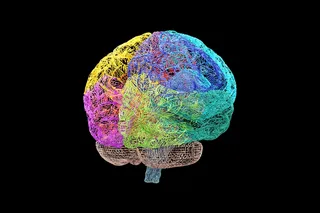
MRI scans suggest that throughout the course of pregnancy, white matter tracts transform, showing increased structural integrity.
(Image Courtesy of Daniela Cossio)
But unlike Hoekzema, they found temporary changes, too, including an increase in white matter integrity, which rose and then returned to pre-pregnancy levels by the time that Chrastil’s child was born.
Though the change was transient, such increases are typically associated with efficiency: White matter is composed of the nerve fibers that connect far-flung areas of the brain, and an improvement in their integrity allows information to move between brain areas much more easily.
“If you just look pre- and post-, you actually would miss a bunch of changes,” Chrastil told Discover. “Being able to look in the intervening times during pregnancy and during those first postpartum weeks and months, we were able to see this trajectory of what happened, and so that was really what was missing.”
Preparing for Parenthood
Knowing how the brain changes and knowing what those brain changes mean for pregnant people are entirely different matters, however.
“That’s the big question for all these things,” Chrastil told Discover. “If your brain is changing, does it mean anything?”
One idea is that the brain changes are a simple trade-off: The brain shrinks so the body can concentrate on being pregnant. Another is that the shrinkage is adaptive in a different way, preparing adults for the challenges of parenthood.
“The question is, does it affect our behavior? Does it affect our cognition in some way, or our emotional connections?” Chrastil said. “That’s something that we need to just do more on.”
Thankfully, the researchers suspect that the changes and the reductions in gray matter volume could be positive for expecting parents, strengthening their connection to their infants. When we talk about gray matter, we tend to think that bigger is better.

Hannah Grotzinger, a student at UCSB and another author of the 2024 Nature Neuroscience study, works with MRI scans and biofluids to study the brain throughout periods of hormonal transition.
(Image Courtesy of Matt Perko)
“But that’s not always the case,” Chrastil said. “We don’t always see these relationships between volumes and performance or behavior.”
Indeed, the changes could indicate a “trimming” of neuronal connections in the cortices, not unlike what happens to adolescents as they experience puberty.
“This is a very similar period driven by increases in these same hormones,” Hoekzema told Discover. “There you also see very strong reductions in gray matter volume, and in this phase, we know that this is partially more a pruning of connections.”
That pruning cuts unused synapses to strengthen those that are used, allowing the brain to become better at processing information and performing particular tasks. In teens, for example, synaptic pruning is associated with improved learning, focus, and attention.
“It’s a way of allowing you to specialize for specific functions, so it’s very important for maturing,” Hoekzema said.
While the benefits of these changes in pregnant people remain unclear, initial results seem to indicate that they are closely related to the response of the body and brain to infants and to the perception of oneself and one’s child.
“We think that perhaps this might be a way to trigger this maternal instinct,” Hoekzema said, “if you can call it that.”
Still, Hoekzema does caution that the changes aren’t the difference between a good parent and a bad one, and they aren’t necessarily universal. While the results so far show that these brain changes are remarkably consistent among pregnant people, they may not take place in every pregnancy.
“It doesn’t mean that people who don’t undergo these hormonal changes are not good parents,” she added, “but it’s still very interesting to see that there’s [some sort of] link there.” And in fact, similar brain changes are also seen in parents who do not undergo pregnancy, though they typically take longer to appear without the influx of pregnancy hormones to trigger them.
Read More: Aging Brains Show Surprising Mix of Decline and Adaptation
The Future of Pregnancy Neuroscience
For all of the physical changes that Chrastil felt throughout the course of her pregnancy, she never noticed a change in her cognition — a change that could have clued her in to what was happening inside her head as it occurred.
“I felt like myself,” she told Discover. But she did notice a shift when her infant was born. “Raising a child, I do see things a little differently, and I do have different ways of interacting with people now that I’ve had that experience,” she said. “So, I’m certainly a different person.”
Today, new results on the neuroscience of pregnancy are published at an impressive pace, at least in comparison to the pace only a few years ago. Already in 2026, for instance, Hoekzema compared the brain changes that occur in people’s first and second pregnancies, finding that the stronger adaptations in the first are supplemented by subtler ones in the second in a study in Nature Communications, perhaps supporting a parent’s ability to bond with another child. But the field still has a long way to go, especially when it comes to brain function.
“I think one of the most important questions really is, ‘What does this mean for the mother?’ So what brain functions are changing, what brain functions are not changing, how does this impact her functioning?” Hoekzema told Discover. “It’s so interesting to see these very strong structural changes, but if you [don’t] really know what it [does to] a woman, it doesn’t have the same meaning.”
As Hoekzema points out, further research on the topic would not only inform our idea of the brain but also our understanding of parental health: Her research is already starting to show that the changes in the cortex that occur throughout pregnancy are associated with a person’s susceptibility to postpartum distress and depression, though the specifics of this connection are not yet clear.
“There’s a lot to learn from really looking into this more specifically,” Hoekzema said, “to see if we can find out who is at risk for developing disorders of maternal mental health.”
Thankfully, these issues are well within our reach. “These aren’t hard problems,” Jacobs told Discover. “It’s not that we can’t answer them, we just have to care and put our resources into them.”
Right now, researchers are only starting to think about pregnancy’s impacts on the brain, which means that they’re still missing fundamental features of how the brain works, she said. And that has clinical implications.
“We’re not serving half our population in the way that we should be. We don’t have answers to basic questions,” she added, “and that’s something that we can solve.”
Both Chrastil and Jacobs see their 2024 study as a proof-of-concept — a starting point for future research. Publishing their data publicly as an open-access dataset, they aimed to fuel future studies and to show that such research is not only safe but constructive — capable of tracking the brain changes between the “before” and “after” of pregnancy.
As Chrastil put it, “The thing that was most important about this paper was that we did it.”
And, indeed, the researchers are already working on follow-up studies with wider pools of participants and having no trouble finding people who want these mysteries solved, whether they’re researchers themselves or not.
“Right now, we’re at inch one of the marathon. We’re not even at mile one,” Jacobs told Discover. “[There are] just 1,000 threads to pull, and it’s exciting to see what impact this could have for women.”
This article was updated with minor changes for clarity by the Discover staff on July 7, 2026.
Read More: A Brain MRI Could Predict How Quickly Your Body Is Actually Aging
Article Sources
Our writers at Discovermagazine.com use peer-reviewed studies and high-quality sources for our articles, and our editors review for scientific accuracy and editorial standards. Review the sources used below for this article:
- This article references information from a study published in Nature Neuroscience: Neuroanatomical Changes Observed Over the Course of a Human Pregnancy
- This article references information from UCSB: New study reveals changes in the brain throughout pregnancy
- This article references information from an article published in Nature: Only 0.5% of Neuroscience Studies Look at Women’s Health. Here’s How to Change That
- This article references information from a study published in Nature Neuroscience: Pregnancy Leads to Long-Lasting Changes in Human Brain Structure
- This article references information from a study published in Nature Communications: Mapping the Effects of Pregnancy on Resting State Brain Activity, White Matter Microstructure, Neural Metabolite Concentrations and Grey Matter Architecture
- This article references information from a study published in Nature Communications: The Effects of a Second Pregnancy on Women’s Brain Structure and Function