

There has been much debate, from scientists and the general public alike, about the origins of some of our planet’s most devastating pandemics. Now, a new genetic analysis of major outbreak viruses is challenging a long-held assumption about how pandemics start.
According to research published in Cell, many viruses that jump from animals to humans may already be capable of infecting people without undergoing special evolutionary changes beforehand. This finding reshapes how scientists think about zoonotic diseases and also provides a new tool for investigating the origins of outbreaks, including the virus behind COVID-19.
“This work has direct relevance to the ongoing controversy around COVID-19 origins,” said senior author Joel Wertheim in a press release. “From an evolutionary perspective, we find no evidence that SARS-CoV-2 was shaped by selection in a laboratory or prolonged evolution in an intermediate host prior to its emergence. That absence of evidence is exactly what we would expect from a natural zoonotic event — and it represents another nail in the coffin for theories invoking laboratory manipulation.”
Read More: A New Vaccine Platform Could Cut Development Timelines From Months to Weeks
How Scientists Can Tell a Virus Didn’t Come From a Lab
For years, many scientists believed that animal viruses had to accumulate specific mutations before they could successfully spread among humans. But the new study suggests that assumption doesn’t hold up.

 Explore All Options
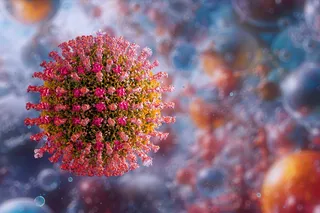
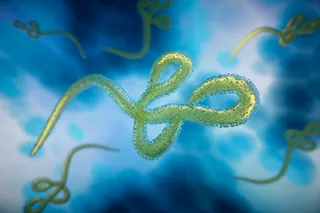
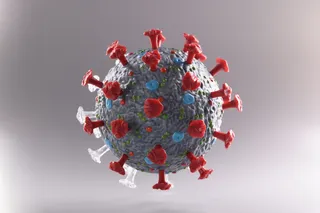
The research team conducted a large phylogenetic analysis of viral genomes from multiple outbreaks, including Influenza A virus, Ebola virus, Marburg virus, Mpox virus, SARS-CoV-2, and SARS-CoV-1. They focused specifically on the evolutionary window just before each virus began spreading among humans. If viruses had undergone significant adaptation before infecting people, those changes would leave detectable signatures in their genomes. But the researchers didn’t find that signal.
Instead, the selection pressures shaping viruses before they infected humans looked essentially the same as those seen during normal circulation in animal reservoirs. Only after viruses began spreading widely among people did new evolutionary patterns emerge.
“From a broad epidemiological standpoint, our findings challenge the idea that pandemic viruses are evolutionarily special before they reach humans. Rather than requiring rare, finely tuned adaptations in animals, many viruses already possess the basic capacity to infect and transmit between humans. What matters most is human exposure to a diverse array of animal viruses,” explained Wertheim.
To confirm their method worked, the researchers also analyzed viruses that were deliberately propagated in laboratory environments, such as in cell cultures or laboratory animals. Those viruses produced distinctive genetic signatures — exactly the kind scientists would expect to see if a pathogen had been heavily manipulated.
The Strange Case of the 1977 Influenza
While most viruses in the study followed the same natural pattern, one historical outbreak stood out.
When researchers examined the strain responsible for the 1977 resurgence of the H1N1 influenza virus, they found something unusual. The virus was nearly identical to strains circulating in the 1950s. Even more surprising, its evolutionary signature resembled the study’s control viruses that had been grown in laboratory conditions.
“The 1977 influenza story is, in many ways, even more compelling than what we found for COVID-19,” said Wertheim. “Our results provide new molecular evidence supporting the long-suspected idea that the H1N1 pandemic was sparked by a laboratory strain — possibly in the context of a failed vaccine trial.”
A New Tool for Future Outbreaks
Beyond revisiting historical outbreaks, the researchers say their framework could help scientists evaluate future pandemics more quickly and objectively. By establishing what typical zoonotic spillover looks like at the genomic level, scientists now have a clearer baseline for comparison when new viruses emerge.
“Our goal is not just to understand the past, but to be better prepared for the future. By clarifying how pandemics actually begin, we can focus attention where it belongs — on surveillance, prevention, and reducing the opportunities for the constant barrage of viral spillover,” concluded Wertheim.
This article is not offering medical advice and should be used for informational purposes only.
Read More: What Makes the Subclade K Strain Different? Here’s What to Know About the “Super Flu”
Article Sources
Our writers at Discovermagazine.com use peer-reviewed studies and high-quality sources for our articles, and our editors review for scientific accuracy and editorial standards. Review the sources used below for this article:
- This article references information from a recent study published in Cell: Dynamics of natural selection preceding human viral epidemics and pandemics