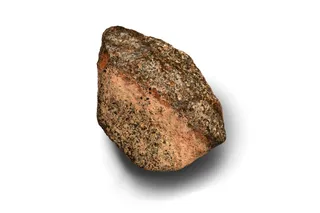
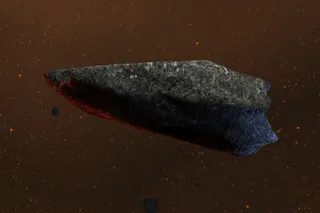
A meteor about 3 feet wide entered the atmosphere over New England on the afternoon of Saturday, May 30, 2026, causing a double boom that rattled buildings and led people across Massachusetts and Rhode Island to report what sounded like an explosion.
The source was not immediately clear. Local police agencies received reports from residents who heard the boom, felt shaking, or saw a bright streak through the sky. But the American Meteor Society (AMS) soon logged the event as a fireball, a bright meteor that burns through Earth’s atmosphere.
According to the AMS, the May 30 fireball drew over 80 reports from people across the Northeast U.S. and Canada, including Massachusetts, New Hampshire, Rhode Island, Vermont, New York, Delaware, Ontario, and Québec.
AP News, citing NASA officials, reported the object was natural material, rather than a satellite or space debris. The meteor entered the atmosphere around 2:06 p.m. EDT and may have been traveling about 75,000 miles per hour.
Read More: Thousands Of Meteorites Hit Earth Each Year — Here's What They Bring
Why the New England Meteor Explosion Was So Loud
Although a 3-foot-wide meteor may not sound especially dramatic, its speed allowed it to release a huge amount of energy as it broke apart in the atmosphere.

 Explore All Options
The meteor fragmented about 40 miles above the ground over northeastern Massachusetts and southeastern New Hampshire and released energy equivalent to about 300 tons of TNT, according to the AP.
That high-altitude breakup would explain the boom people heard on the ground. According to the U.S. Geological Survey (USGS), bright meteors that explode in the atmosphere can produce light, sound, and ground motion, while a loud bang may indicate an atmospheric source, such as a sonic boom.
The meteor did not need to hit the ground to make noise. NASA’s Center for Near-Earth Object Studies explains that objects that cause fireballs are usually not large enough to survive the atmosphere intact, although fragments are sometimes recovered. The AMS also notes that a fireball usually has to remain visibly bright below about 12 miles above the ground to have a good chance of producing meteorites.
Daytime fireballs can also be more confusing than nighttime ones. Fireballs are seen from the ground much more rarely in daylight than at night. At night, a bright streak across the sky is easier to recognize as a meteor. During the day, many people may only hear the sound or feel the vibration without seeing anything overhead.
Why It Felt Like an Earthquake
Because the boom shook buildings, some people reported the event to the USGS via its “Did You Feel It?” system, which is typically used to collect public earthquake reports.
AP News reported that USGS did not record a matching event on its seismographs, meaning the shaking was not caused by an earthquake.
The distinction is noteworthy because sonic booms and earthquakes can feel similar, even though they come from very different sources. Earthquakes begin beneath the surface when energy travels through the rock as seismic waves. A sonic boom occurs in the atmosphere when a fast-moving object creates a pressure wave.
The USGS explains that sonic booms can sometimes be reported as shaking, but they do not behave like earthquake waves. A loud bang can be one clue that the source is atmospheric rather than seismic, though sound reports alone are not enough to identify the cause.
In this case, the reports pointed upward rather than underground. The witness reports, fireball data, NASA details, and lack of a matching seismic event all help explain why a small meteor could make parts of New England feel like they were shaking.
Read More: Large Meteor Impacts Can Cause Extinction, But Also May Be Beneficial For Life
Article Sources
Our writers at Discovermagazine.com use peer-reviewed studies and high-quality sources for our articles, and our editors review for scientific accuracy and editorial standards. Review the sources used below for this article:
- This article references information from AP News: Meteor over Massachusetts causes explosion reports, sightings from Delaware to Montreal
- This article references information from the American Meteor Society: Events in 2026
- This article references information from the American Meteor Society: Fireball FAQs
- This article references information from NASA’s Center for Near-Earth Object Studies: Fireballs
- This article references information from the U.S. Geological Survey: Sonic Booms